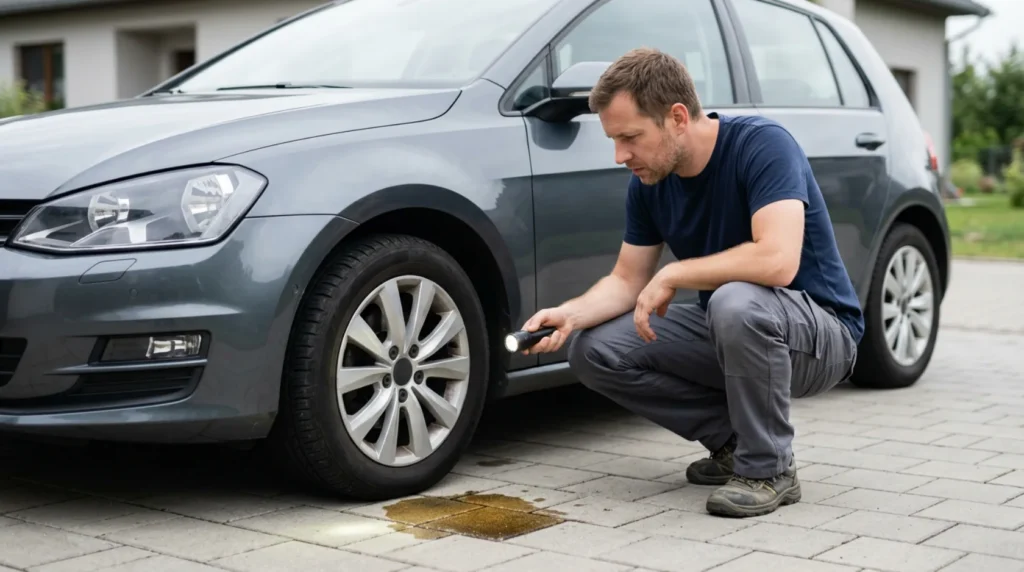
Engine oil leaking under the car isn't something to put off, but not every dark drop under the vehicle is definitely engine oil either. First you need to confirm exactly what's leaking, where it's coming from, and how fast the level is dropping. This guide helps you separate a small external trace that can be monitored calmly from a situation where the engine must be shut off immediately to avoid destroying it.
You need to know how to check the oil level on level ground and safely do only a visual inspection of accessible spots, without crawling under an unsecured vehicle. It helps to roughly tell fluids apart: engine oil is brown to black and greasy, coolant is sweetish-smelling and colored (green, pink, blue), and transmission fluid is often reddish. Working on a hot engine or under the car on just a jack isn't a home job.
1 Let the engine cool and secure the car before looking underneath
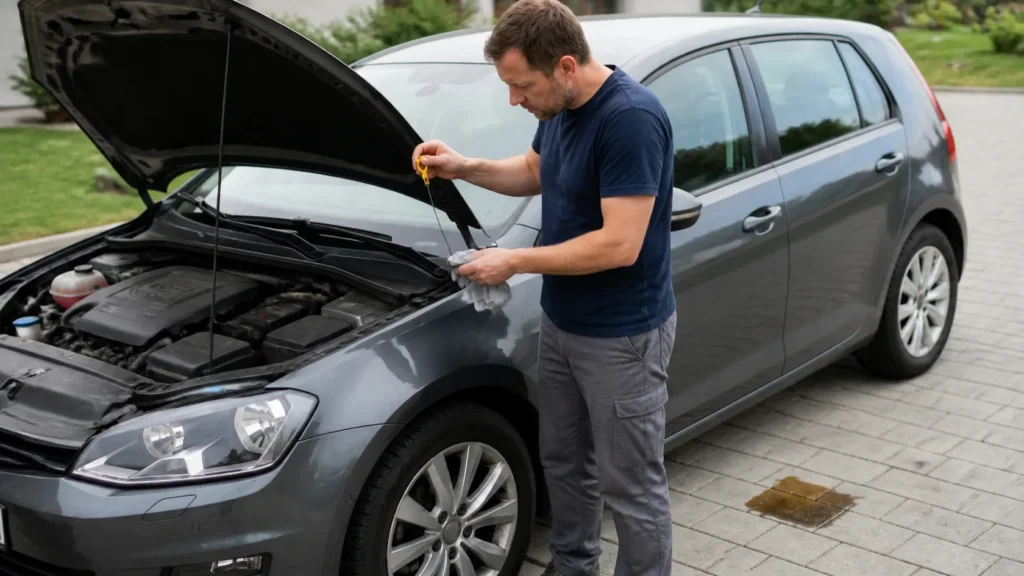
Park on level ground, apply the parking brake, and turn off the engine, then wait for it to cool. Hot oil and hot exhaust pipes cause serious burns, and that's the most common mistake when you're in a hurry. If you need to look underneath, lift the vehicle at the designated points and support it on solid stands; never crawl under a car that's hanging on just a jack.
2 Check the level on the dipstick and determine the color and smell of the drops
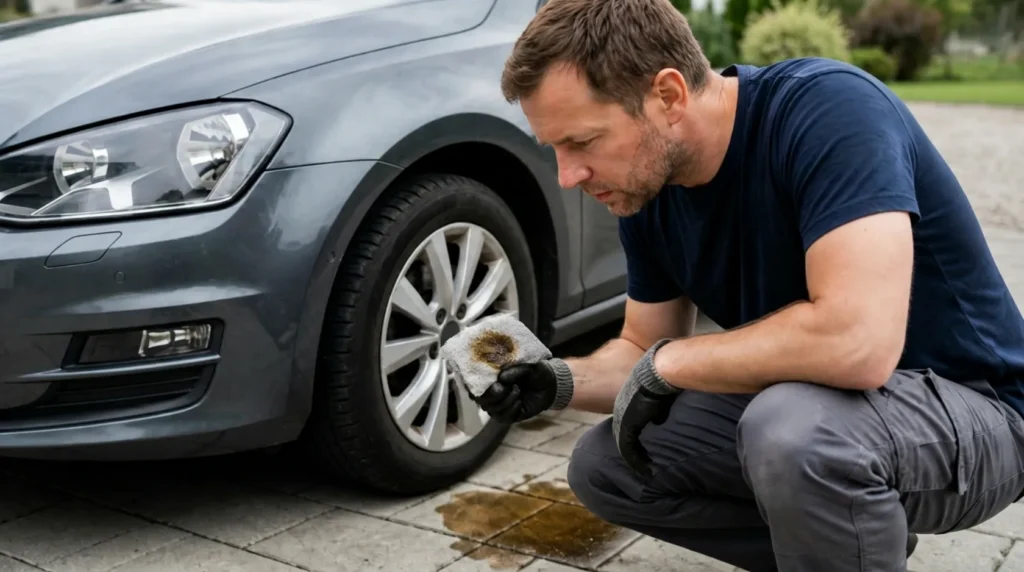
On level ground with a cold engine, pull out the dipstick, wipe it, reinsert it fully, and pull it out again to read the level between the MIN and MAX marks. Then look at the drop under the car itself: engine oil is greasy and dark, coolant smells sweetish and is colored, while AC condensate is clear water and harmless. Don't assume every stain is oil, since that's how you get both the cause and the urgency wrong.
3 Inspect the drain plug, filter, valve cover, and oil pan for traces
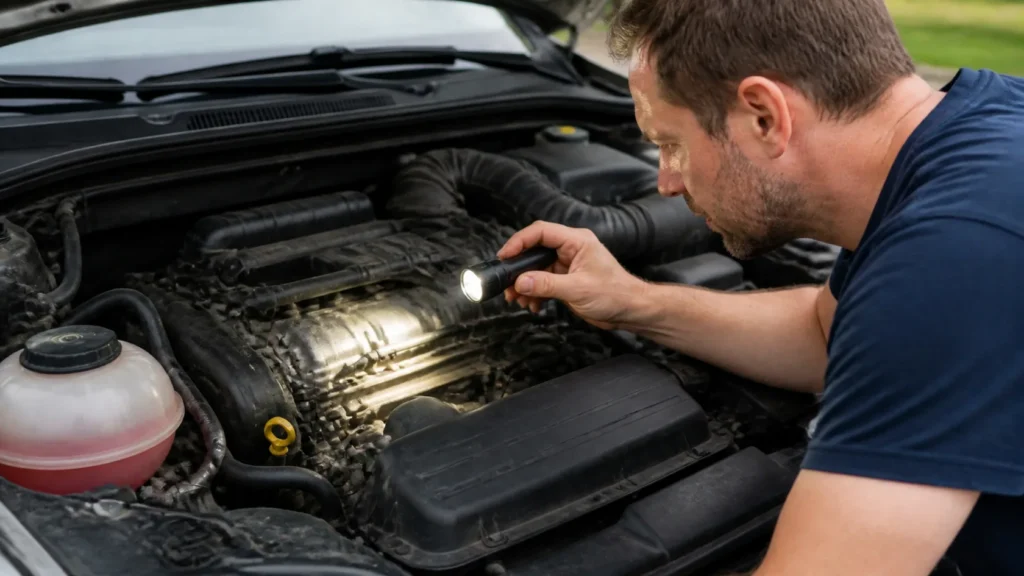
Wipe down the accessible surfaces with a rag and then track where a fresh trace is coming from: most often the drain plug, around the filter, the valve cover gasket, or the oil pan. A damp, shiny trace that keeps building up shows an active leak. Only work as far as you can safely reach from above or the side; don't crawl under an unprotected vehicle just to confirm the source, since it's not worth the risk.
4 Recognize when to shut off the engine and call a tow truck

If the oil level drops suddenly, if the red oil-pressure warning light comes on, or if oil is leaking onto hot parts and the exhaust (smoke, a burning smell), shut off the engine and don't keep driving. Driving with too little oil or with the pressure light on for even a few kilometers can destroy the engine. Leave finding the exact leak source and gasket replacement to a shop; a slight weeping from the drain plug or filter that isn't dropping fast can be monitored more calmly, but it still needs to be fixed.
5 Check that the level holds and no new trace appears after driving
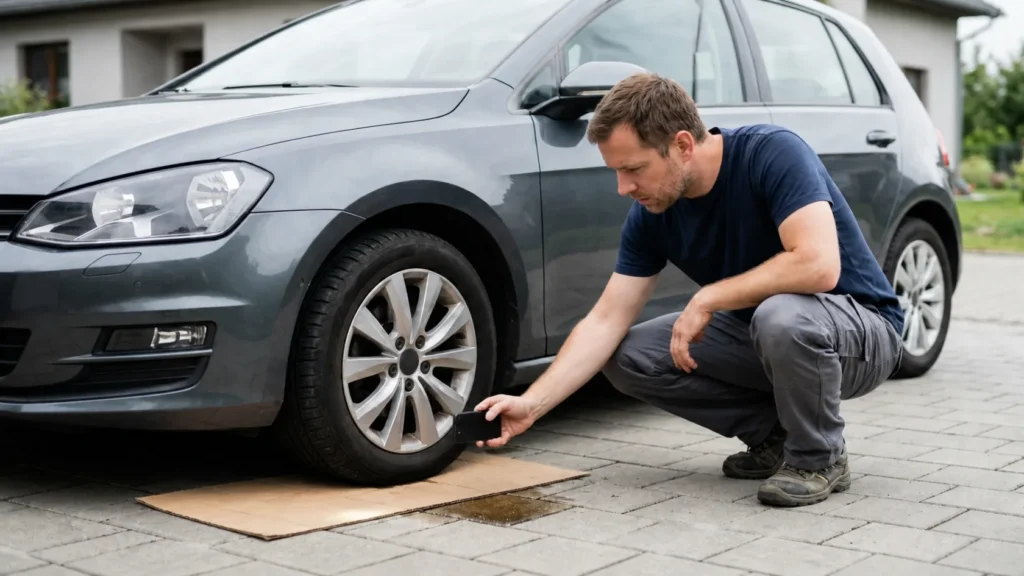
Once the cause is fixed, put the plug and tools back, top up the oil to the correct level, and take a short test drive in a safe spot. After that, leave a clean piece of cardboard under the engine overnight and check in the morning for any new stain, then read the dipstick again cold. If there's no fresh trace and the level holds, the leak is stopped; if the stain comes back, the source isn't fixed and the job continues.
Final check
- The oil level has been checked on the dipstick, and it's noted when and where a fresh trace appears.
- The color, smell, and location of the drop distinguished oil from coolant or water.
- The common accessible leak points have been checked without risky crawling under the vehicle.
- Driving wasn't continued after a sudden level drop or with the pressure light on.
Common problems
- A stain is noticed on the ground, but the oil level is never checked.
- Without reading the dipstick, you can't tell whether the loss is minor or serious. Measure the level first, cold and on level ground, since a small stain and a dangerous loss can look similar on the ground.
- The vehicle keeps being driven even though the red oil-pressure light is on.
- A lit pressure light means the engine may be running without enough oil and can seize within a few kilometers. Stop immediately, turn off the engine, and arrange a tow instead of continuing to drive.
- Only the spot where it drips onto the ground is checked, missing the real source.
- Oil often travels down the block and chassis before dripping onto the ground. Clean the surfaces and trace it upward as far as it's safe, to find the actual, higher leak point.