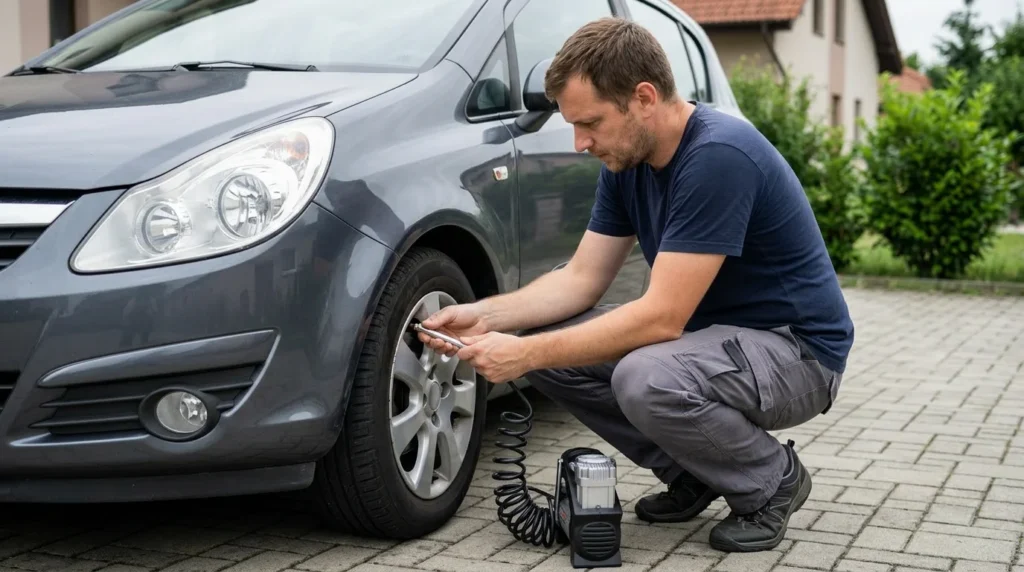
1 Find the specified pressure
Read the label on the driver’s door frame, fuel filler cap or in the vehicle manual. The values may differ for the front and rear axle and for full load.

⚠ Warning: The MAX PRESSURE number on the tire sidewall is not the recommended pressure for your vehicle. Use the vehicle manufacturer’s value.
2 Measure when the tires are cold
Do the check before driving or after no more than a few kilometres of gentle driving. A warm tire shows higher pressure, so don’t bleed it down to the cold-tire value.
3 Measure each tire
Remove the valve cap, press the gauge straight onto the valve until the hissing stops and read the value. Record the pressure for all four wheels.
4 Inflate gradually
Add air in short intervals and repeat the measurement. If you overfilled, briefly press the valve pin and measure again until you reach the specified value.
5 Check valves and spare tire
Put the caps back on, inspect the valves and check the spare tire if the vehicle has one. A large difference on one tire can mean a nail, a damaged valve or a poor rim seal.
? Tip: Check the pressure once a month and before a long trip; a temperature drop of about 10 °C usually lowers the pressure by about 0.1 bar.