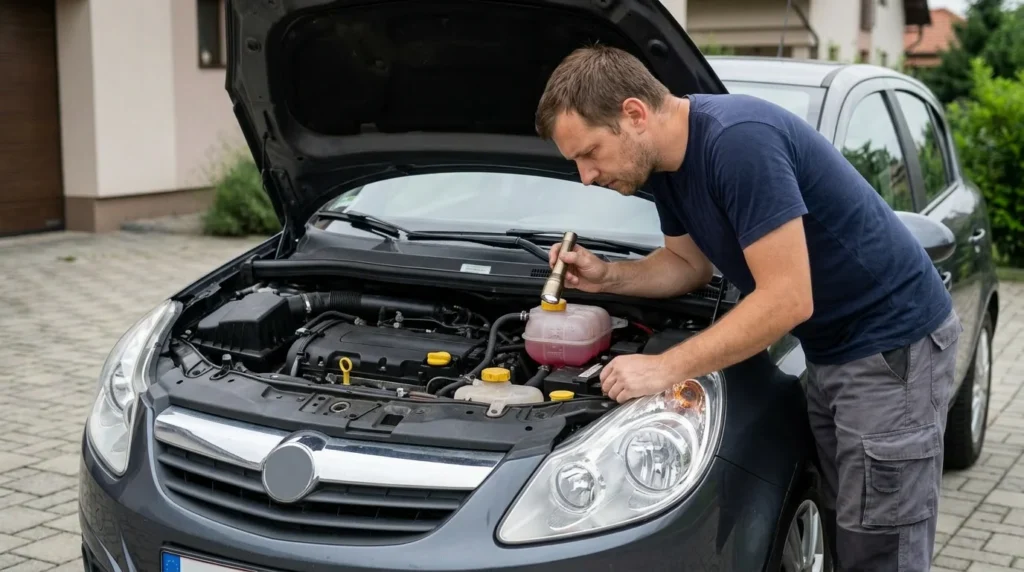
When coolant slowly disappears and there's no clear puddle under the car, the problem is often a small leak that evaporates on a hot engine, or a fault that only shows up under pressure. The goal of this guide isn't to declare a major failure off the top of your head, but to help you safely gather useful clues and tell apart what you can check at home from what needs shop diagnostics. The cooling system isn't opened on a hot engine and isn't topped up at random with just any fluid. If the engine's temperature is climbing, it's smoking heavily, or it's building pressure in the system even when cold, the inspection shouldn't be postponed.
No special mechanical knowledge is required, but you should work only on a cold engine and be able to calmly monitor the level in the expansion tank. It also helps to distinguish a simple coolant top-up from diagnosing a leak or an internal fault.
1 Check only on a cold engine
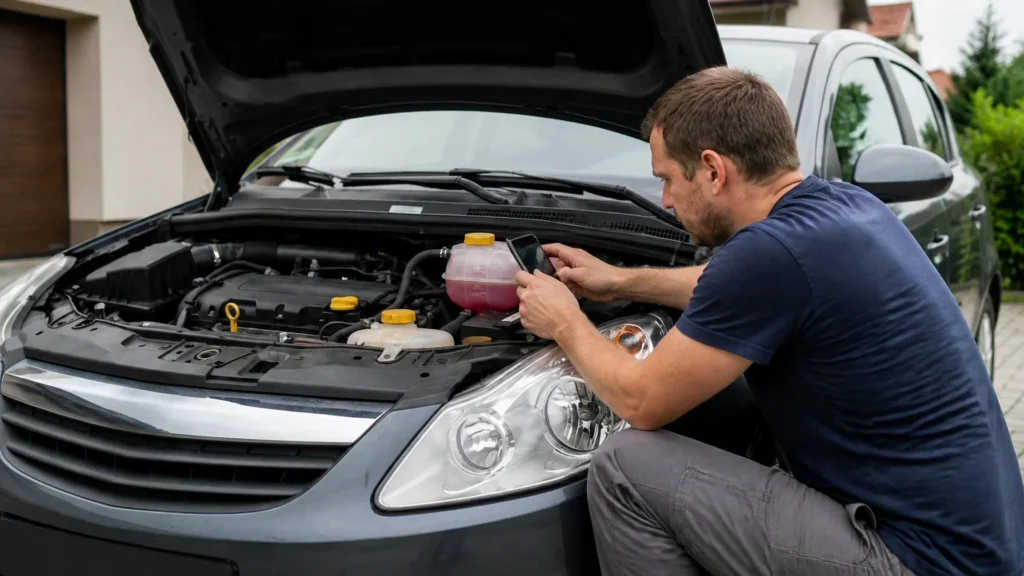
Let the vehicle cool completely, ideally overnight, and only then open the hood and look at the level in the expansion tank. The car should be parked level, since even a slight tilt can distort your impression of the level. It's a good idea to photograph the level or note the date, so later you're not guessing offhand whether a drop is real or just appears that way.
2 Look for traces of dried coolant
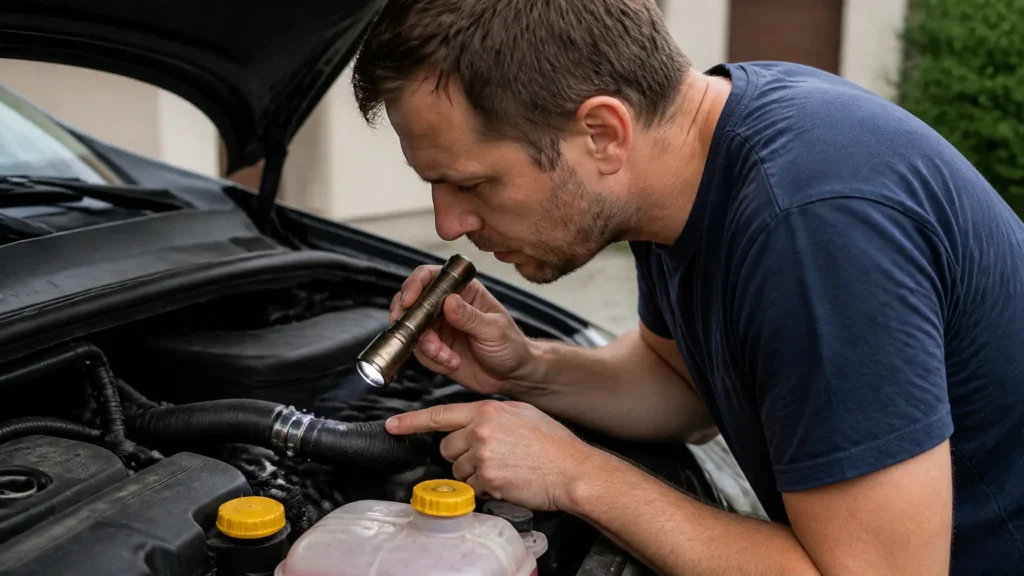
Inspect the hose connections, the radiator, the thermostat housing, the water pump, the cap, and the area around the expansion tank. Small leaks often don't leave a puddle, but instead leave a white, pink, or greenish residue, a sticky trace, or slight dampness at a joint. Pay special attention to the undersides of hoses and the areas under the clamps, since leaks there often stay hidden while everything above looks dry.
3 Check the cabin and the exhaust
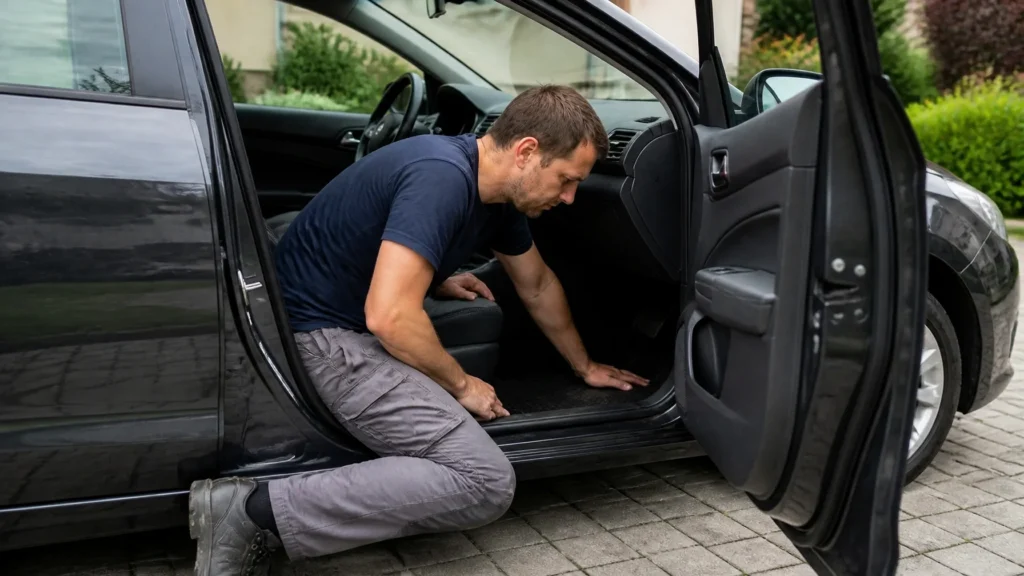
If there's a sweet smell in the cabin, the windows fog unusually, or the passenger-side carpet is damp, suspicion falls on a small heater core. On the other hand, thick white smoke even after warm-up, bubbles in the tank, or a residue resembling emulsion can point to a more serious internal problem. It's important to tell apart morning condensation in cold weather from constant white smoke that doesn't clear once the engine warms up.
4 Monitor temperature and level
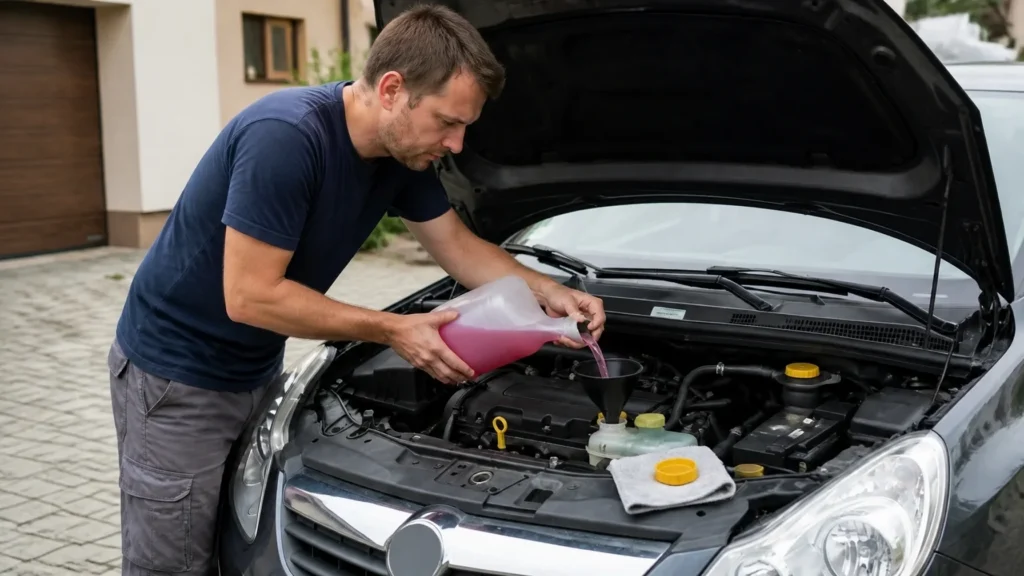
If you need to top up the system, use only fluid of the correct specification and don't mix incompatible types just because they're a similar color. After topping up, watch the temperature gauge while driving and check the level again only once the engine is fully cold again. If the level keeps dropping quickly or the temperature starts swinging more than before, that's a more important signal than the amount you added.
5 Request a system pressure test
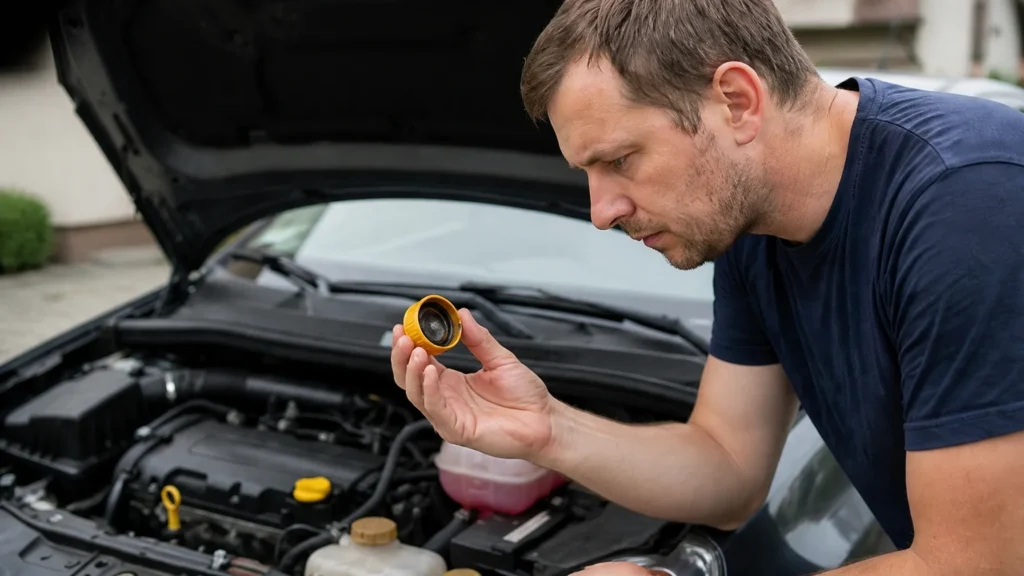
When a home check doesn't reveal a clear cause, the next sensible step is a cooling system pressure test on a cold engine. That makes it easier to find a small leak at the radiator, the water pump, the EGR cooler, the cap, or a joint that otherwise stays invisible. It's far more reliable than randomly replacing a hose, cap, or thermostat without confirmation.
Final check
- The coolant level was monitored only on a cold engine and on level ground.
- The connections, hoses, radiator, cap, and the area around the water pump were checked for traces of dried coolant.
- You checked whether there are any traces in the cabin or unusual white smoke after the engine warms up.
- It's clear whether the problem needs further pressure testing at a shop instead of randomly replacing parts.
Common problems
- The level drops slightly below the mark once and it's unclear whether that's a fault or normal.
- That's why the level should be tracked over several days under the same conditions, on a cold engine and level ground. One rough reading isn't enough to conclude anything, but a repeated drop is already a signal for further checking.
- The system keeps getting topped up, but no one looks for the cause since there's no puddle under the car.
- Many small leaks evaporate on hot parts or leave only a residue at the joints. The absence of a puddle doesn't mean there's no leak.
- Any coolant of the same color that's on hand gets poured in.
- Color isn't a reliable sign of compatibility. You should follow the manufacturer's specification, since the wrong combination can weaken protection and cause residue buildup in the system.