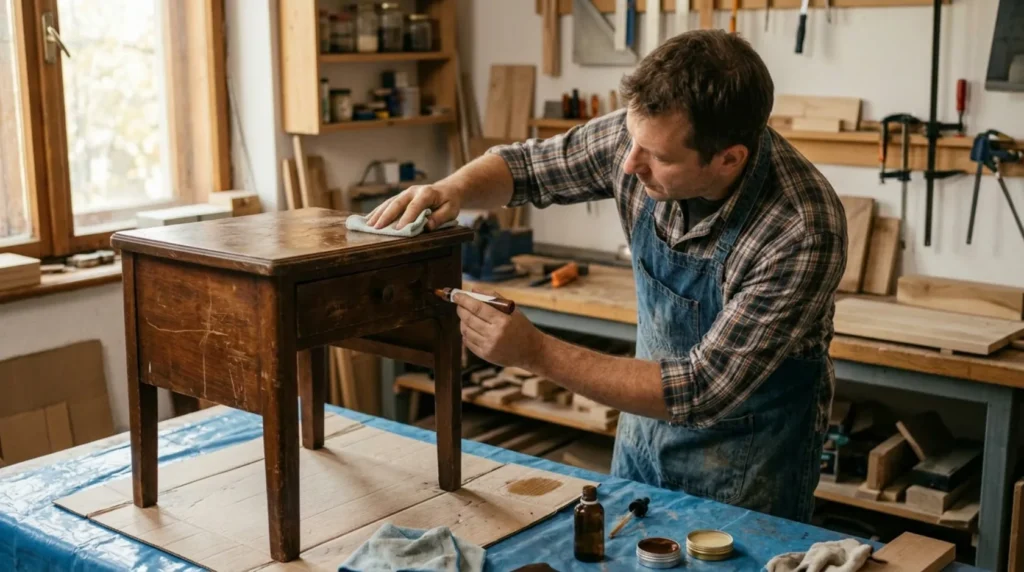
1 Prepare for safe work
Clean the item using a mild method, photograph the existing patina, and first test the procedure in a hidden spot. Work with ventilation and preserve original parts and hardware.
⚠ Warning: Do not use walnuts, cooking oil, or aggressive solvents on a valuable piece; they can darken the wood and make later restoration more difficult.
2 Determine the pattern of the problem
Clean the surface and determine under side-lighting whether only the wax, the finish coat, or the wood itself is damaged.

3 Check the most common cause
Try to conceal a shallow scratch with a compatible wax or touch-up marker in multiple thin tones, without staining the surrounding surface.
4 Apply the appropriate solution
Fill a deep scratch with a suitable wax or wood filler, level it with a plastic tool, and match the gloss with a finish coat.
? Tip: Photograph the initial state and change only one thing at a time so that you know which check really affected the result.
5 Test the result and set limits
Allow the glue, filler, or coating to cure completely, then inspect the connection under day and side light. The finish should be reversible or at least not unnecessarily remove original material.