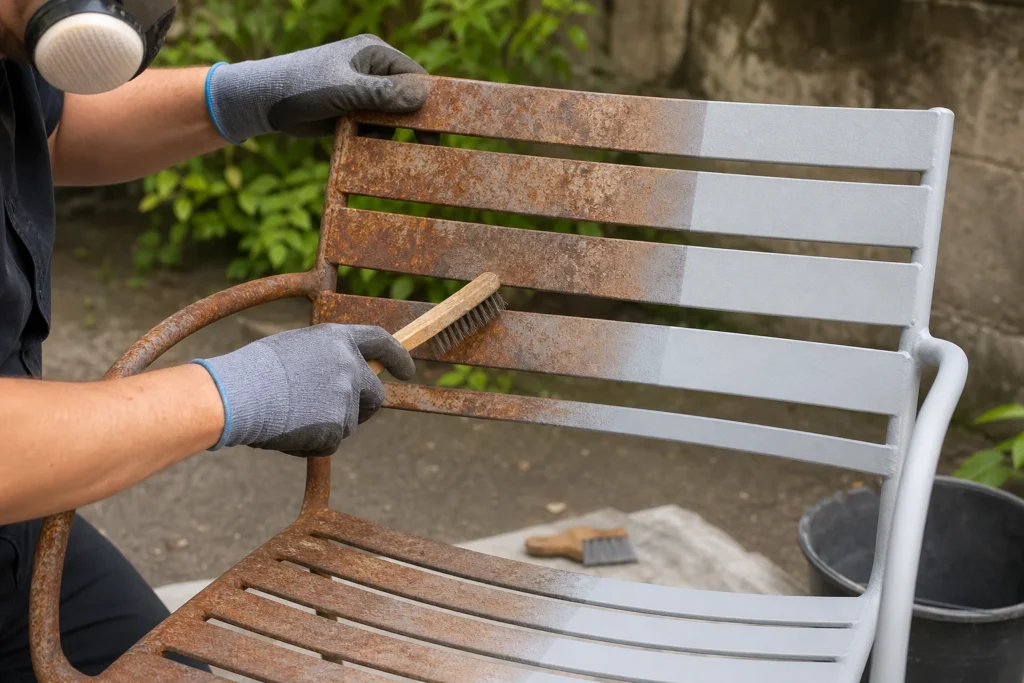
A rusted metal garden table or chairs do not have to go to the landfill — rust is almost always surface-level and can be removed with a wire brush and sandpaper, while an anti-corrosion primer prevents its return. With a final coat of metal paint, the furniture gets many more seasons in the rain and sun, and in a color of your choice. The key to durability is thorough preparation, not the paint itself.
n
No special prior knowledge is required, just a willingness to perform thorough mechanical cleaning before painting.
n
1 Cleaning and assessment
Wash the furniture with water and a mild detergent to remove dirt, dust, and plant debris, and assess how widespread the rust is – surface-level or deep.
2 Removing rust mechanically
Use a wire brush or steel wool to remove loose rust and flaking paint chips, working until the metal underneath is visible and firm to the touch.
⚠️ Warning: When dry-sanding rust, wear a mask because fine rust and old paint particles (which on older furniture may contain lead) are easily inhaled.
3 Treating remaining rust
For minor rust traces, soak a cloth in white vinegar or a citric acid solution and leave it on the spot for 1–2 hours, or apply a specialized rust converter according to the manufacturer’s instructions.
4 Sanding and degreasing
Lightly sand the entire surface with finer sandpaper for better paint adhesion, and then wipe it with a cloth soaked in paint thinner to remove grease and dust.
5 Applying anti-corrosion primer
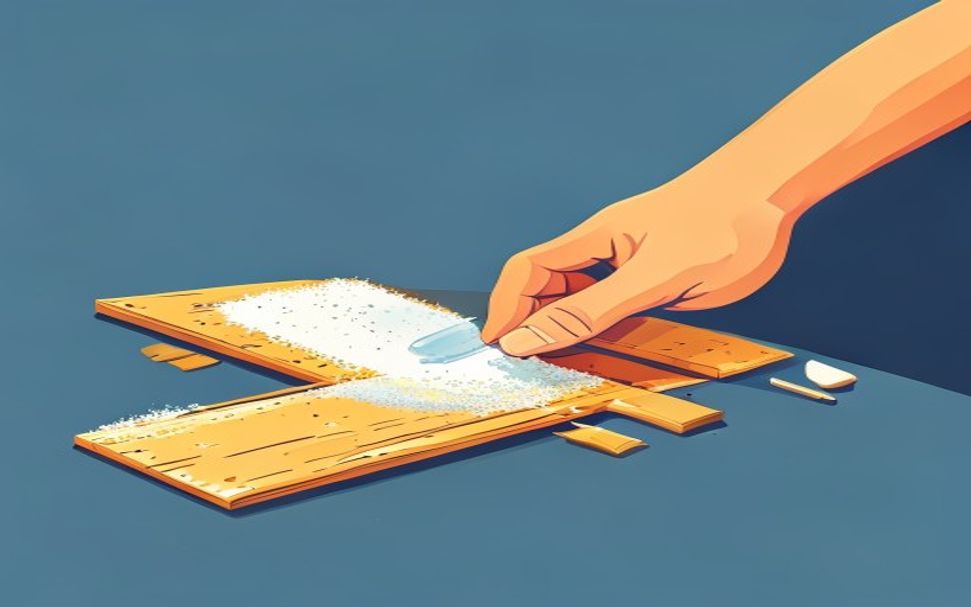
Apply a thin, even coat of anti-corrosion primer, paying special attention to welded joints and hard-to-reach corners where rust is most likely to reappear.

6 Final painting
After the primer has dried, apply two thin coats of topcoat paint designed for outdoor metal surfaces, drying between coats according to the manufacturer’s instructions.
? Tip: Choose paint labeled ‘for outdoor use’ and resistant to UV rays so the color does not fade or crack after just one season in the sun and rain.
7 Drying and protection
Leave the furniture to dry in a dry and ventilated place (ideally 48 hours) before exposing it to rain or moisture, and to extend durability, consider an occasional coat of wax or metal protection spray.
Final check
- The paint is even on all sides, including under sides and joints, without runs or missed spots
- No rust breaks through the coating anywhere – all corroded spots were cleaned to bare metal or treated with rust converter
- The coating is completely cured before taking the furniture outside and first use (usually 48 hours)
Common problems
- A few weeks after painting, brown rust spots break through the new coating.
- Rust was not completely removed or neutralized before the primer. Sand the problem areas to clean metal or apply rust converter, then repeat the anti-corrosion primer and final paint only on those zones – paint does not hold on rust without a primer.
- Spray paint runs and forms droplets on the round tubes of the furniture.
- The spray was held too close or too long in one place. Spray from a distance of 25–30 cm, in short even strokes with constant movement, in several thin layers with a pause between – sand dried drops first, then respray.