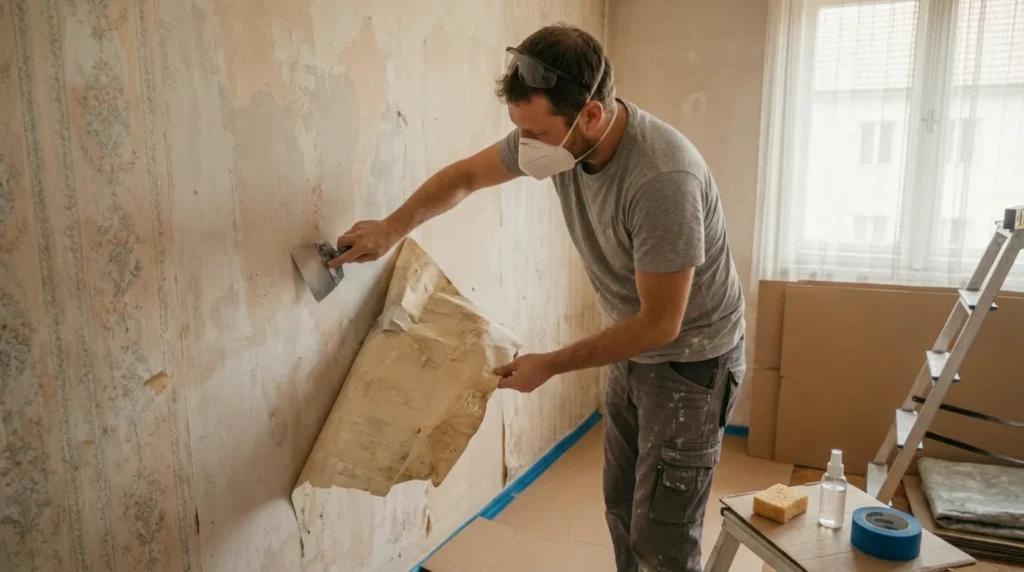
1 Prepare for safe work
Protect the floor and furniture, switch off hidden installations in the drilling or cutting zone, and check the moisture and load-bearing capacity of the substrate. Wear dust protection and work on a stable surface.
⚠ Warning: Do not soak drywall and do not use a steam stripper near electrical boxes. Too much water destroys the paper layer and joint compound.
2 Determine the problem pattern
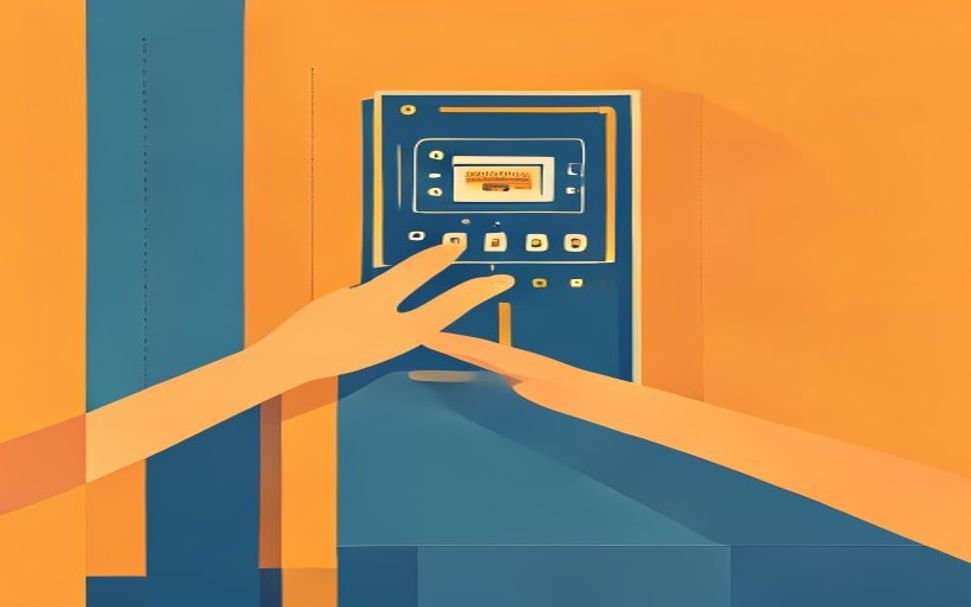
Turn off the electricity in the area, protect the outlets, and test on a small section to see if the top layer can be dry-stripped.
3 Check the most common cause
Perforate only the surface of the wallpaper without deeply damaging the plaster, apply warm water or an approved solution and let it soften.
4 Apply the appropriate solution
Remove with a wide spatula at a low angle, repeat the wetting, and finally wash off the glue before repairing the wall.
? Tip: Photograph the initial state and change only one thing at a time to know which check really affected the result.
5 Test the result and set the limit
Allow the material to dry or cure for the full period from the declaration, then check the levelness, adhesion, and cracks under side lighting. Do not cover active moisture or structural problems with a finishing coat.