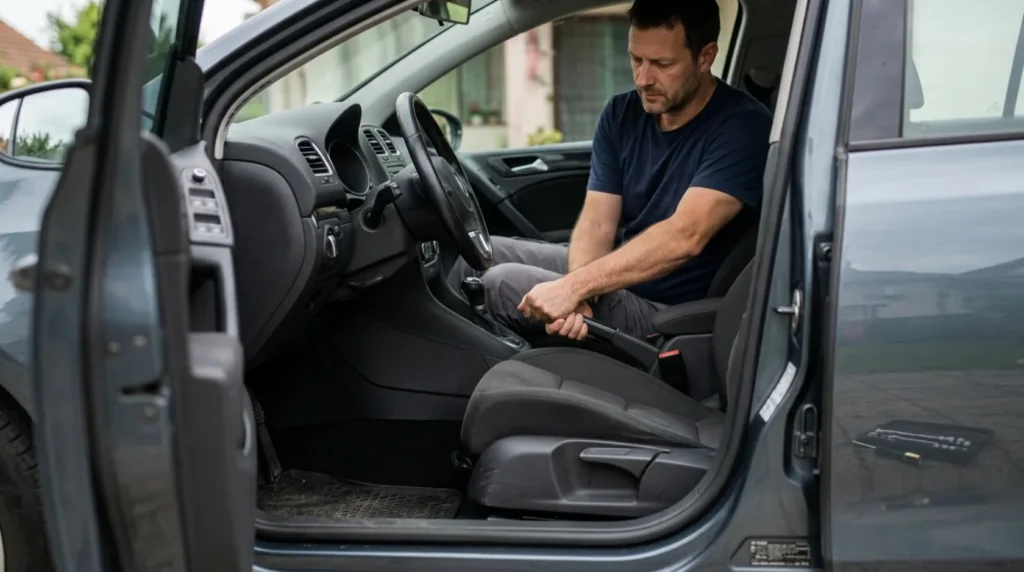
A weak parking brake isn't just an inconvenience on a slope — it's also a sign of wear, poor adjustment, or a problem with the cable, shoes, or mechanism in the rear brakes somewhere in the system. The most common mistake is tightening the cable right away, even though the real cause is a worn lining, a stuck piston, or the left and right sides working unevenly. This job is safe for a home check only as long as you stay within inspection and basic adjustment; if the mechanism has seized or the brake linings need serious work, that's where you should stop.
It's enough to know how to safely support the vehicle, recognize basic lever travel, and tell a simple adjustment apart from a fault that needs a shop. Extensive experience isn't required, but discipline is — don't 'lock in' the problem just by tightening the cable harder, since that hides the real cause instead of fixing it.
1 Secure the vehicle with wheel chocks before lifting the rear
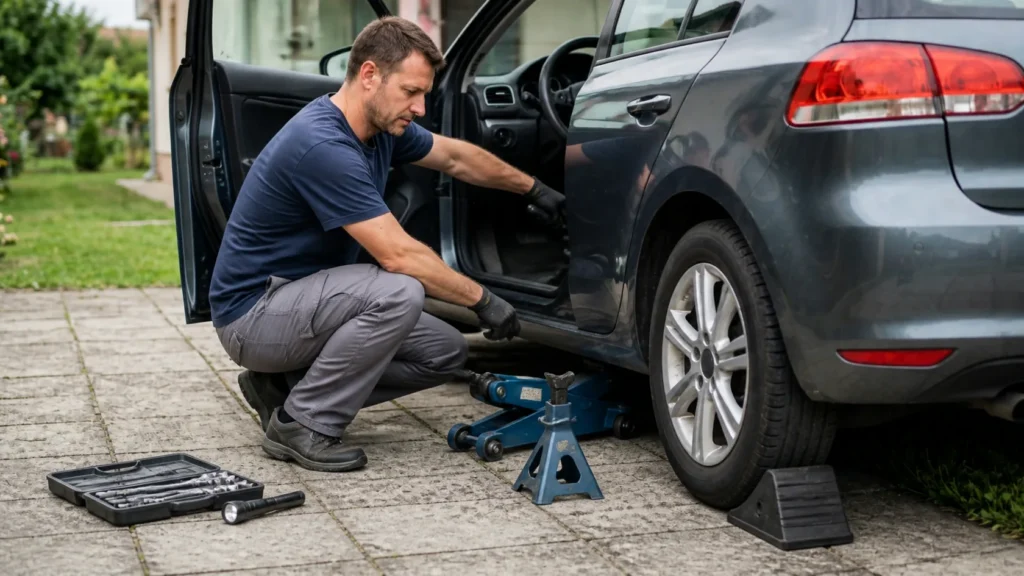
Park on level ground, put the vehicle in gear or Park, place chocks under the front wheels, and only then release or tighten the parking brake as needed. If you need to lift the rear, use the designated lift points and solid stands. Don't work under the car while it's only on a jack, since even a small shift can create a serious problem.
2 Determine how the brake is failing to hold
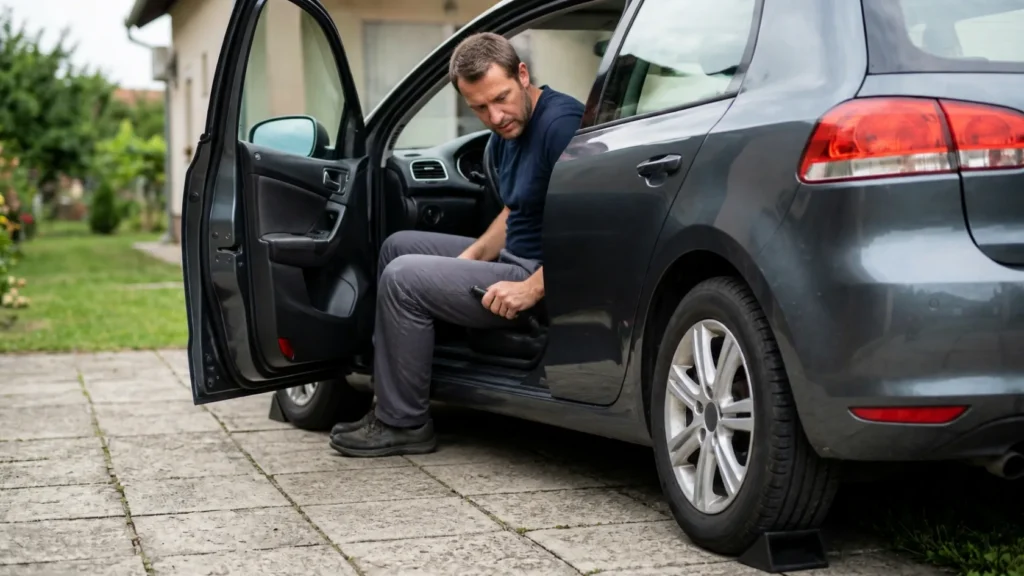
Note how far the lever travels (number of clicks), whether one side brakes better, and whether the car moves on a slight incline. If the lever goes up too high before it engages, the problem is often wear or excessive play. If you feel uneven resistance left to right, don't treat that as a simple adjustment item, but as a clue to where the cause lies.
3 Inspect the cables and rear brakes
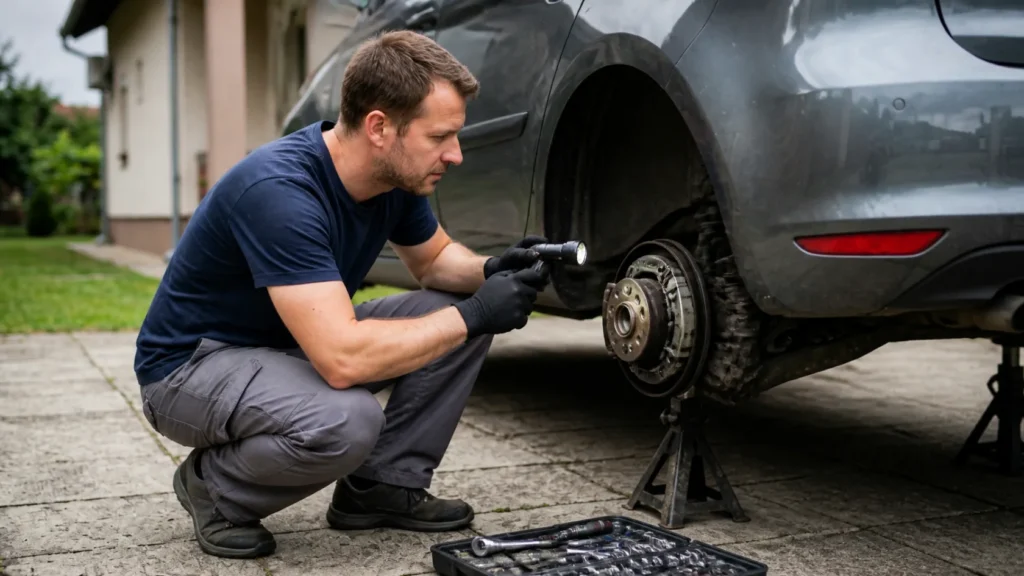
A lifted vehicle lets you inspect the cables, levers, and rear brakes without guessing. Look for a seized cable, a damaged sheath, leakage around the brake caliper, or shoes worn more than they appear from outside. Worn pads or shoes aren't fixed by tightening alone, since the brake may briefly seem better but still lack real grip.
4 Only adjust once the system is confirmed sound
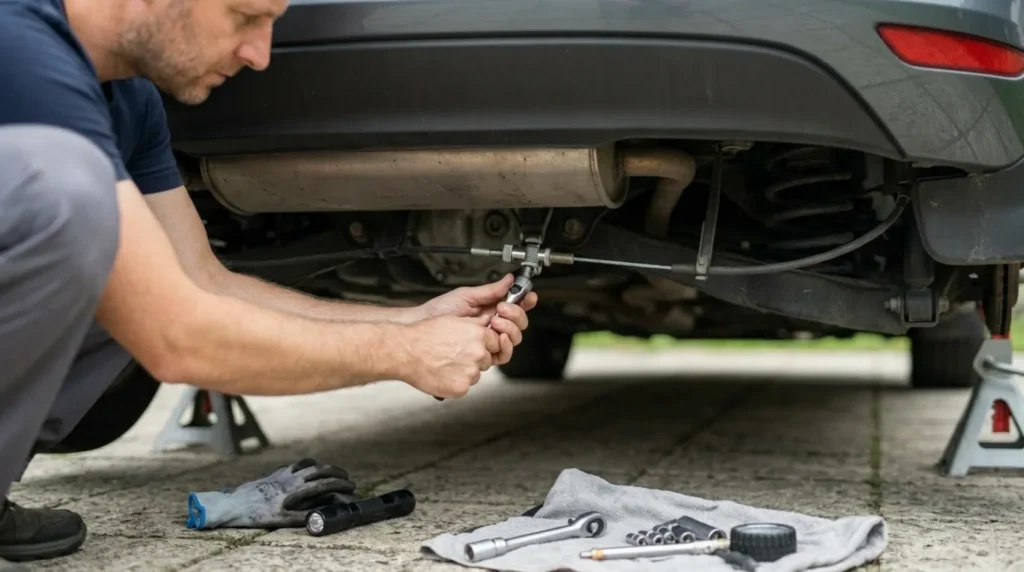
Only adjust once you know the cables, levers, and brake linings aren't worn out. Tighten gradually and watch that the lever doesn't become too stiff or too short, since that means you've gone too far. If one wheel still turns more freely than the other, go back to inspection before tightening further.
5 Test the holding power in a safe spot
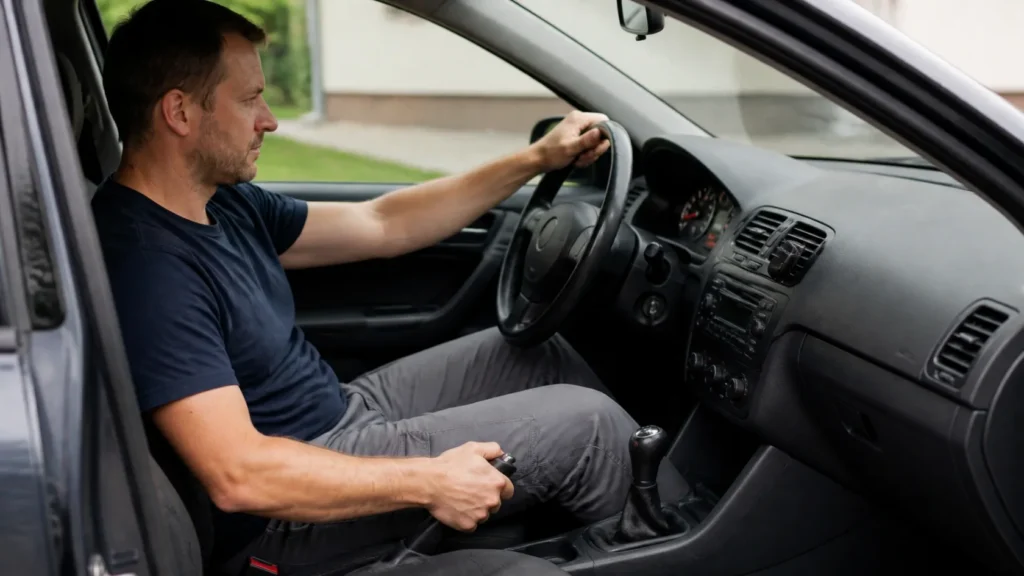
Lower the vehicle, remove the stands, and on level ground do a check with light load on the parking brake. The lever should hold the vehicle without excessive travel and without one side feeling like it lags. Until the brake holds reliably, don't park on a slope and don't count on one more click to save you.
Final check
- The lever engages the vehicle at a reasonable number of clicks and without excessive travel.
- The left and right sides brake evenly, without a noticeable difference in resistance.
- The cables, levers, and rear brakes have been checked for wear, tension, and binding.
- If the brake still doesn't hold reliably, it's clear the job needs a shop before parking on a slope.
Common problems
- The parking brake is tightened all the way, but the car still creeps slightly.
- The cause is most often a worn lining, a seized cable, or a mechanism that no longer has enough travel. Tightening it further isn't the fix — inspecting and repairing the worn part is.
- One side holds, while the other barely grips at all.
- That usually points to an uneven cable, a seized lever, or unevenly worn rear brakes. Find out first why one side is dead, since adjustment alone won't even out a system that isn't mechanically sound.
- The lever is stiff and travels only a short distance, but the brake still isn't safe.
- That can mean you've gone past the adjustment limit or the mechanism is binding somewhere. A stiff lever isn't proof of good holding — it's a sign to step back and check the free travel.