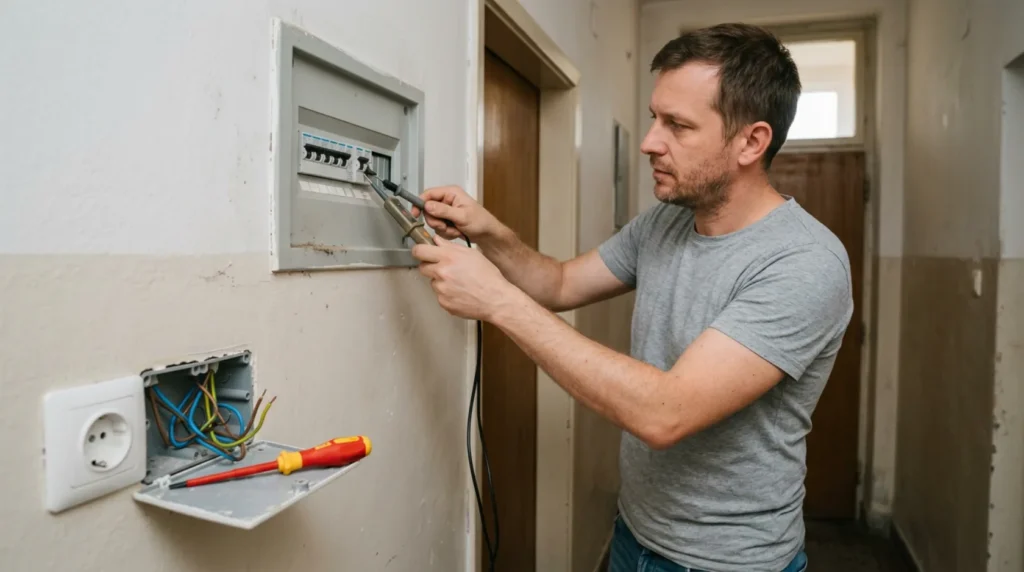
A protective conductor is not identified by feeling, assumption, or just one wire color. In newer installations, it often is green-yellow, but in older, repaired, or untidily modified installations, this may not be reliable proof. This guide serves to explain what you can visually suspect, and what can only be confirmed by proper measurement and electrical inspection.
You should know the difference between visual inspection and actual line identification, and that a test light is not a tool for confirming a protective conductor. It is also useful to understand that the protective line has a safety function and is not used as a substitute for a neutral or any other working conductor.
⚠ Safety note: This guide involves working with electricity. If you're not completely sure about every step, stop and call a licensed professional. Before you start, always switch off the power at the breaker or close the main water/gas valve.
1 First look at the color as a clue, not as final proof
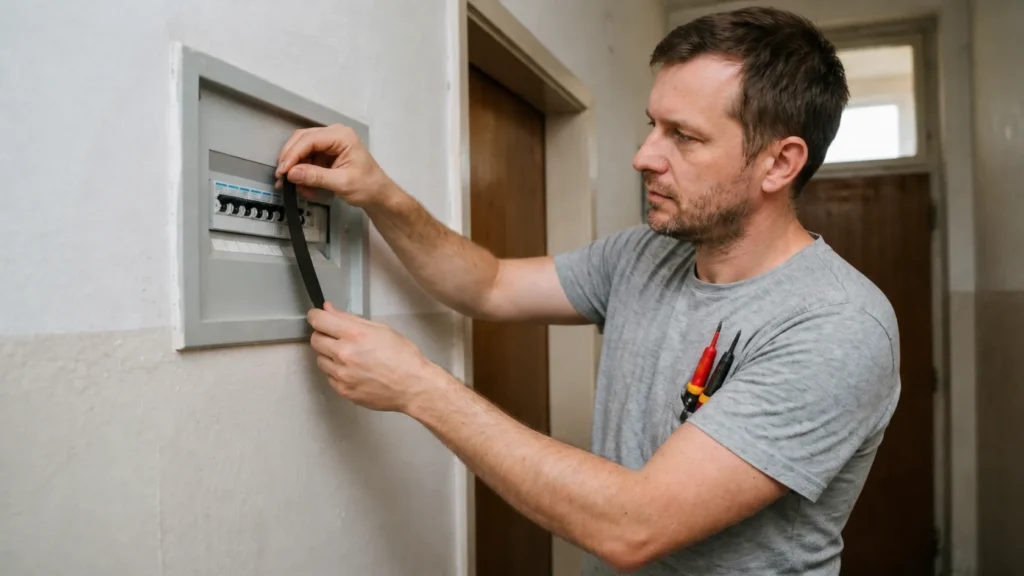
In a neat newer installation, the protective conductor is usually green-yellow, but that is only an initial clue. If the installation is old, partially modified, or wires have been extended and spliced, colors can be unreliable. Therefore, color helps to narrow down suspicion, but must not decide on its own.
2 Look where the wire goes and what it is logically connected to
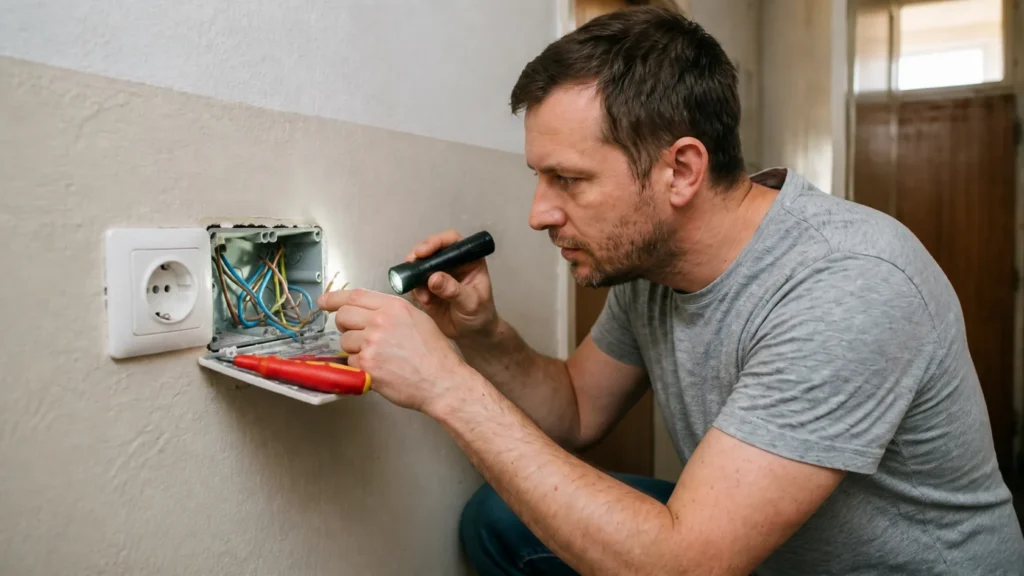
The protective conductor usually goes to the protective contacts of the outlet, the metal housing of the device, or the common protective busbar in the panel. If the same wire obviously participates in a working connection or serves as a return, that is already a sign that something is not right. The logic of the connection often reveals more than the color itself.
3 Do not try to confirm by touch, test light, or random test
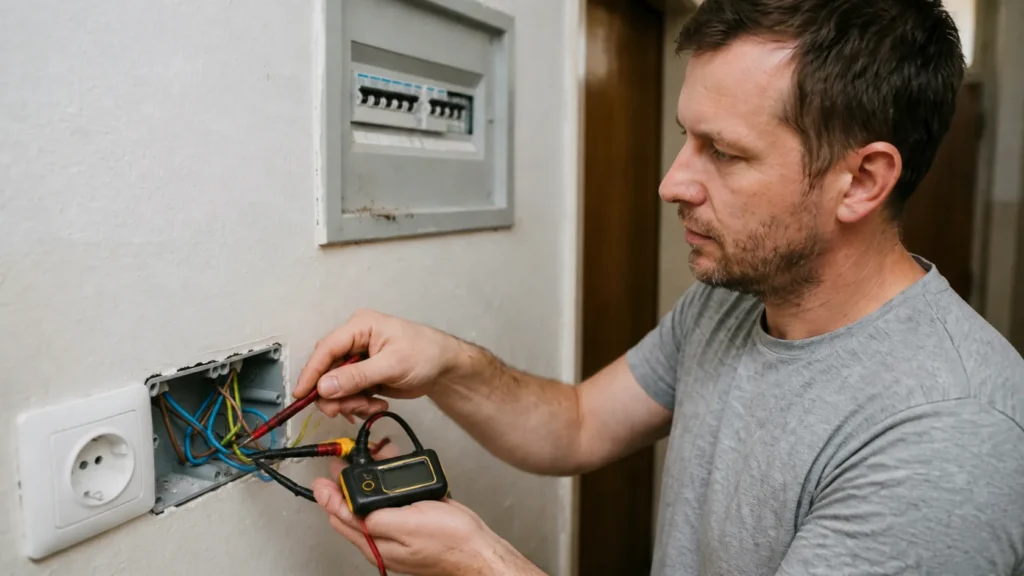
A protective conductor is not identified because ‘the test light does not light up’ or by touching it to see what happens. Such moves are not measurement but dangerous guessing. True confirmation requires a suitable instrument and verification of continuity and connection to the protective system.
Warning: A test light and random tests are not a way to confirm the protective conductor. If the identity of the line is not certain, stop and do a professional check.
4 If the identity of the line is important for further work, measurement is already needed
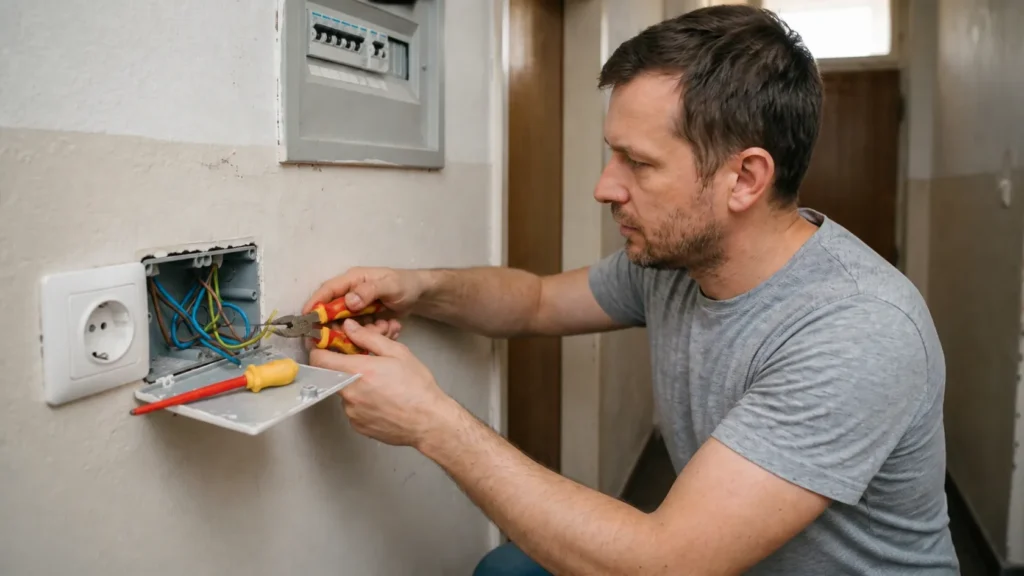
As soon as the continuation of installation, connecting the device, or deciding what is phase and what is neutral depends on identifying the protective conductor, do not rely on visual assessment. Then the electrician checks the line with an appropriate procedure on the disconnected system and, if necessary, along the entire route. There is no place for assumption with the protective conductor.
5 A missing or misused protective conductor requires correction of the installation
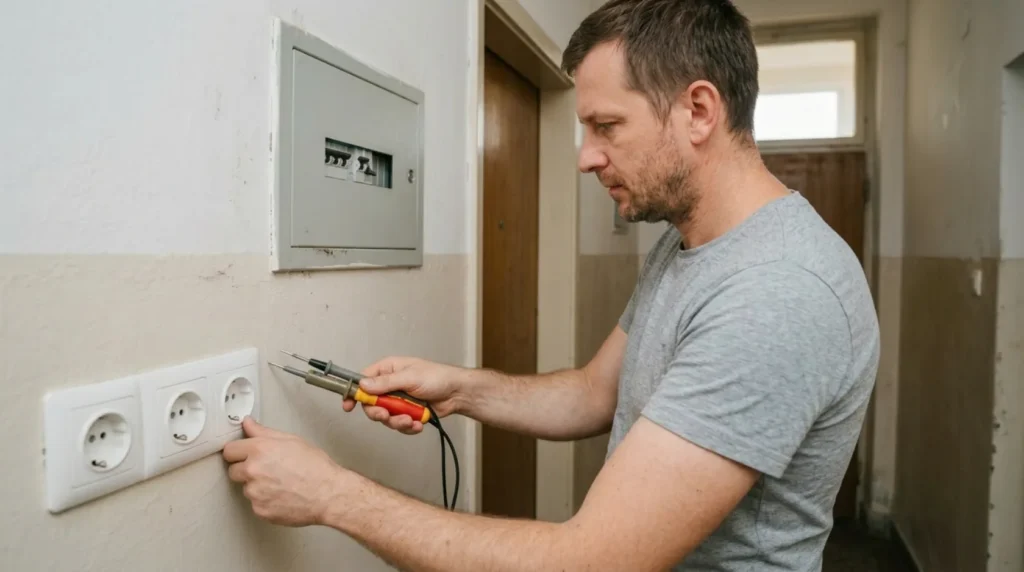
If it turns out that the protective conductor is not present, is not connected, or is used for another purpose, this is not a minor defect but a serious safety issue. Such a circuit should not be ‘somehow enabled’ for operation until it is corrected. The real goal is not to guess the wire but to have a properly implemented protection.
When to call a professional: If the job involves changes to the electrical panel, the main gas line, or load-bearing walls/beams — or if you're not sure how it will turn out — this is not a DIY task. Hire a licensed professional.
Final check
- The wire color was used only as an initial clue, not as the only proof.
- The logical direction of the line toward the protective contact, housing, or busbar was inspected.
- The protective conductor was not 'identified' by a test light or touch.
- If there is doubt or a lack of protective line, a professional correction of the installation is planned.
Common problems
- The wire is green-yellow so it is immediately assumed everything is correct.
- Color is a strong clue, but not a guarantee if the installation is older or someone made modifications earlier. Always look at both the connection logic and the need for actual measurement.
- The protective line is attempted to be confirmed with a test light.
- A test light does not provide a reliable identification of the protective conductor and easily leads to a wrong conclusion. For such a check, a proper instrument and correct procedure are required.
- It is discovered that the protective conductor is missing, but device connection is still continued.
- This bypasses the very purpose of protection. When the protective line is not correct, the installation is solved first, and only then all other works.