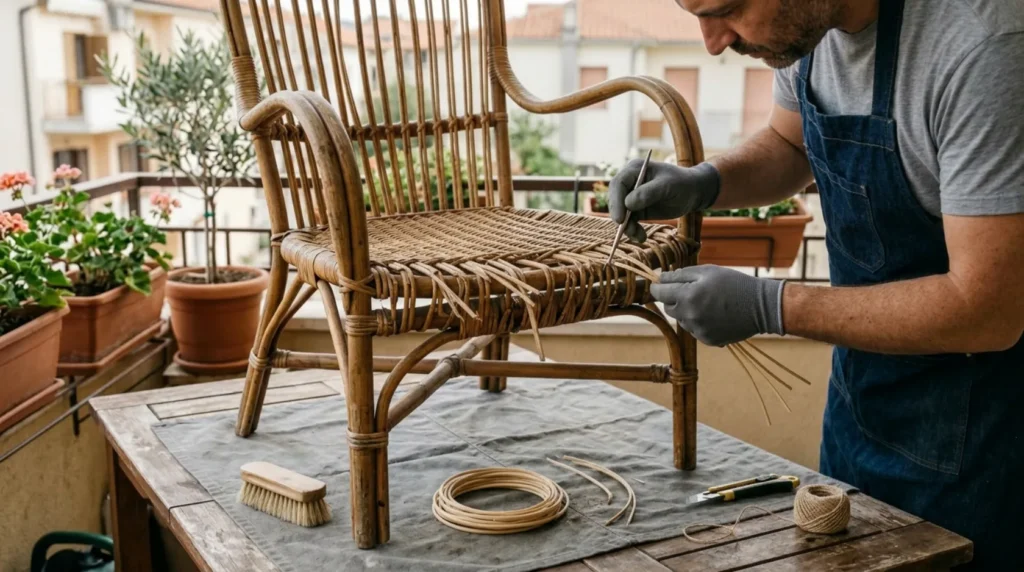
1 Prepare for safe work
Clean the object with a mild method, photograph the existing patina, and test the procedure on a hidden area first. Work with ventilation and save original parts and hardware.
⚠ Warning: Old dry wicker breaks easily in a chain reaction. If a large load-bearing seat surface is damaged, leave it to a professional furniture weaver.
2 Determine the pattern of the problem
Determine if the wicker is natural rattan, cane, willow, or synthetic strap, as materials soften and join differently.
3 Check the most common cause
Photograph the pattern, remove only the broken strand, and weave the new one in the same order with even tension.
4 Apply the appropriate solution
Secure the ends on the hidden side using the original construction method, then match the color with a mild compatible coating.
? Tip: Photograph the initial state and change only one thing at a time so that you know which check really affected the result.
5 Test the result and set the boundary
Let the glue, filler, or coating cure completely, then inspect the joint in daylight and side light. The finish should be reversible or at least must not unnecessarily remove the original material.