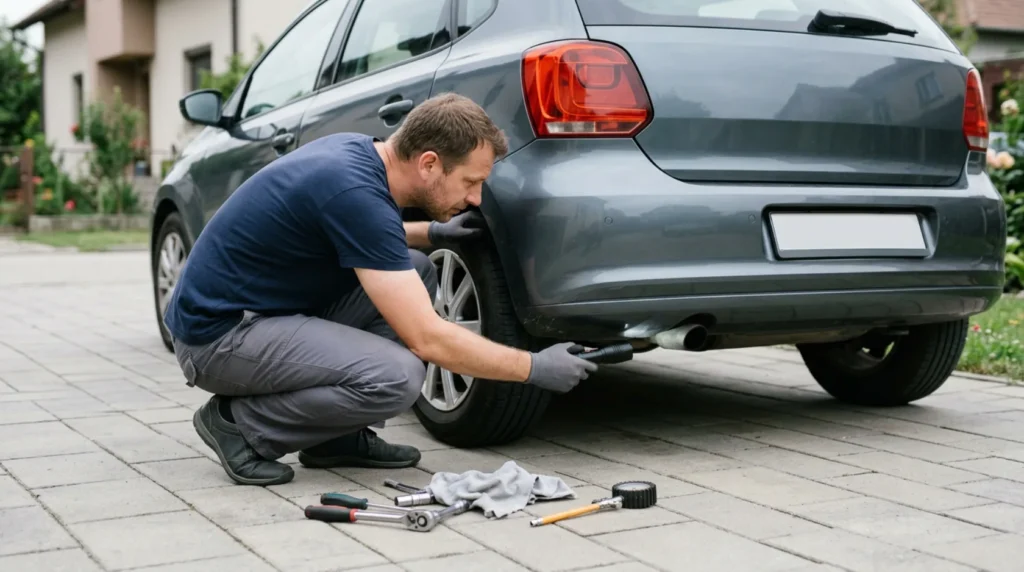
A rattle under the car often sounds more dramatic than it is, but the cause shouldn't be guessed at. Most often it's a loose heat shield, weakened rubber bracket, loosened clamp, or part of the exhaust that started to contact the floor or undercarriage. This is a good job for home inspection only if you work on a cold car and with secure support; anything requiring removal of corroded parts, work under a car without stands, or work on the catalytic converter should be left to a shop.
It's enough to know how to safely raise a vehicle, distinguish between a heat shield and a pipe, and recognize when a rattle comes over bumps, on startup, or at certain RPMs. No mechanic training is needed, but careful inspection is required, without going deep into corroded or hot parts, because the exhaust stays hot for a long time.
1 Let the exhaust cool and support the vehicle on solid stands
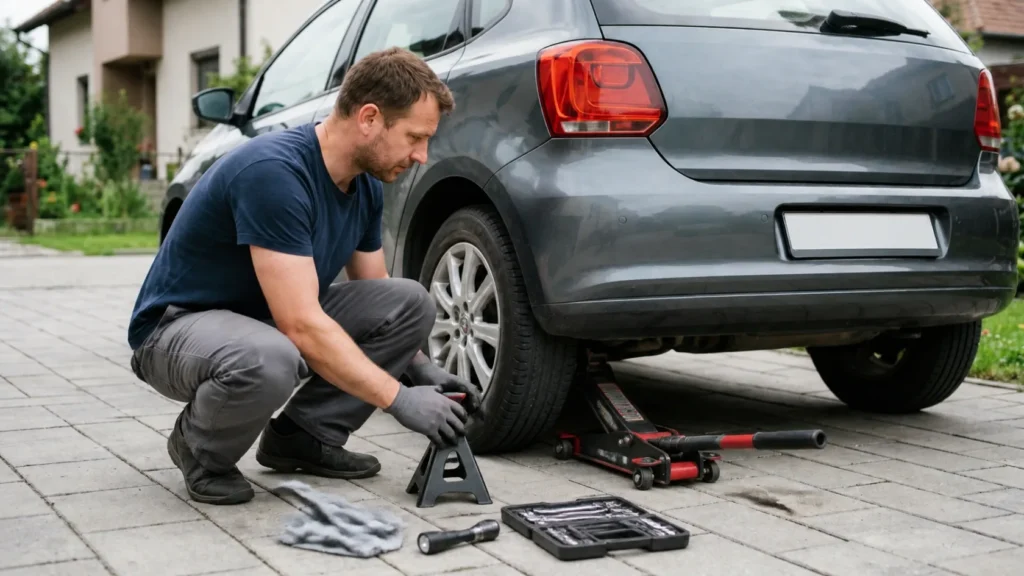
Park on a level surface, turn off the engine, engage the parking brake, and wait for the exhaust to cool completely. If you need to raise the vehicle, use the designated support points and solid stands, never just a jack. Before getting under the car, check that the ground is dry and you have enough light, because false confidence in safety here quickly becomes expensive.
2 Determine when the rattle occurs
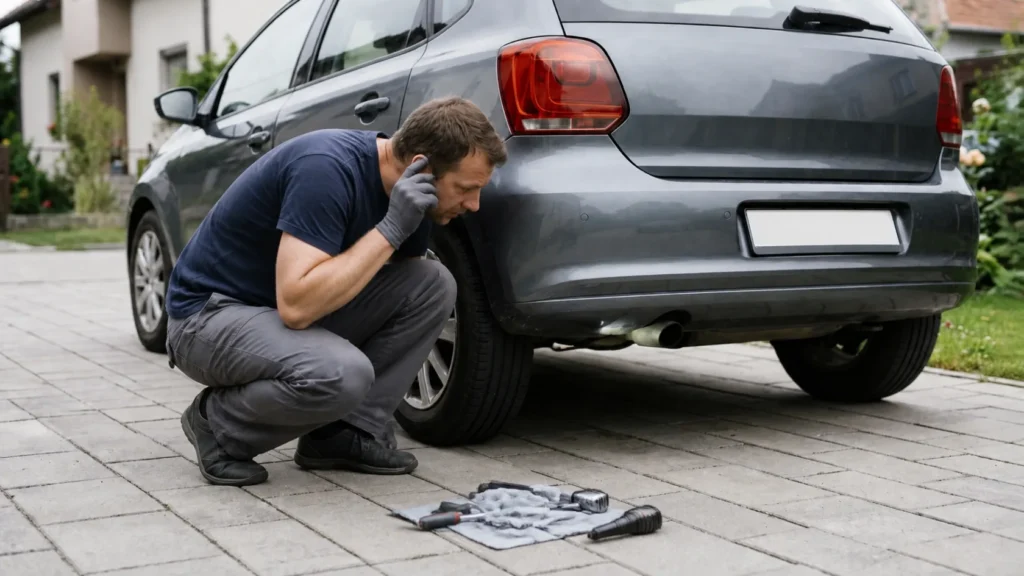
Listen for whether the rattle starts immediately on startup, only when the engine is warm, at higher RPMs, or when going over bumps and uneven surfaces. This tells you whether the problem is in the sheet metal, bracket, heat shield, or part of the exhaust that moves under load. If the rattle stops when you gently press on the body or changes on rough terrain, it’s often an exterior component contacting something, not internal failure.
3 Inspect the brackets and sheet metal
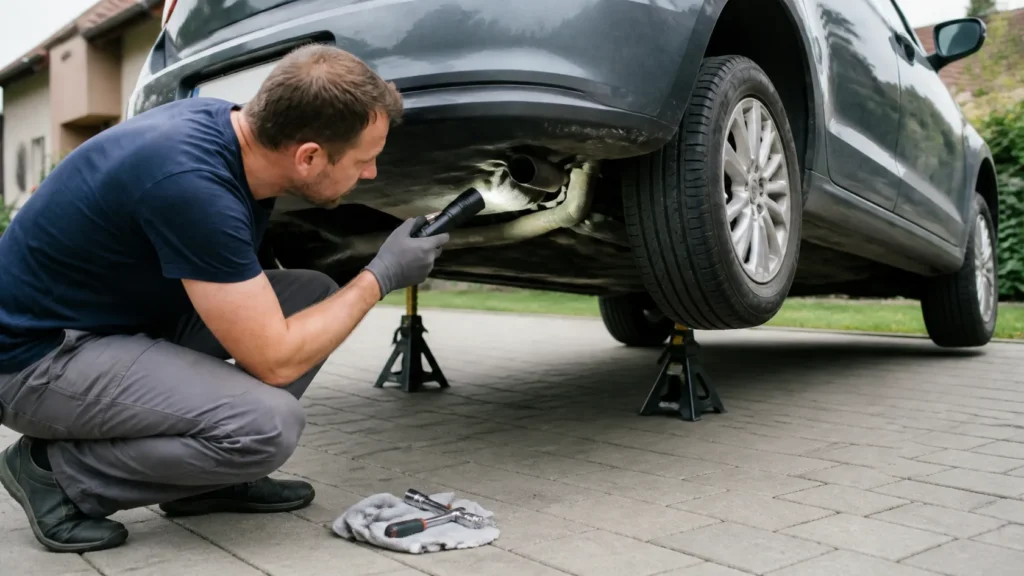
From a safe distance, check the rubber brackets, heat shields, hose clamps, and places where the pipe might contact the floor or undercarriage. Look for shine marks from friction, bent sheet metal, missing bolts, and rubber brackets that are cracked or stretched. Don’t touch a hot exhaust and don’t run your hand between parts just to confirm the rattle, because that’s the quickest path to a burn.
4 Perform only minor repairs
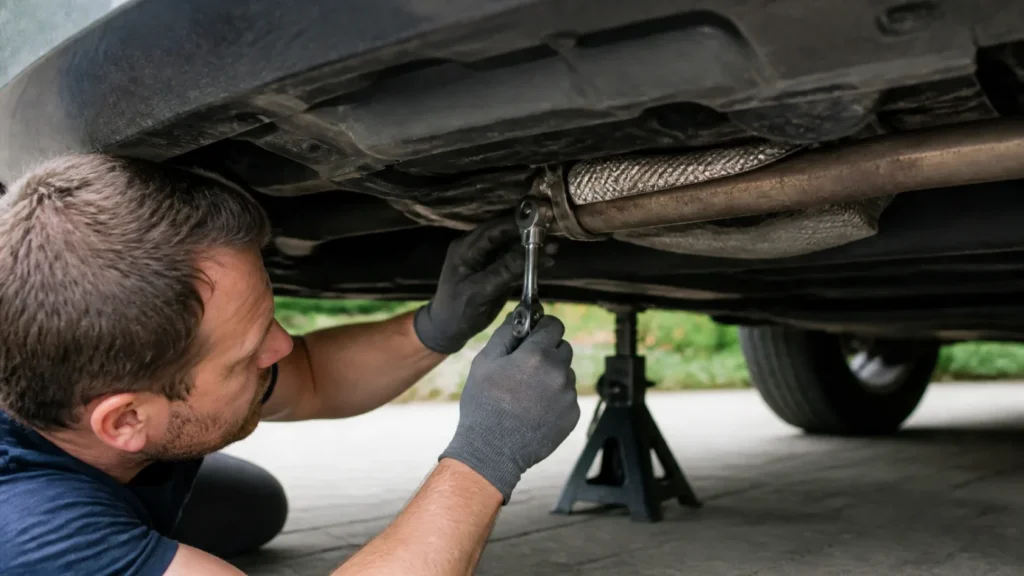
A loose heat shield can be reattached with the appropriate fastener if the material is still good, and a rubber bracket is replaced when it no longer holds the exhaust in the correct position. If a clamp has loosened, tighten it moderately, without stripping threads and without over-stressing corroded bolts. When a pipe is cracked, a bracket is broken, or a catalytic converter has internal looseness, that’s no longer a job for home improvisation.
5 Drive the car over bumps and monitor if the rattle returns

After reassembling, do a quick test on the spot and then a gentle drive over bumps. The rattle should disappear and not return at the same RPMs or when crossing holes. If you still hear the metallic clattering, don’t blindly tighten things again, but look for the deeper cause or take the car to a shop.
Final check
- The rattle no longer occurs at startup, at RPMs, or over bumps.
- Rubber brackets, clamps, and heat shields are solid and do not contact the floor.
- There are no fresh friction marks, cracks, or movement on the pipes and connections.
- It's clear whether the problem was solved with home inspection or requires service due to cracks, corrosion, or internal damage.
Common problems
- The rattle is only heard when the engine is cold, then disappears.
- Most often the cause is a shield or bracket that behaves differently when cold due to metal and rubber contraction. Check the connections and clamps first, because this kind of rattle often happens right on first startup.
- The clamp is tightened, but the rattle returns after a few drives.
- This usually means the surface is already corroded or the part isn't aligned as it should be. Just tightening more won't solve the problem permanently if the pipe or bracket has play.
- The rattle sounds like sheet metal, but comes from inside the catalytic converter.
- Loose internals of a catalytic converter aren't fixed by external tightening. Then service or part replacement is needed, because home repair can only delay the real failure.