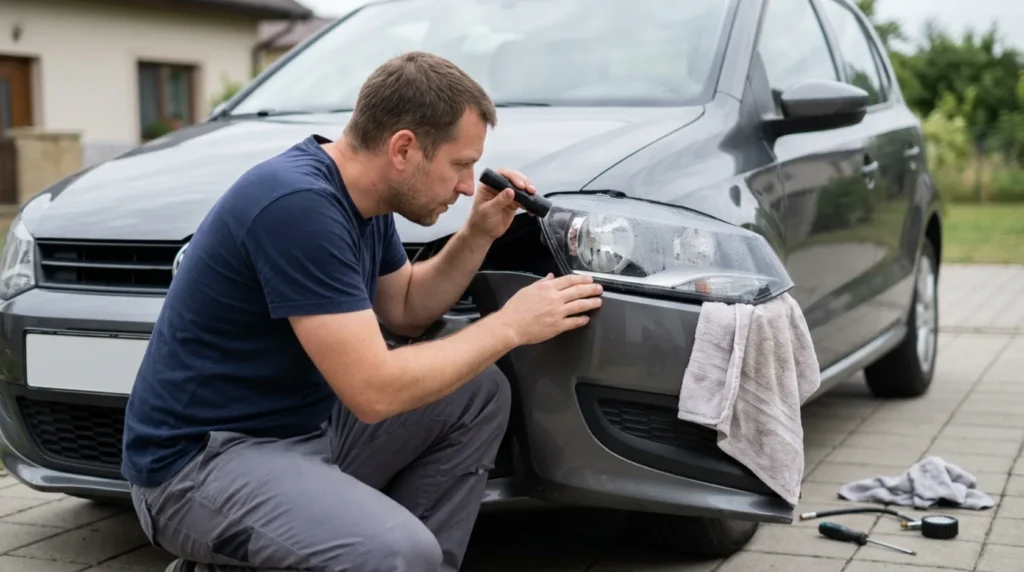
Headlight fogging from inside usually comes from poor housing ventilation, a loose rear cap, weakened seals, or a crack through which moisture enters. Not every light fogging is the same problem as droplets and water that pools at the bottom of the headlight. First you need to separate normal brief condensation from actual water intake.
All you need is to safely approach the headlight on a cool vehicle and remove or check accessible caps without breaking mounting brackets. It also helps to track under which conditions the fogging appears: after washing, rain, or every drive.
⚠ Safety note: This guide involves working with electricity, plumbing. If you're not completely sure about every step, stop and call a licensed professional. Before you start, always switch off the power at the breaker or close the main water/gas valve.
1 Cool down the vehicle and look at the actual headlight condition

Don’t inspect the headlight right after a long drive when it’s still hot, because steam and temperature difference can be deceiving. Wait for the assembly to cool down and then check whether you’re dealing with light fogging, droplets, or actual water inside. This distinction is important for your next steps.
2 Check the caps, ventilation, and seals
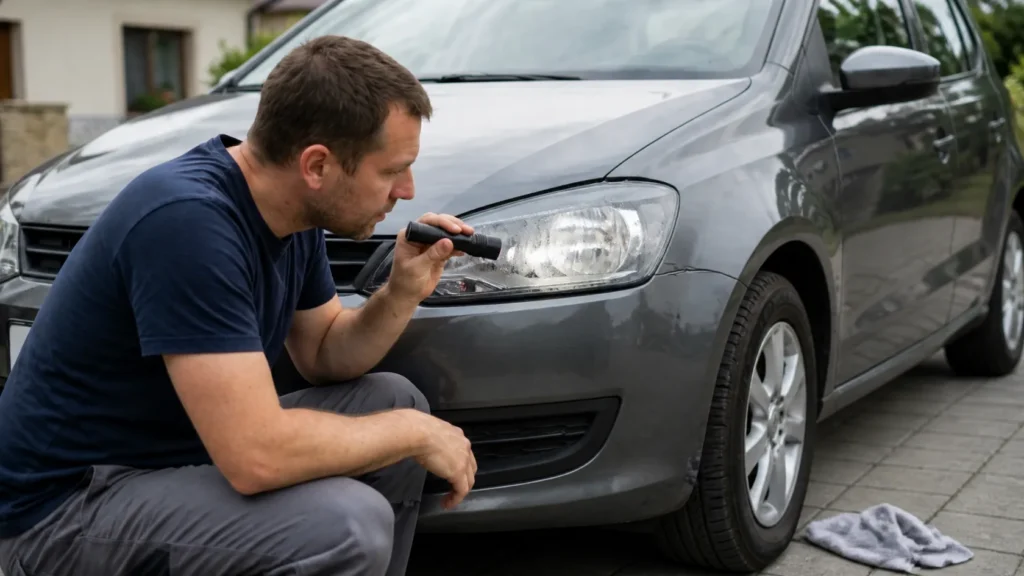
Check the rear caps, ventilation openings, and rubber seals on the headlight. If any cap doesn’t fit properly or the seal is hard and cracked, moisture gets an easy way in and a hard way out. This is often where the cause lies, and you won’t see it from the outside unless you look for it specifically.
3 Find the highest point where moisture is entering
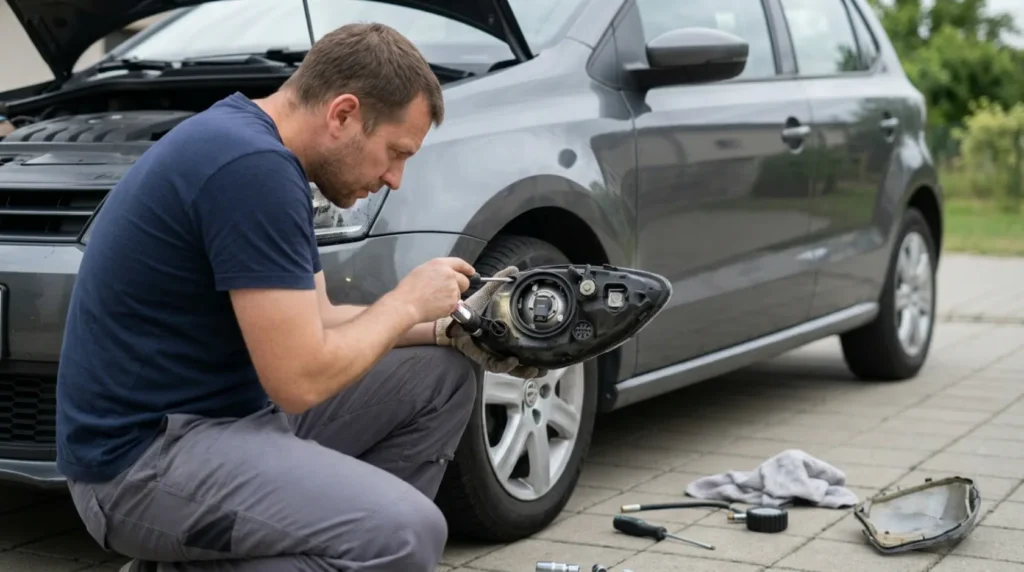
Look for traces of drips, water lines, or dirty streaks that show where the moisture is coming from. Don’t just focus on the bottom of the headlight, because water often shows the consequence at the bottom while the cause is higher up near the cap or housing joint. That’s important so you don’t seal the wrong place.
4 Dry out and fix one confirmed cause
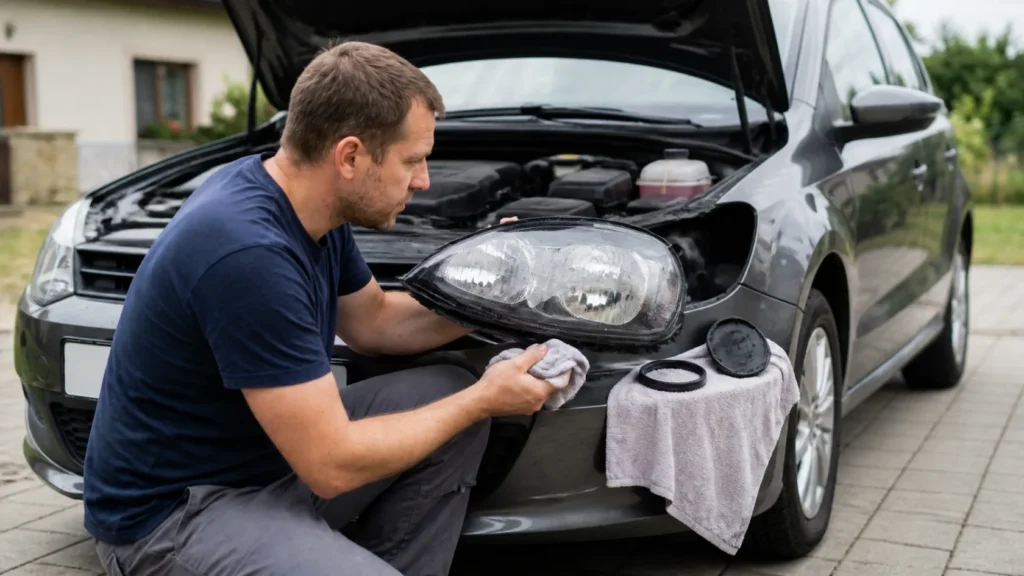
First dry the headlight as safely as you can and fix what you’ve actually confirmed: a bad cap, seal, or accessible ventilation opening. Don’t start sealing everything with silicone if you don’t know where the headlight actually needs to breathe. Bad improvisation will only trap moisture inside.
⚠ Warning: If there are droplets or a puddle of water in the headlight, or if you see cracks in the housing and lens joint, don’t settle for temporary drying. Then the problem calls for more serious repair or assembly replacement.
5 Monitor the headlight over a few days of driving
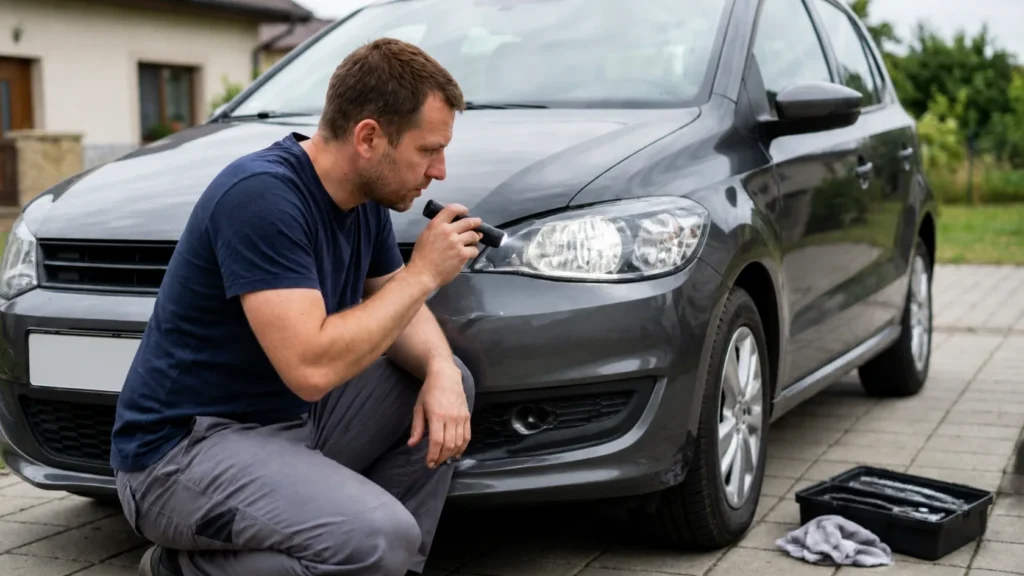
Watch the headlight over the next few drives and different conditions, especially after nights, rain, or washing. If it stays clear and without new droplets, the correction likely hit the cause. If water comes back every time, you need to look for a crack or deeper housing problem.
When to call a professional: If the job involves changes to the electrical panel, the main gas line, or load-bearing walls/beams — or if you're not sure how it will turn out — this is not a DIY task. Hire a licensed professional.
Final check
- Light temporary fogging has been distinguished from actual water intake into the headlight.
- Caps, ventilation openings, and seals have been checked as the most common entry points for moisture.
- Ventilation that the headlight needs for normal operation has not been carelessly sealed.
- Over the next few drives the headlight stays clean or at least the same amount of moisture does not return.
Common problems
- The headlight dries, but it fogs up again after the first wash.
- This usually means the cause of moisture entry hasn't actually been fixed but the headlight was just temporarily dried. You need to go back to the caps, seals, and cracks.
- Everything is sealed with silicone, and the headlight still retains moisture.
- If you seal what also needs to breathe, moisture stays trapped inside. A headlight needs to be both sealed and properly ventilated, not just 'glued shut'.
- Fogging is called normal even though there are droplets of water inside.
- Droplets and retained water are not the same as brief fogging. This already indicates actual water intake, not just temperature difference.