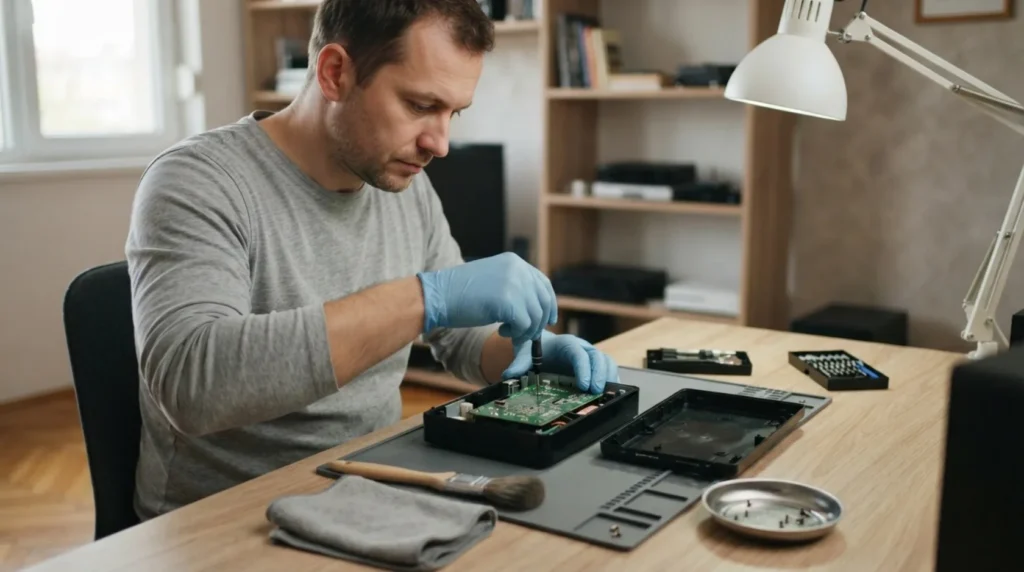
⚠ Safety note: This guide involves working with electricity. If you're not completely sure about every step, stop and call a licensed professional. Before you start, always switch off the power at the breaker or close the main water/gas valve.
1 Prepare for safe work
Turn off the device, unplug the charger, and remove the battery if it’s user-replaceable. Save your data when you can, and don’t open power supplies, screens, or capacitor circuits.
⚠ Warning: Remove leaking batteries with gloves. Don’t mix old and new batteries or different chemical types.
2 Check the basics first
Verify the polarity, date, and voltage of the new batteries, and clean the springs and contacts with a dry cloth or isopropyl alcohol.
3 Test the most likely cause
Use your phone’s camera to watch the infrared LED while you press a button; flickering means the remote is sending a signal.
4 Apply the right fix
If it’s sending a signal, re-pair a Bluetooth remote or check the device’s sensor; if it’s not sending, clean any stuck buttons without breaking open the case.
? Tip: Take a photo of the starting state and change only one thing at a time so you know exactly which check actually fixed the problem.
5 Test the result and know your limits
Put the parts back together and test with only one change at a time. Watch for lights, sounds, or error messages; overheating, smoke, smell, or a swollen battery means stop immediately.
When to call a professional: If the job involves changes to the electrical panel, the main gas line, or load-bearing walls/beams — or if you're not sure how it will turn out — this is not a DIY task. Hire a licensed professional.