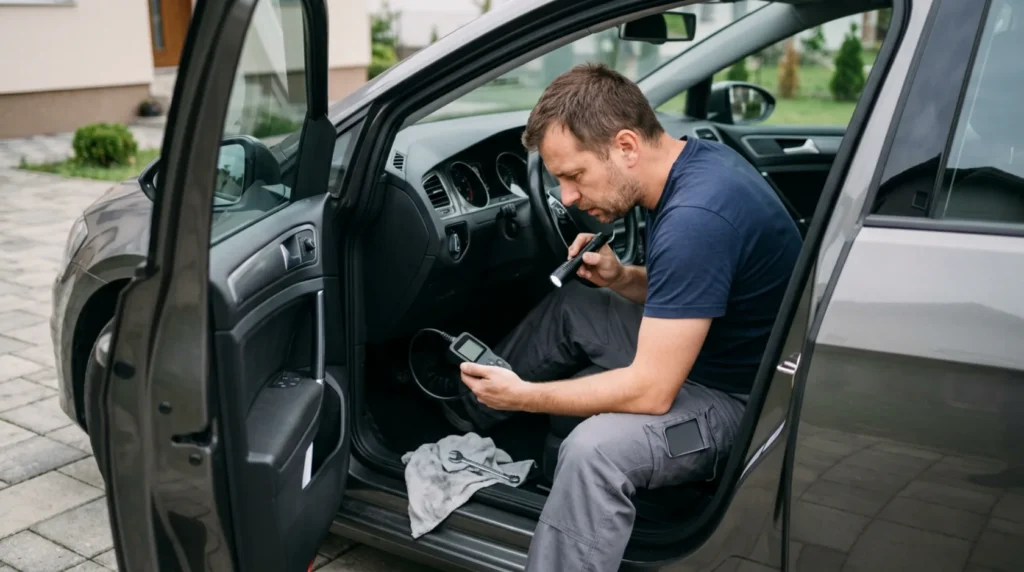
Reading an OBD2 error code without clearing it requires some discipline, because the easiest mistake is precisely to delete the code prematurely and lose the lead that was supposed to help the diagnostics. A code is not automatically a verdict for a single part, but an entry point into a system reporting a problem. This guide therefore emphasizes what to save before any reset and how to read the fault without causing additional damage to the diagnostics.
You should know how to find the OBD2 port and use a reader that is compatible with the vehicle without randomly clicking clear options. It is also useful to distinguish active, stored, and pending codes, because they do not mean the same thing at the time of inspection.
1 First prepare the vehicle and reader without rushing
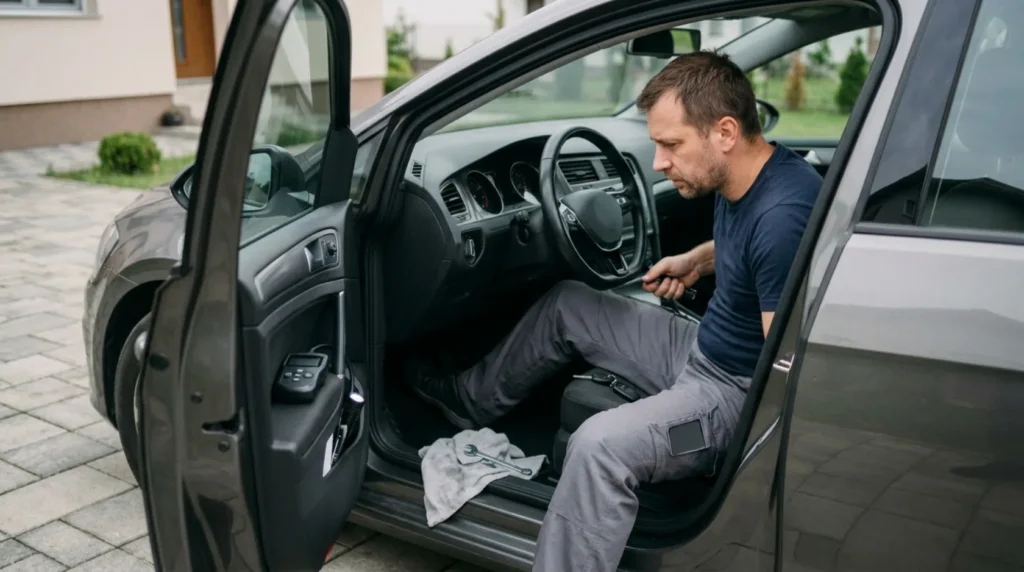
Park safely, turn off the engine, and prepare the reader before turning on the ignition. The goal is not just to ‘see some code’, but to preserve a clean first overview. If you work in a rush, it is very easy to click the wrong option and delete the very reason you connected the diagnostics in the first place.
2 Connect the reader and enter code reading only

When you turn on the ignition as requested by the device, go directly to reading errors and avoid options like `clear`, `erase` or `reset`. Many cheaper devices offer these commands very early in the menu. For this step, you are only interested in reading, not intervening.
3 Save active, stored, and pending codes

Do not write down only one main code if the device displays multiple statuses. Active, stored, and pending codes together often give a more meaningful picture than a single code taken out of context. A photo of the screen or a manual record of all markings here is worth more than relying on memory.
4 Be sure to record freeze-frame data
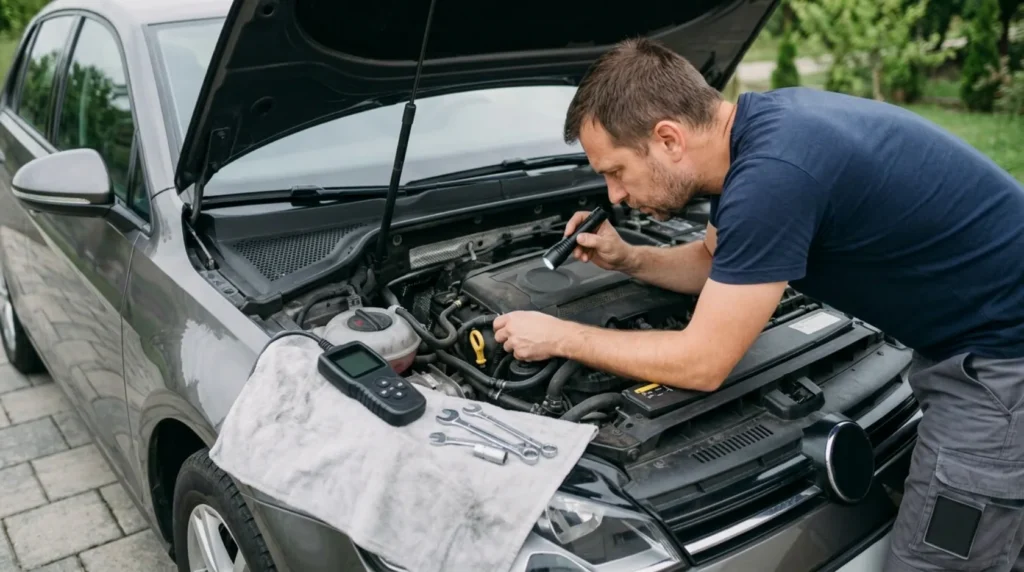
If the reader supports freeze-frame, write down or take a picture of the data about speed, temperature, load, and other conditions in which the error appeared. Exactly those data often show whether the problem occurs on a cold engine, under acceleration, at idle, or under a specific load. Without them, the code remains too general.
Warning: If you see codes related to braking, steering, overheating, oil pressure, or serious engine operation after reading, do not treat the vehicle as if it is just a light. Then further driving can cause greater damage or a safety risk.
5 Interpret the code as a lead to the system, not as an automatic part replacement
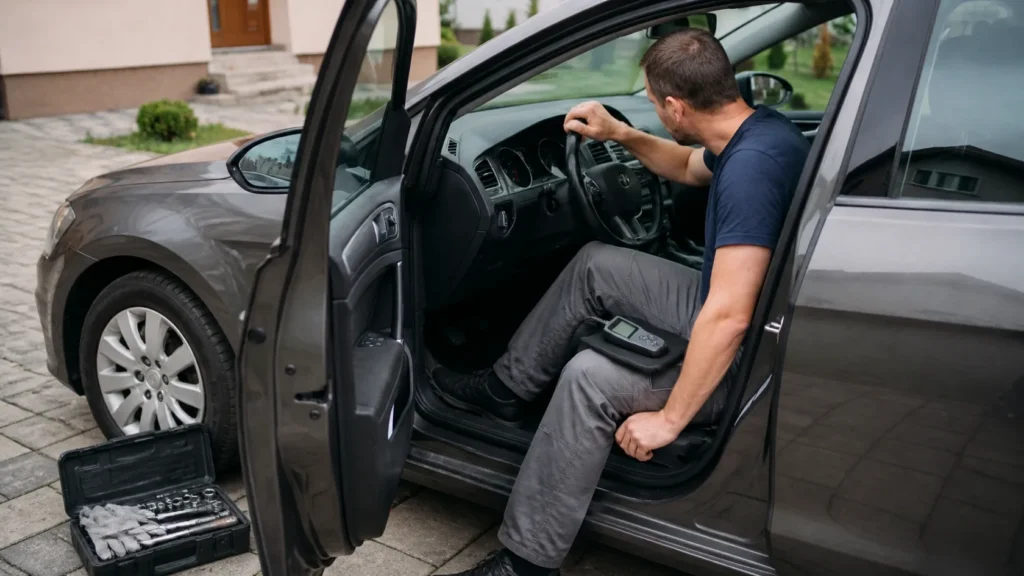
When you read a code, do not immediately conclude that the named sensor or component is definitely for replacement. The code often reports that the system detected a problem in that circuit, and the cause could be a connector, power supply, vacuum, mechanical condition, or something else. Good diagnostics starts with reading, but does not end with it.
Final check
- Codes are read without entering clear or reset options.
- Active, stored, and pending codes are recorded if displayed.
- Freeze frame data is saved before any further intervention.
- The code is used as a lead to the system, not as an automatic verdict for a single part.
Common problems
- The error is read, but immediately cleared out of habit.
- This often loses the most useful lead before anything is actually diagnosed. First save all data, then decide about the reset later.
- Only one code is written down without status and freeze-frame data.
- This leaves too many gaps in the picture of the failure. Code status and conditions of occurrence often mean almost as much as the alphanumeric marking itself.
- A new sensor is immediately bought based on the code name.
- The code usually describes the affected circuit or system, it does not guarantee that the part itself is physically faulty. Without additional checks, a good part is easily replaced.