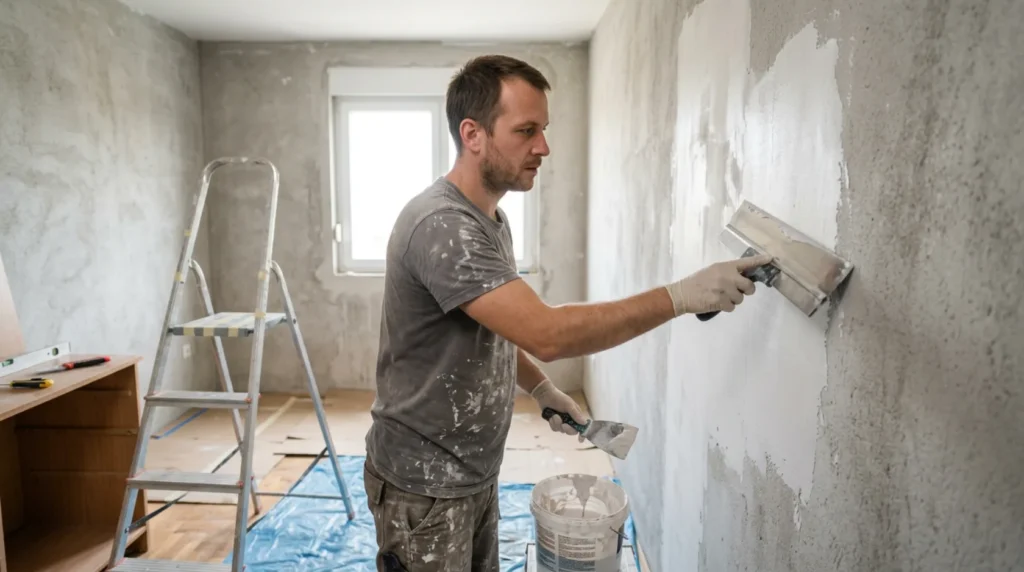
1 Prepare safe work
Protect the floor and furniture, switch off hidden installations in the drilling or cutting zone, and check the moisture and load-bearing capacity of the substrate. Wear dust protection and work on a stable surface.
⚠ Warning: Old paints may contain hazardous substances. Do not sand an unknown coating without assessment and proper protection.
2 Identify the pattern of the problem
Remove dust, weak layers, and grease, fill larger holes, and apply the right primer to an absorbent wall.
3 Check the most common cause
Mix a smaller amount of filler without lumps, apply a thin first coat with a wide trowel, and do not try to level deep holes all at once.
4 Apply the right solution
After drying, sand lightly while vacuuming, remove the dust, and apply the finishing coat at a cross angle.
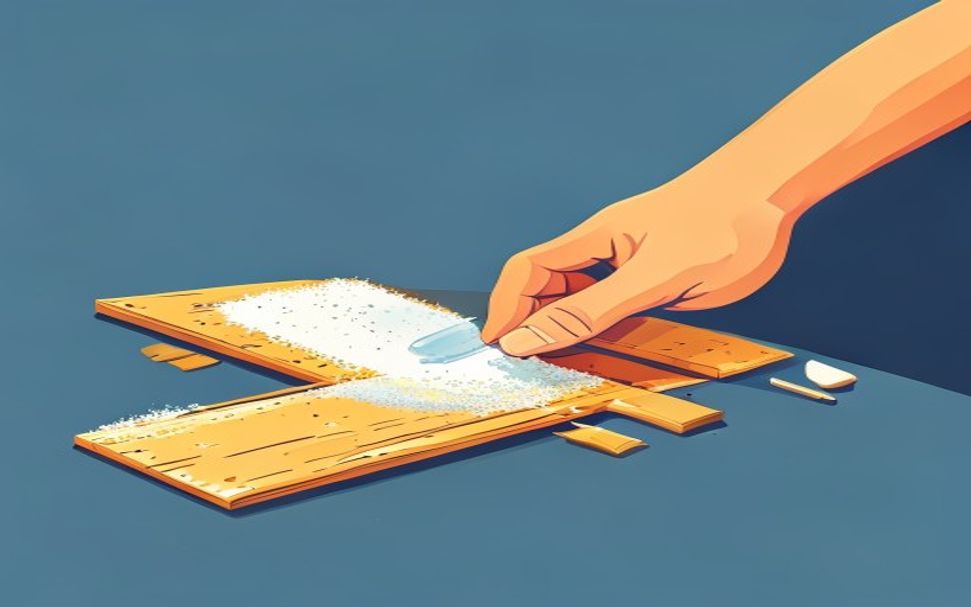
? Tip: Photograph the initial state and change only one thing at a time so you know which check actually affected the result.
5 Test the result and set a boundary
Let the material dry or cure for the full time on the label, then check flatness, adhesion, and cracks in side light. Do not cover active moisture or a structural problem with the finish coat.