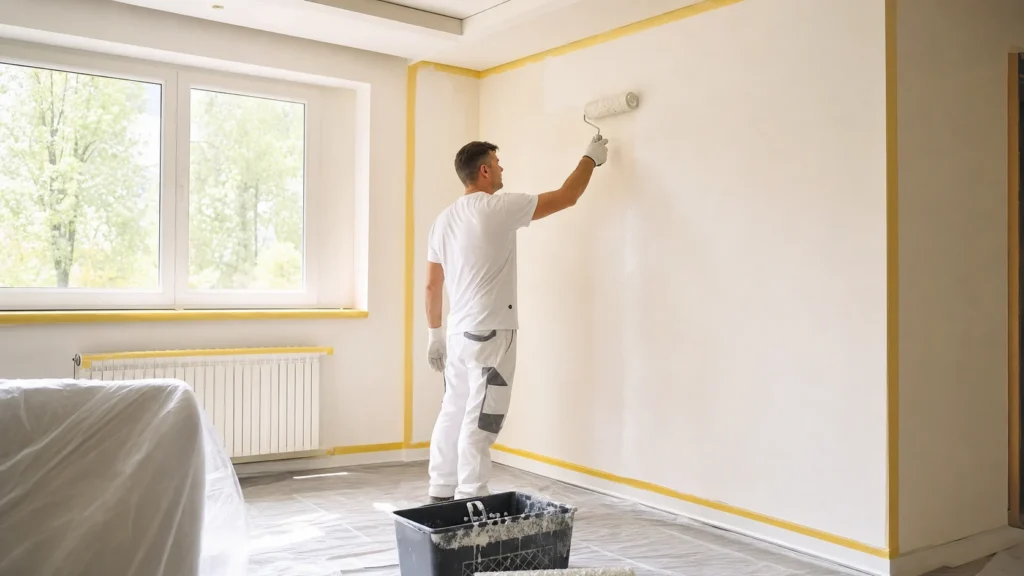
Painting is the most cost-effective way to make a room look new, and it is a job that anyone can do themselves. For an average room, expect one weekend: half a day for preparation and protection, the rest for two coats of paint with drying in between. Remember the rule of all painters – the quality of painting is decided in the preparation, not in the painting itself.
No prior knowledge is required, but patience when taping and preparing the wall makes the difference between an amateur and a clean result.
1 Empty and protect the room
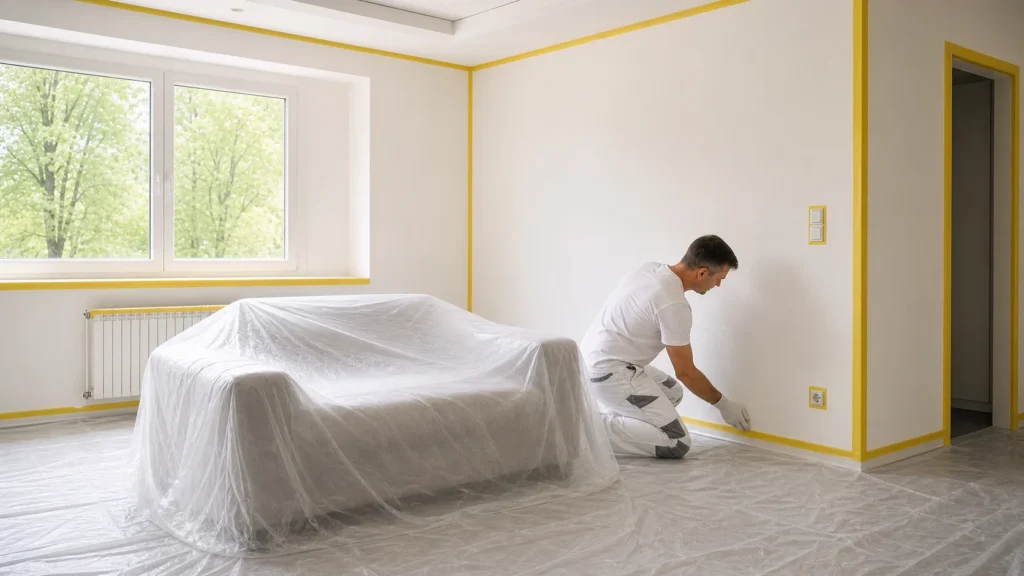
Move furniture to the middle and cover it with plastic sheeting, cover the floor, and apply masking tape around door frames, windows, switches, and outlets.
⚠️ Warning: If you want to remove the covers of switches and outlets for a cleaner paint job, make sure to turn off the corresponding fuse in the fuse box first.
2 Inspect and repair the surface
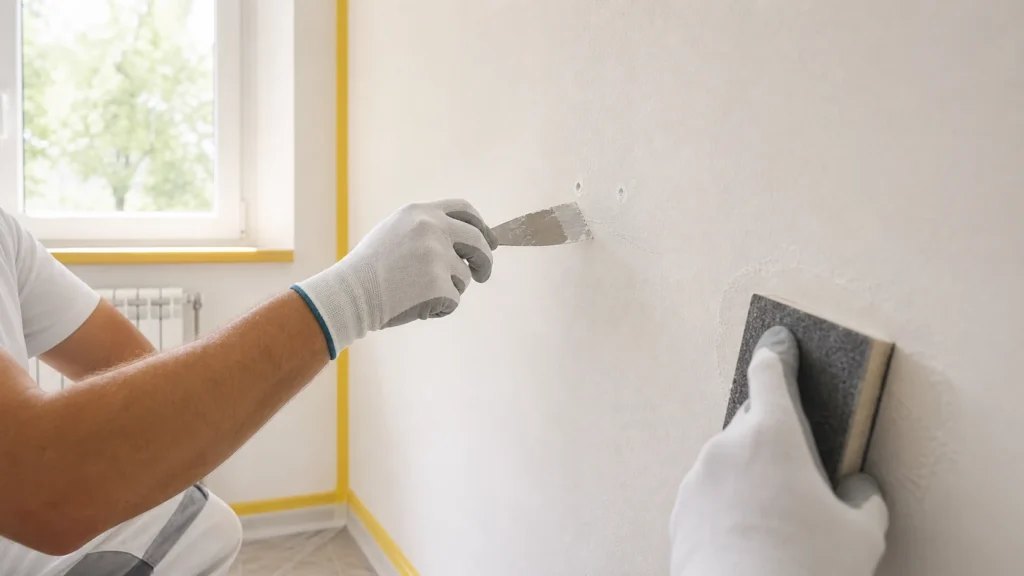
Fill smaller holes and cracks with wall putty, let them dry and sand them, and scrape or sand away loose old paint.
3 Wash and degrease the wall
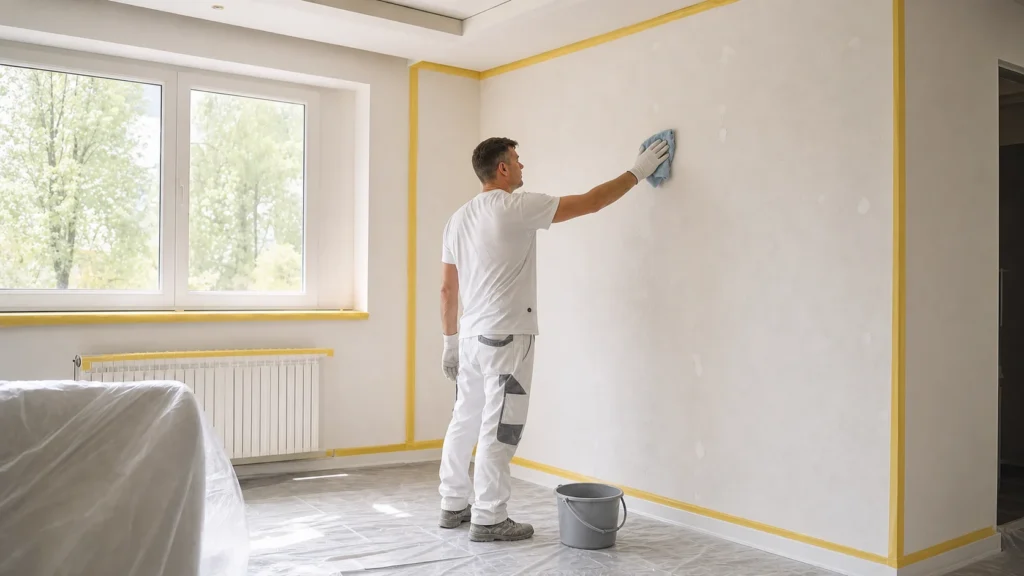
Remove dust, grease, and cobwebs from the wall with a damp cloth or mild cleaner, and leave it to dry completely.
4 Apply primer as needed
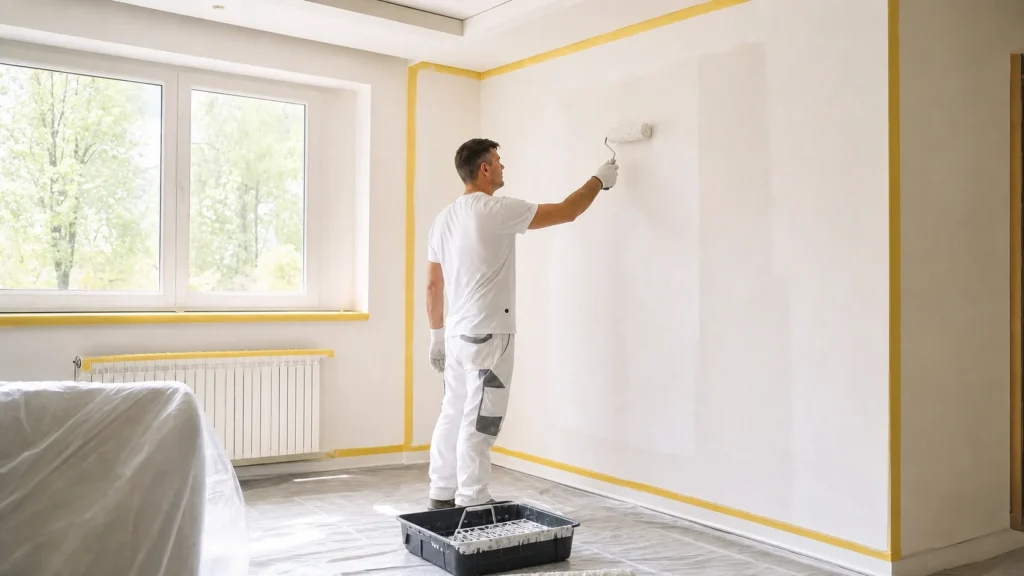
Apply primer on new plaster, repaired spots, or when switching to a significantly darker/lighter color and let it dry according to the instructions.
5 Paint edges and corners with a brush
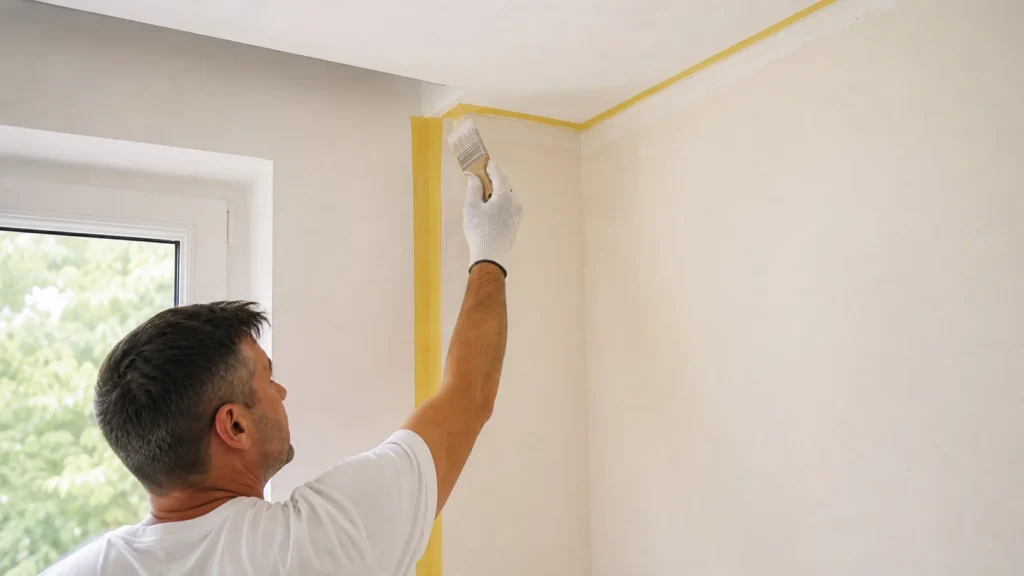
Before rolling, paint the edges along the ceiling, corners, and frames with a brush (so-called ‘cutting edges’) to avoid inaccuracies with the roller.
6 Apply paint with a roller in sections
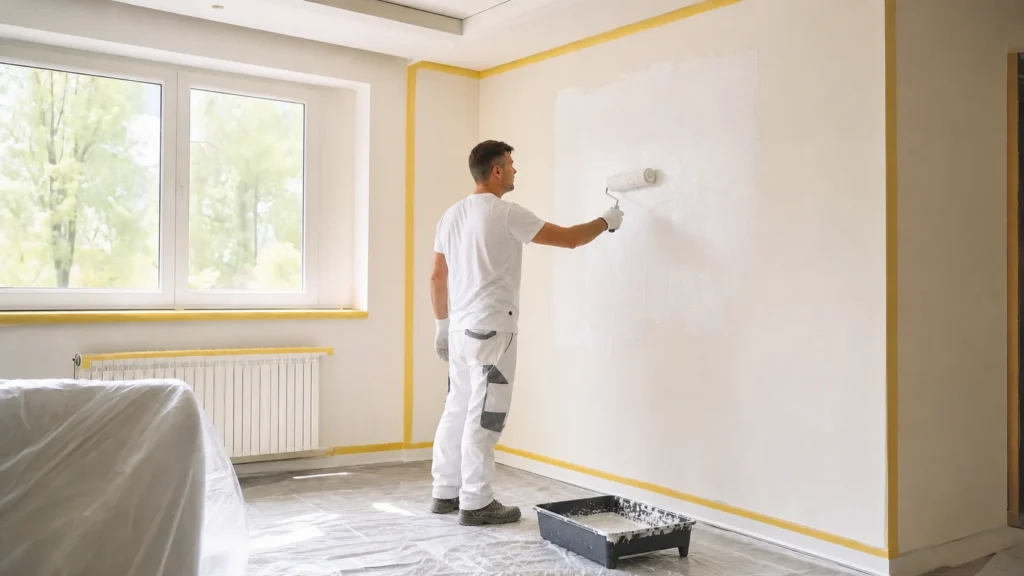
Work in sections of about 1 W or M pattern, spreading the paint in the same direction with a slight overlap, avoiding returning to semi-dry paint.
? Tip: Ventilate the room well during and after painting, but avoid direct drafts while the paint is drying, as drying too quickly can create visible roller marks.
7 Apply the second coat
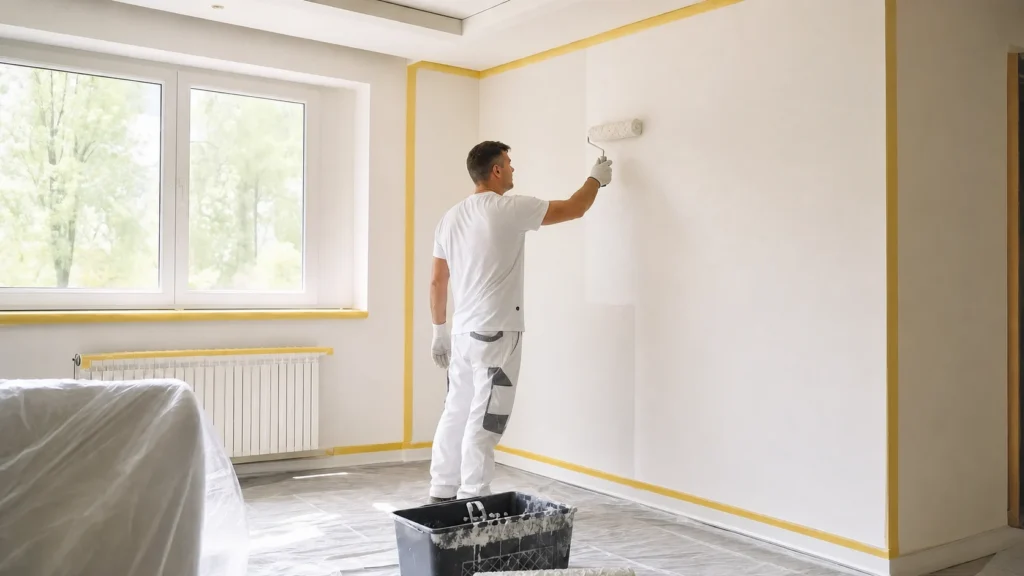
After the first coat is completely dry (usually 4–6 hours, check the label), apply the second coat in the same way for an even, covering color.
8 Remove tape and clean tools
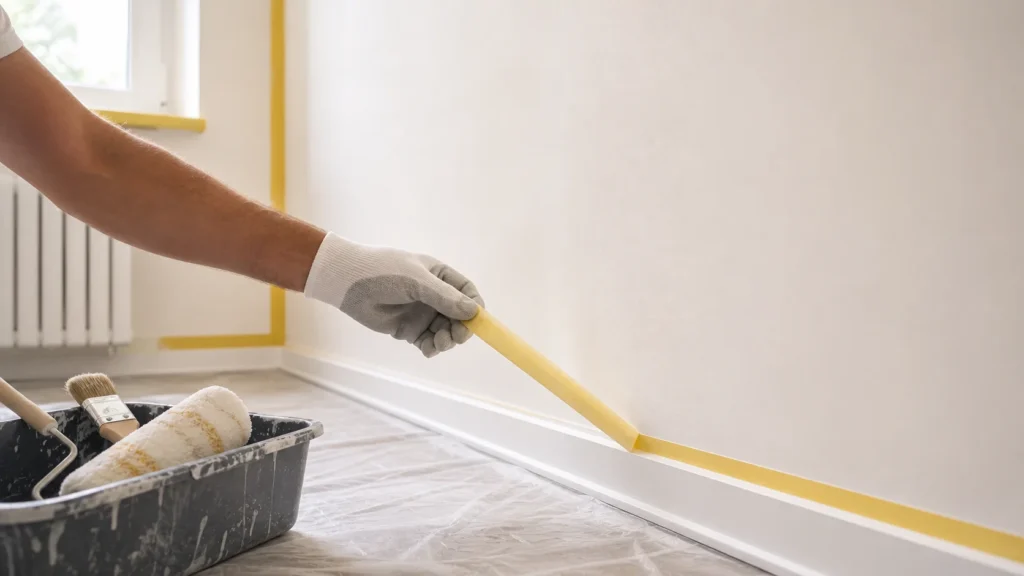
Remove the masking tape while the paint is still slightly wet so the line stays clean and sharp, and wash rollers and brushes immediately with water or solvent according to the paint type.
Final check
- The paint is even across the entire wall without roller marks, streaks, or transparent spots – check in daylight from several angles
- Edges along the ceiling, baseboards, and outlets are straight and sharp, without paint where it shouldn't be
- The second coat is completely dry, and the tape was removed without peeling the edge of the paint
Common problems
- The paint is transparent and spots or the old shade show through underneath.
- Apply another coat only when the previous one is completely dry. For dark spots from moisture or nicotine, apply an insulating primer first, otherwise it will bleed through every layer.
- When removing the masking tape, fresh paint peels off the wall.
- Remove the tape while the paint is still slightly wet, pulling at a 45-degree angle. If the paint is already dry, lightly score the edge of the tape with a utility knife before removing it.