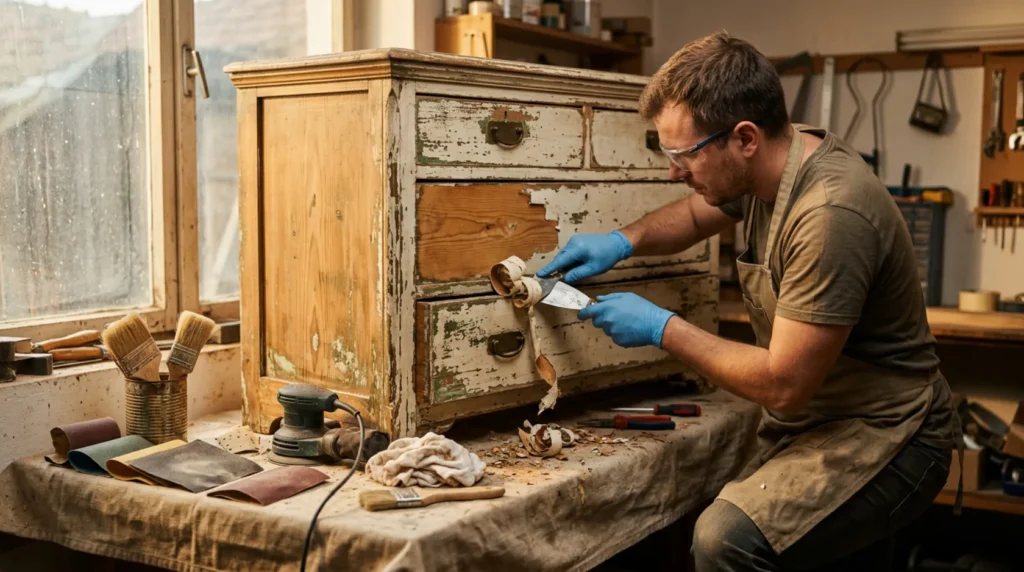
1 Prepare for safe work
Photograph the item, check the stability and value, and first test the procedure on a hidden spot. Work with ventilation, gloves, and eye and respiratory protection.
⚠ Warning: Old coatings can contain lead, and a valuable antique can lose its value through improper cleaning. Have an unknown coating and serious structural damage assessed by a restorer first.
2 Determine the condition and cause
Determine the type of wood and coating and test on a hidden part. For very old paint, perform a lead test before sanding or heating.
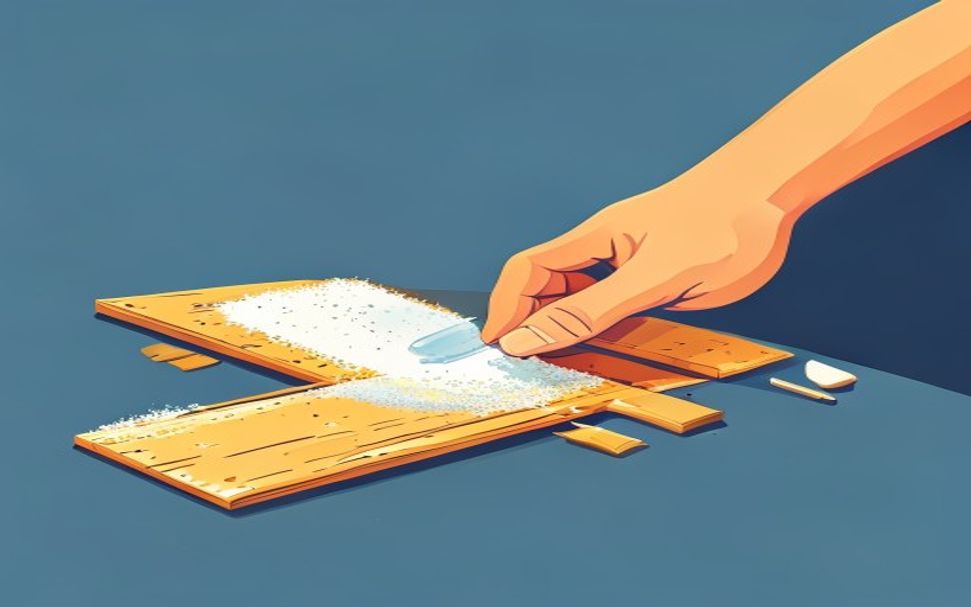
3 Perform the key check
Start with the least aggressive method: a scraper, controlled heat, or a dedicated remover according to the label and with ventilation.
4 Do the repair or maintenance
Work in small zones in the direction of the grain, neutralize the surface if the product requires, and let the wood dry completely before sanding.
? Tip: Photograph the initial state and change only one thing at a time. This makes it easier to determine what really solved the problem.
5 Test the result
Let the glue, coating, or finish dry completely according to the manufacturer, then gradually load the item and inspect the joints under good light.