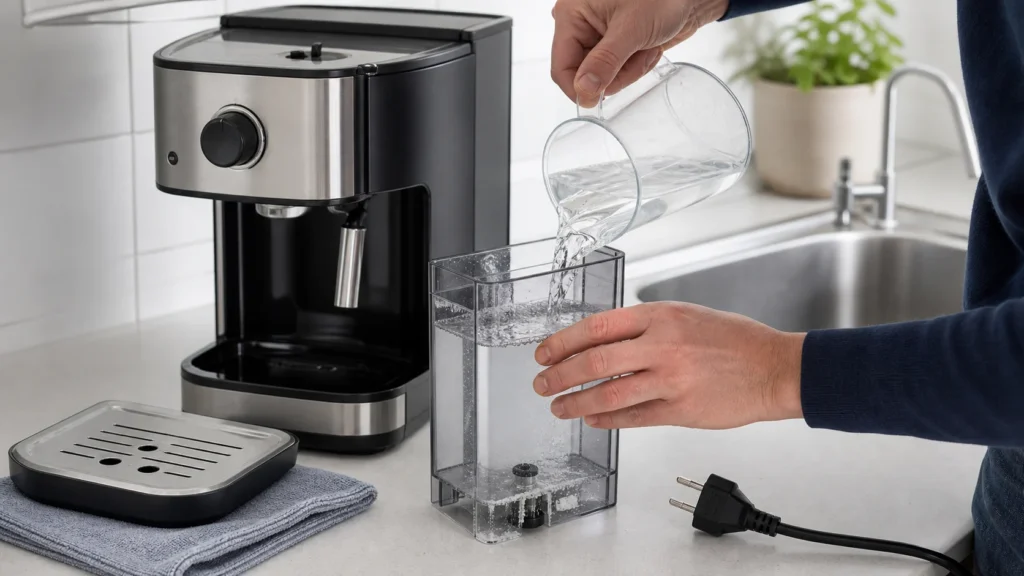
A coffee maker that runs slower, gets noisier, or changes the taste of the drink often just needs descaling, not servicing. Limescale builds up gradually, so people tend to put up with weaker performance for a long time before connecting cause and effect. Good descaling isn't just 'run some vinegar through the machine' — it's about getting the agent, the soak time, and enough rinsing afterward right.
No special knowledge is needed, but it helps to know which type of machine you have and whether the manufacturer requires its own program or agent. On espresso models with a dedicated cycle, always follow that model's instructions first.
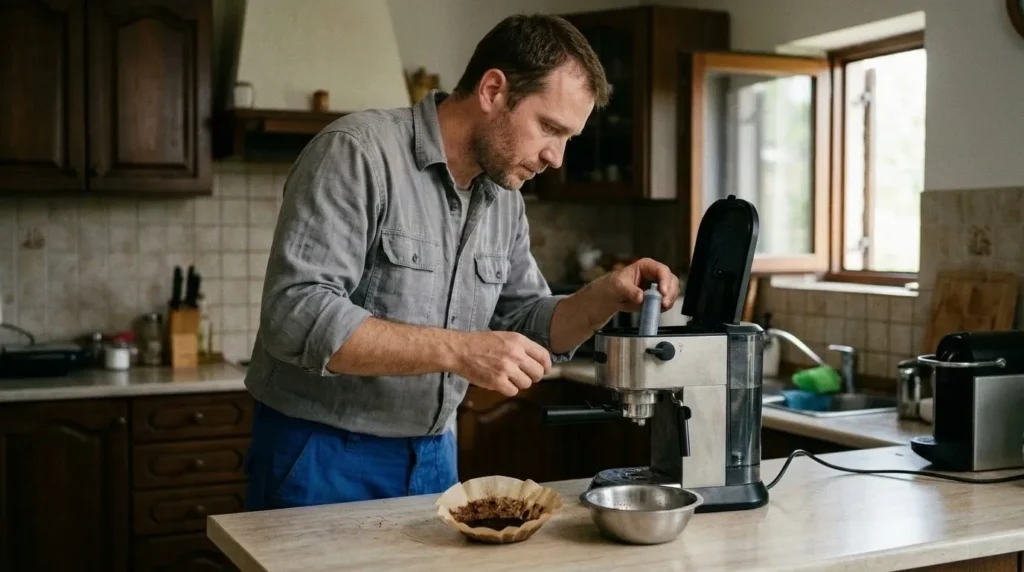
1 Remove coffee residue and temporarily take out the water filter
Before using a descaling agent, remove the grounds, the paper filter, and any water cartridge that shouldn't sit in the solution. That way you avoid dirt from one part of the machine masking a problem that's actually somewhere else.
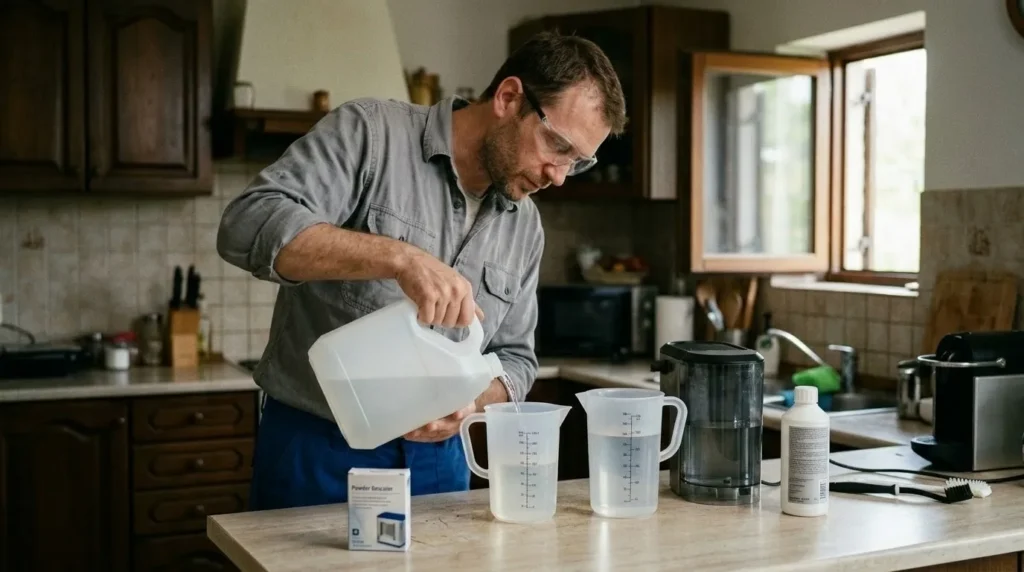
2 Choose the agent according to the type of machine
Simple drip machines often tolerate a milder homemade solution, while espresso and pricier automatic models do much better with a dedicated descaling agent and a built-in program. The worst combination is the wrong agent and insufficient rinsing, because then the machine works, but the coffee stays undrinkable in taste.
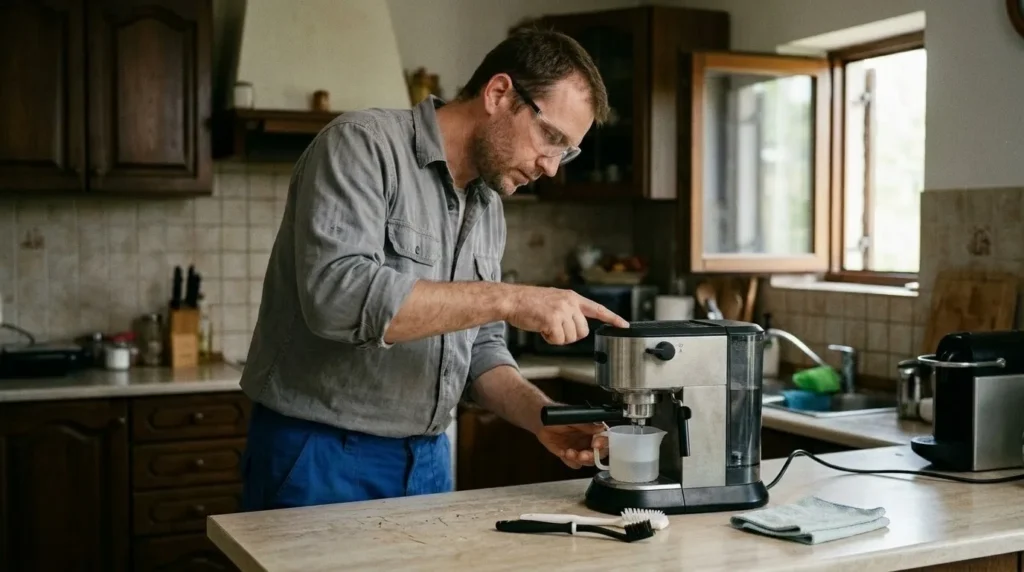
3 Let the first part of the solution run through the system without rushing
Let the solution pass through the machine without coffee in the system, but you don't always have to finish the full cycle right away. For heavier buildup, a short run followed by a pause is often more effective than one quick rinse that only wets the limescale.
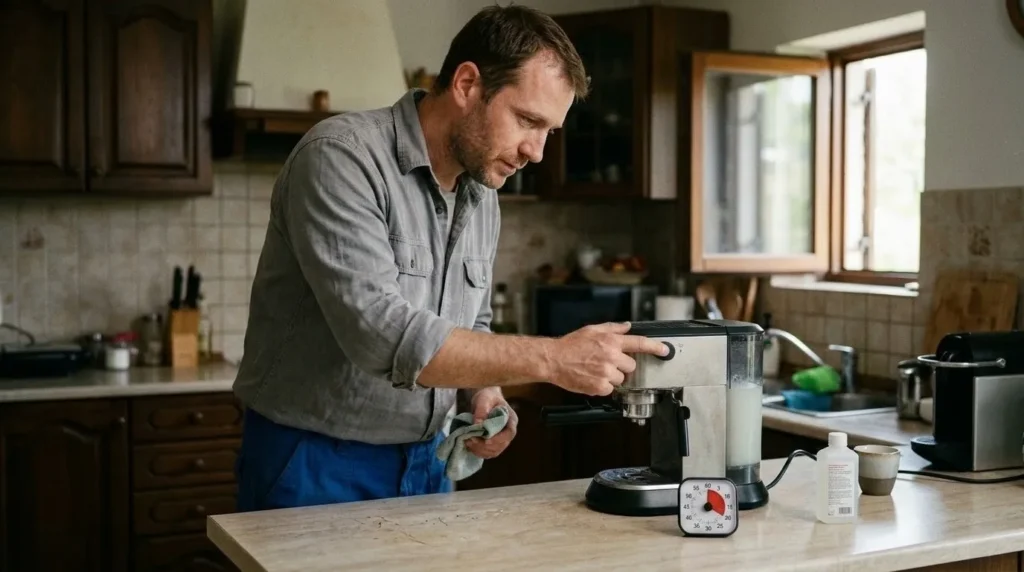
4 Give the agent time to dissolve the deposits
The rest period between parts of the cycle is exactly what attacks the limescale from within, not just the flow of liquid. If everything goes too fast, the machine is formally rinsed, but the deposits stay firm enough for the problem to come back very quickly.
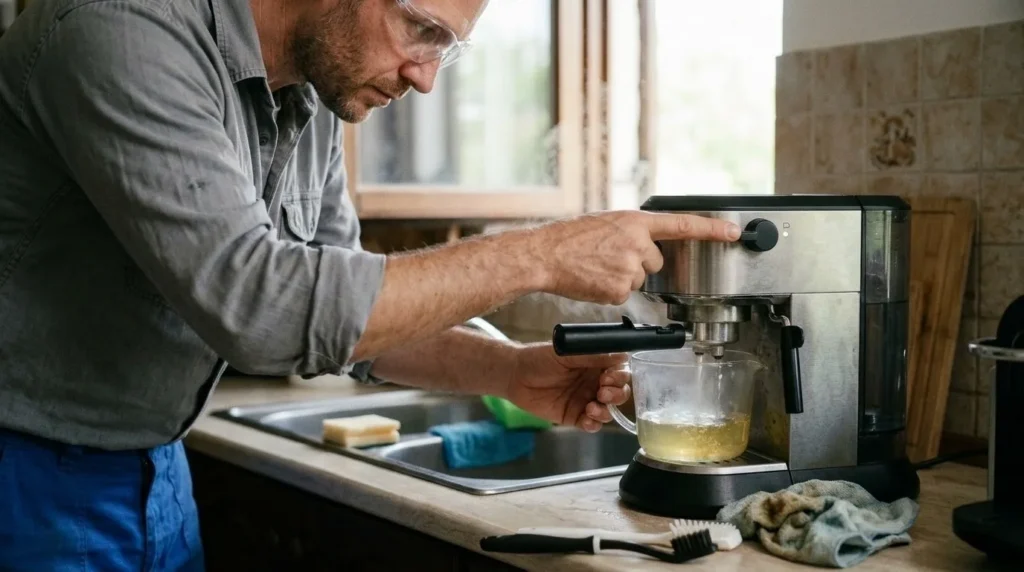
5 Finish the cycle and watch the flow rate
As the rest of the solution passes through the system, watch whether the liquid flow improves and whether the sound of the pump or heating element seems more even. That's a useful practical sign that limescale really was part of the problem.
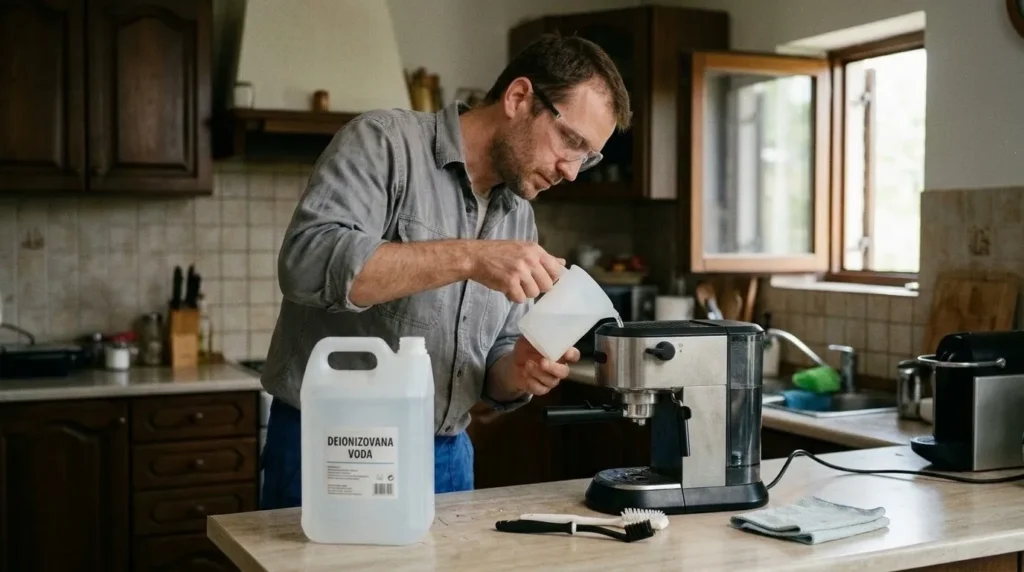
6 Rinse with clean water more times than feels necessary
After descaling, the machine needs to run several full cycles of clean water until the smell and taste of the agent are gone. This is where people cut the process short the most, and then wrongly conclude that the machine 'makes worse coffee after cleaning.'
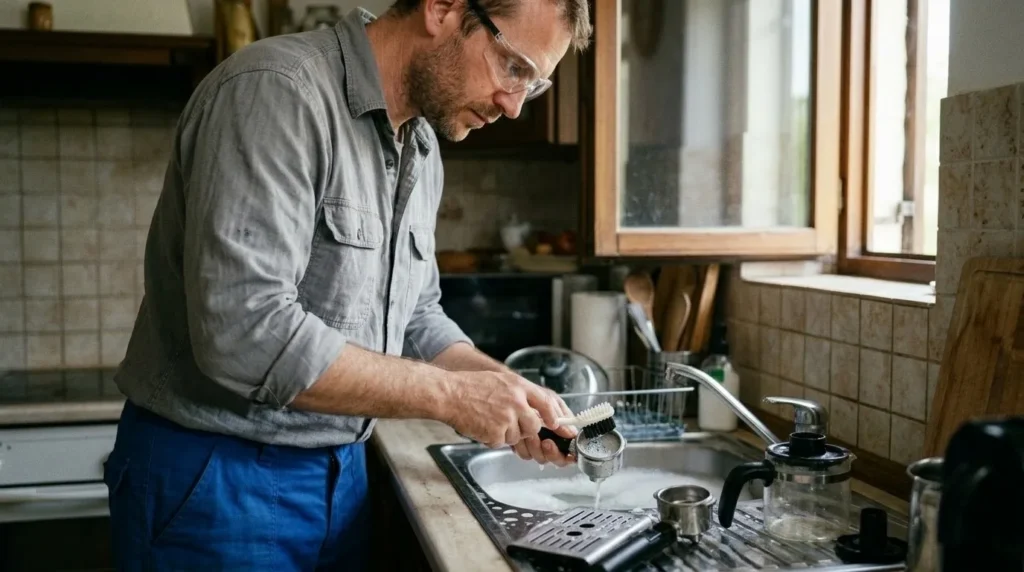
7 Wash the removable parts as a separate job
The carafe, filter holder, grates, and drip tray are washed separately with warm water and mild detergent, because limescale isn't the only impurity in the machine. Leftover grease and coffee oils also affect taste and smell.
8 Put the water filter back and check the taste of the first brew
Once done, put back the new or existing water filter if the model uses one, then brew a test coffee. Only then does it make sense to judge whether the speed, taste, and operation of the machine are back to normal.
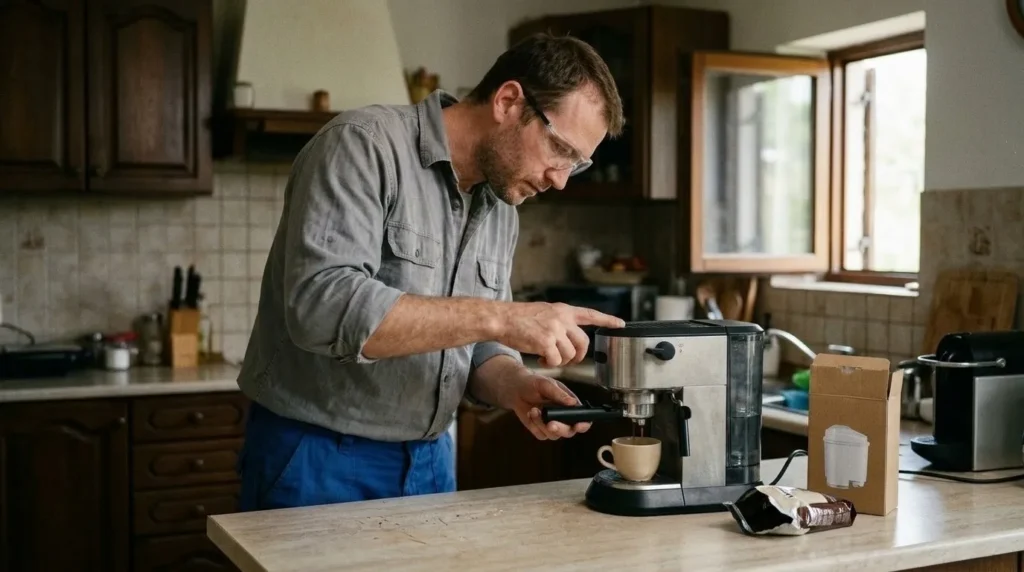
Final check
- Water and coffee flow more evenly, without the slowdown that existed before cleaning.
- There's no residual smell or taste of descaling agent in the machine.
- The removable parts are washed and put back dry and clean.
- The water filter has been put back or replaced if the model required it.
Common problems
- After descaling, the coffee has a strange taste or smell.
- That almost always means the system wasn't rinsed enough. Run a few more full cycles of clean water before judging the result.
- The flow is still slow even after cleaning.
- The deposits may have been heavier than one cycle can handle, or the problem is in another part of the system, such as the nozzles, a valve, or a dirty filter. In that case, repeat the process according to the instructions or consider a service visit.
- The machine has no visible problem, but limescale comes back quickly.
- If your water is hard, the maintenance cycle needs to be more frequent, and a water filter more useful. Prevention here is much easier than waiting for the machine to slow down completely again.