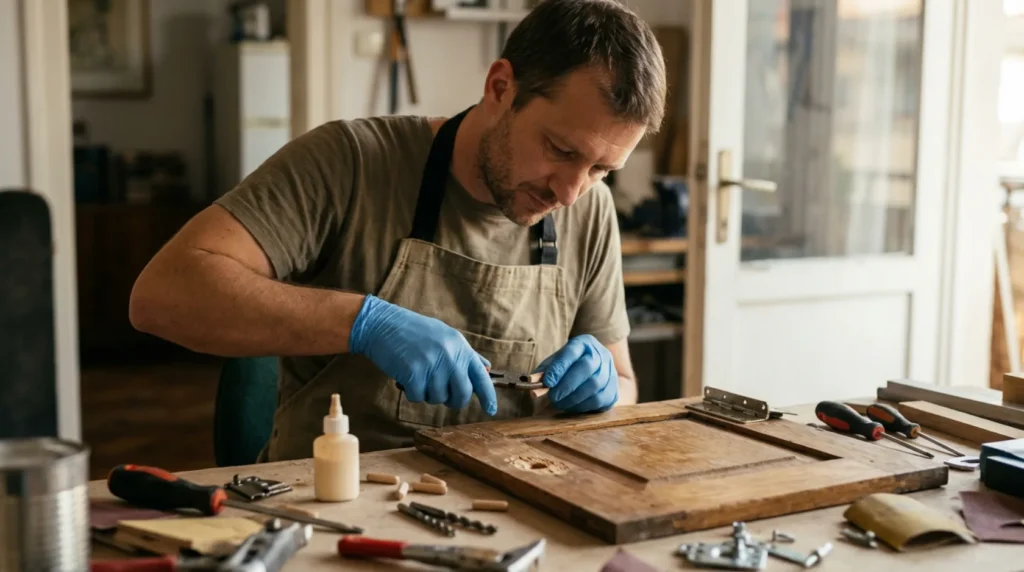
1 Prepare for safe work
Photograph the object, check stability and value, and test the procedure on a hidden area first. Work with ventilation, gloves, and eye and respiratory protection.
⚠ Warning: Old coatings may contain lead, and a valuable antique can lose value with inexpert cleaning. Assess unknown coatings and serious structural damage with a conservator first.
2 Determine the condition and cause
Remove the screw and check that the wood is not cracked or rotten. Determine if the joint carries a shelf, hinge, or a heavy load.
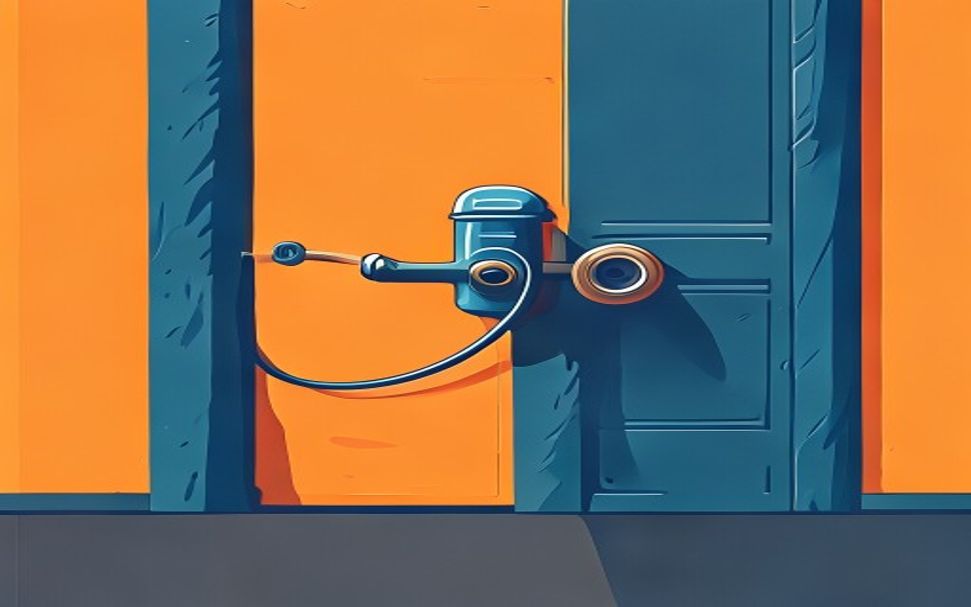
3 Perform the key check
For solid wood, expand the hole properly, glue a wooden dowel, and after drying, cut it flush with the surface.

4 Do the repair or maintenance
Drill a new pilot hole of a smaller diameter and reinstall the corresponding screw. Particle board and heavy joints often require a special insert or plate.
? Tip: Photograph the initial state and change only one thing at a time. This makes it easier to determine what really solved the problem.
5 Test the result
Let the glue, coating, or finish dry completely according to the manufacturer, then gradually load the item and inspect the joints in good light.