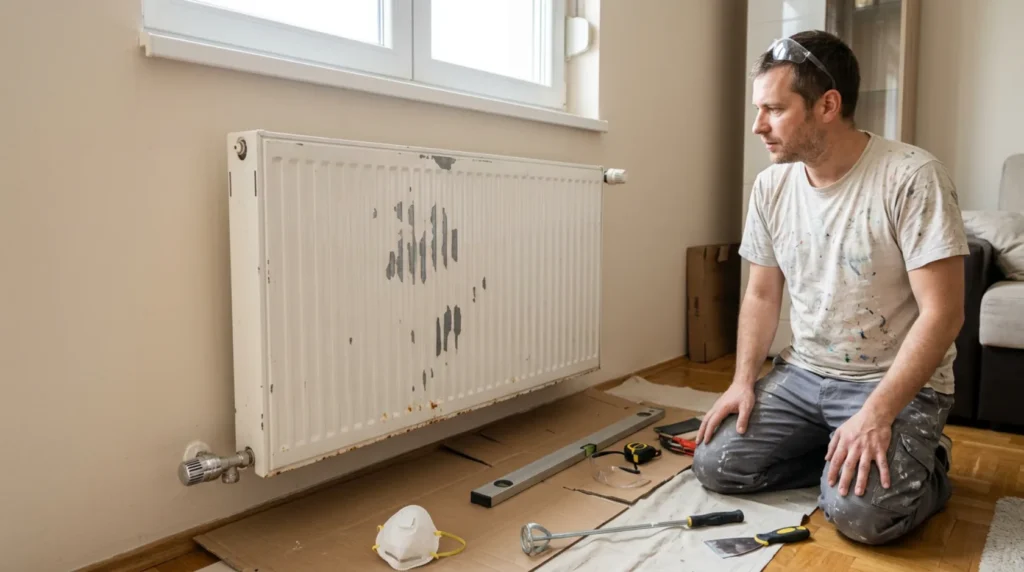
1 Prepare for safe work
Empty and protect the work area, check the base and installations, and use goggles, gloves, and respiratory protection. Mix the material according to the technical data sheet.
⚠ Warning: Do not process load-bearing elements, large cracks, structural moisture, and materials that may contain asbestos without a professional assessment.
2 Determine the condition and cause
Turn off the heating, let the radiator cool down completely, and protect the valve, air vent, wall, and floor.
3 Perform the key check
Degrease the surface, remove loose paint and rust, sand the transitions, and apply an anti-corrosion primer where the metal is exposed.
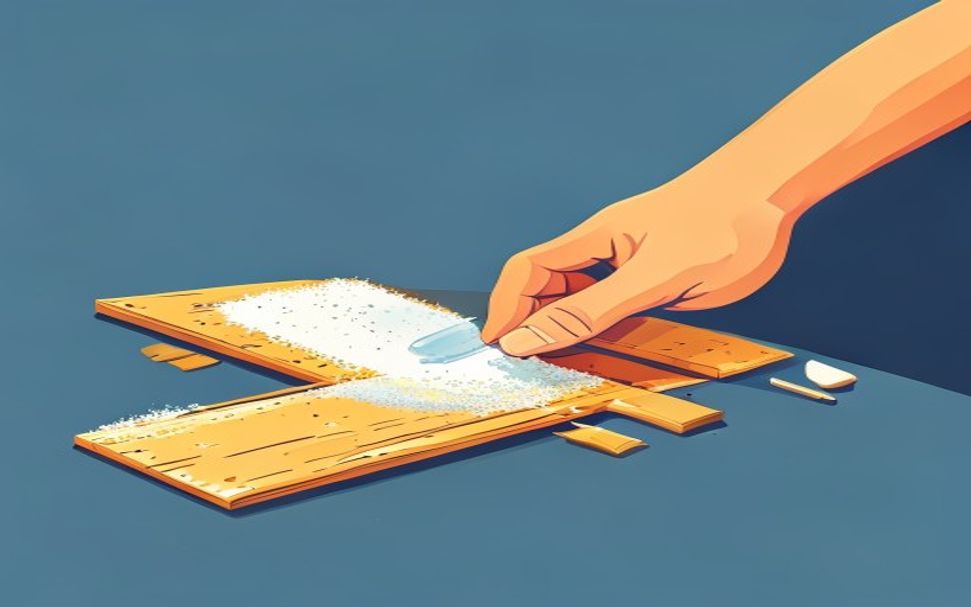
4 Do the repair or maintenance
Apply thin coats of paint designed for radiators, respecting the drying time. Turn on the heating gradually only when the manufacturer allows it.

? Tip: Photograph the initial state and change only one thing at a time. This makes it easier to determine what really solved the problem.
5 Test the result
After the prescribed drying time, check flatness, strength, and edges. Do not load or seal the surface with a top coat until moisture and bonding are within allowable limits.