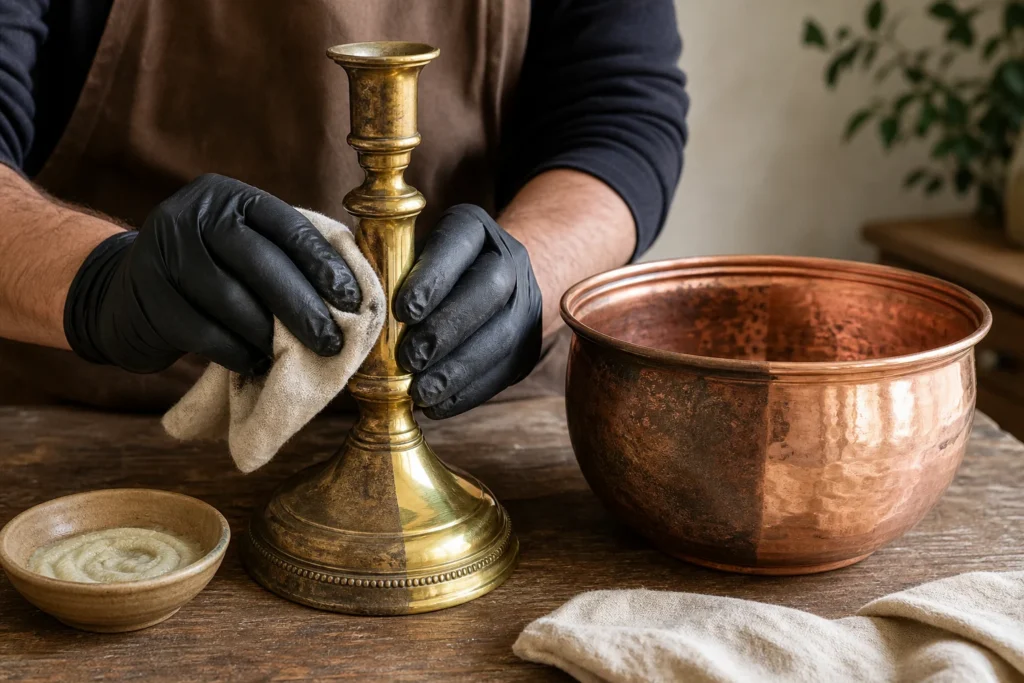
Tarnished brass and copper look neglected, but underneath that dark layer of oxidation lies a warm metallic shine that returns surprisingly easily — often with a simple homemade paste of vinegar, flour, and salt. Throwing away an old brass candlestick or copper pot would be a shame: after an hour or two of washing, polishing, and protecting, the item looks like it came from an antique shop. No expensive tools are needed.
No prior knowledge is needed — this is a job for anyone, with a little patience while rubbing.
1 Determining the metal type and coating
Check if the item is solid brass/copper or only thinly plated (e.g. nickel-plated or lacquered) because more aggressive methods can damage a thin coating – if you are not sure, test in an inconspicuous place.
? Tip: Antique items with an antique patina sometimes have greater value precisely because of that patina – for valuable antiques, consult a restorer first before aggressive polishing.
2 Washing the item
Wash the item with warm water and mild dishwashing liquid to remove dust and grease, then dry it well with a soft cloth.
3 Preparing the polishing paste
Mix equal amounts of flour, salt, and white vinegar (or lemon juice) into a thick paste that will not drip down the item.
4 Applying and rubbing
Apply the paste to the item with a soft cloth or brush and rub gently in circular motions until the oxidation (black or greenish patina) starts to loosen.
? Tip: For hard-to-reach relief details and engraved patterns, use an old soft toothbrush instead of a cloth.
5 Rinsing and drying
Rinse the paste thoroughly with lukewarm water and dry the item immediately with a soft cloth to prevent water spots, especially in recesses and relief details.
6 Additional polishing
For extra shine, use a specialized metal polish applied with a clean cloth, rubbing until the cloth starts leaving fewer black traces.
7 Protection against re-tarnishing
Finally, apply a thin layer of linseed or mineral oil with a clean cloth to slow down re-oxidation and preserve the shine longer.
Final check
- Površina je ujednačeno sjajna, bez tamnih fleka i ostataka paste u udubljenjima i graviranim detaljima
- Predmet je nakon ispiranja potpuno osušen — zaostala vlaga je najbrži put do novog tamnjenja
- Zaštitni sloj (vosak ili lak za metal) je nanešen ravnomjerno i osušen prije vraćanja predmeta na policu
Common problems
- The polishing paste does not work — the item remains dark no matter how much you rub.
- The item is probably not solid brass but only brass-plated, or has an old protective lacquer over the surface. Check with a magnet (real brass and copper do not attract a magnet) and look for peeling lacquer — remove old lacquer first with acetone, and only gently wash plated items and leave them alone.
- The metal is shiny after polishing, but tarnishes again in a few weeks.
- This is natural oxidation on an unprotected surface. After polishing and complete drying, apply a thin layer of microcrystalline wax or clear metal lacquer, and avoid touching with bare fingers — fingerprints accelerate tarnishing.