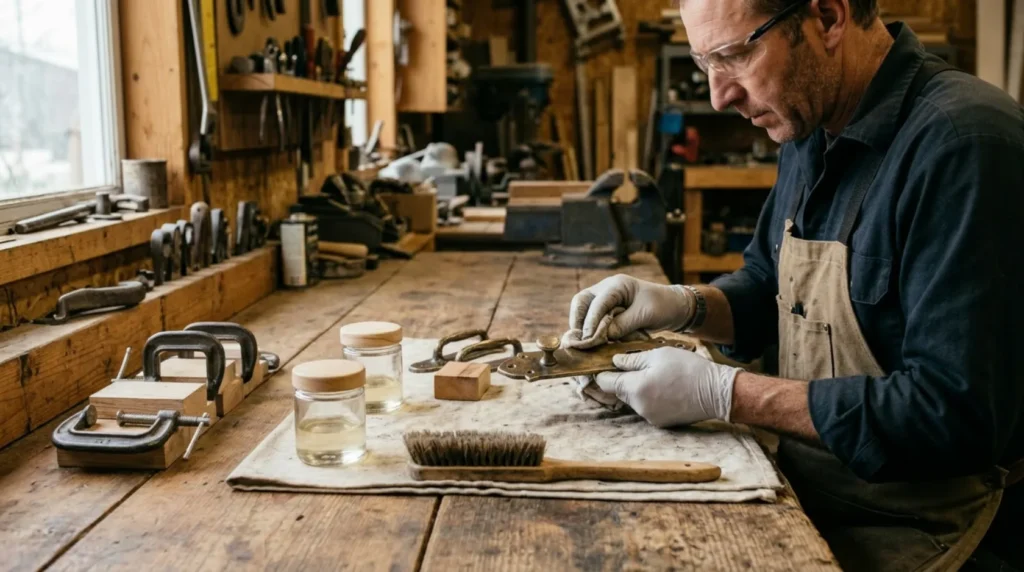
1 Prepare for safe work
Clean the item using a gentle method, photograph the existing patina, and first test the procedure in a hidden place. Work with ventilation and preserve the original parts and fittings.
⚠ Warning: Do not coat dishes, surfaces that touch food, or an item that heats up with a product that is not explicitly approved for that purpose.
2 Determine the problem pattern
Check if the item is solid metal, plated, or factory coated; aggressive polishing of a thin coating can reveal the base metal.
3 Check the most common cause
Clean and polish with a mild specialized agent, remove all residues, and degrease using gloves so no fingerprints remain.
4 Apply the appropriate solution
For a decorative item, apply microcrystalline wax or a compatible clear lacquer in a thin layer and protect it from moisture and salt.

? Tip: Photograph the initial state and change only one thing at a time to know which check really affected the result.
5 Test the result and set a boundary
Allow the glue, filler, or coating to cure completely, then inspect the joint in daylight and side light. The finish should be reversible or at least not unnecessarily remove the original material.