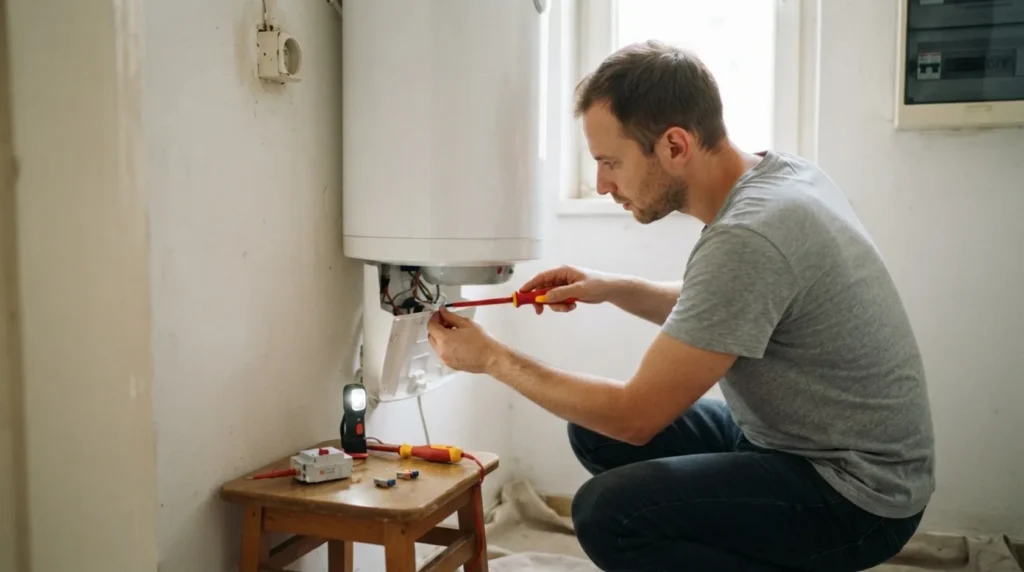
When a water heater trips the breaker or the RCD, that's not a fault you test by resetting the protection device ten times in a row. It matters whether a standard circuit breaker is reacting due to overload or a short circuit, or the RCD due to current leaking to earth.
You need to be able to safely switch off the water heater and understand the difference between a circuit breaker and an RCD. Do any internal electrical checks on the heater only if you genuinely know what you're measuring and why.
⚠ Safety note: This guide involves working with electricity. If you're not completely sure about every step, stop and call a licensed professional. Before you start, always switch off the power at the breaker or close the main water/gas valve.
1 Note which protection device trips and exactly when it reacts
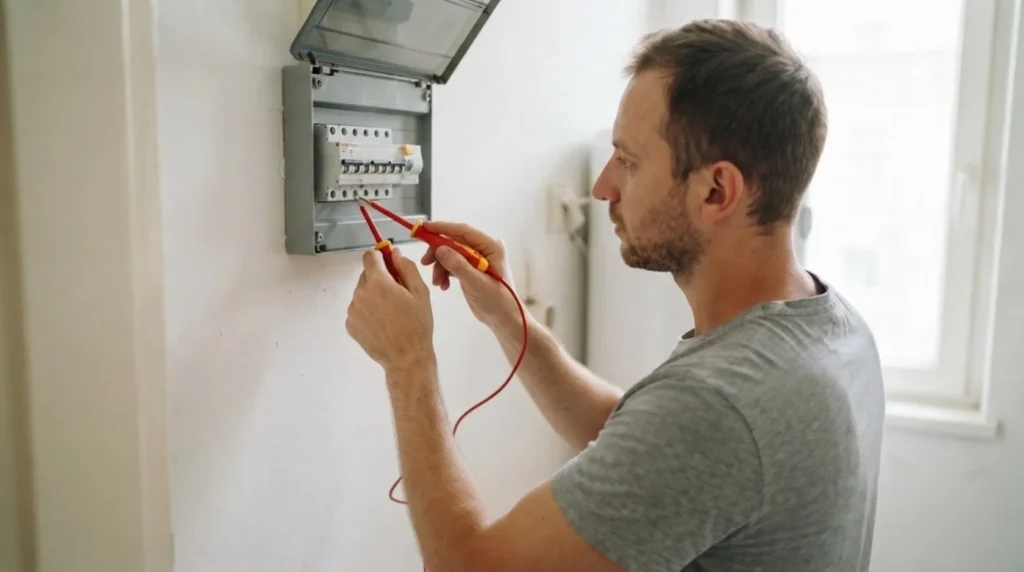
Watch whether the protection trips immediately on switch-on, only once the heater starts heating, or after some time. That detail helps distinguish a hard short circuit from a problem with the heating element, thermostat, or insulation failing at operating temperature.
2 Switch off the heater and inspect only the accessible external signs of a fault
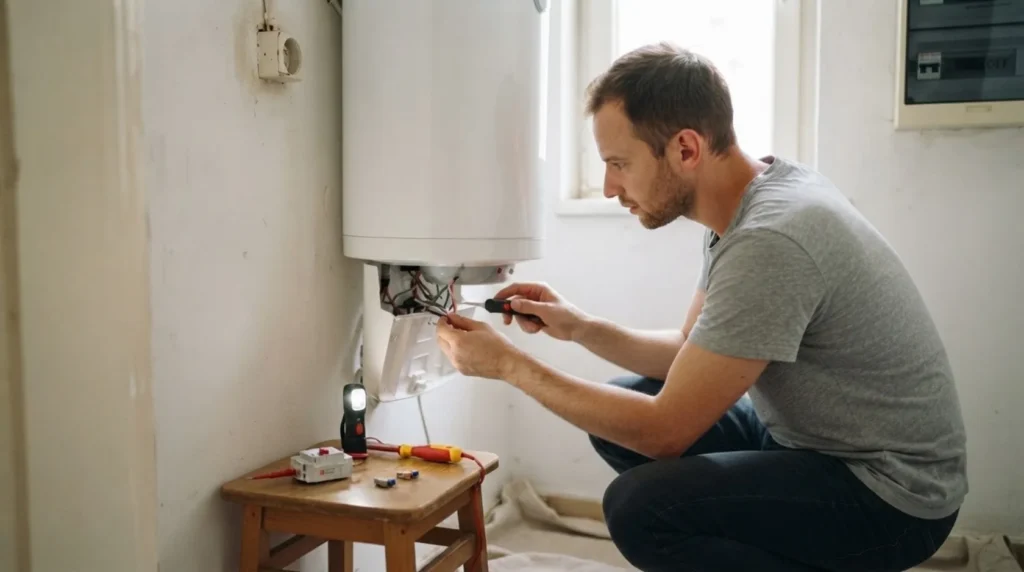
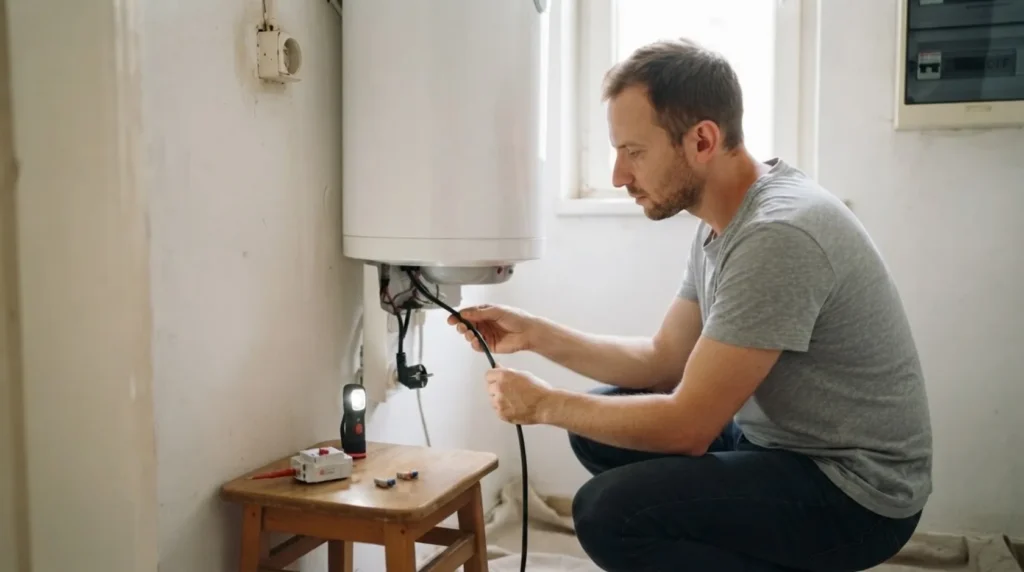
Without opening anything live, look for water around the connections, a damaged cord, a plug, or signs of burning. Water dripping onto the electrical section or cracked insulation are often clearer signs than any amount of guessing.
3 Tell a breaker problem apart from an RCD problem
If the RCD trips, you're more likely dealing with current leaking to earth or moisture, while a standard circuit breaker points more toward excessive current or a short circuit. This distinction matters because it changes the direction of further inspection and the risk of the work.
4 Don't reset the protection device repeatedly without new information
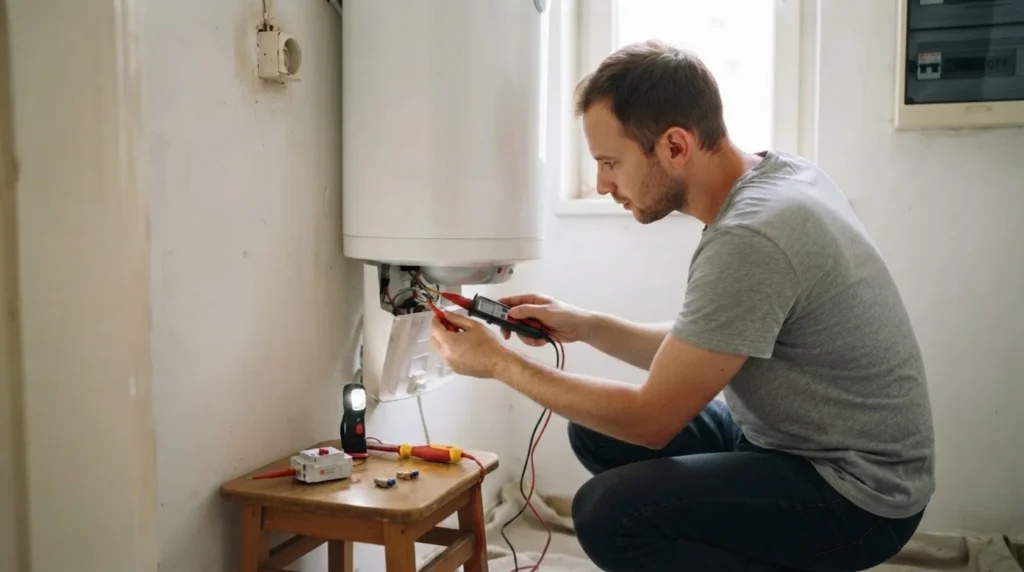
Every new switch-on without understanding the cause can worsen the fault and increase the risk to the user. If one attempt has already shown a problem, the next one should only come after a concrete check or measurement.
5 Leave measuring the heating element, insulation and thermostat to someone qualified if you're not sure
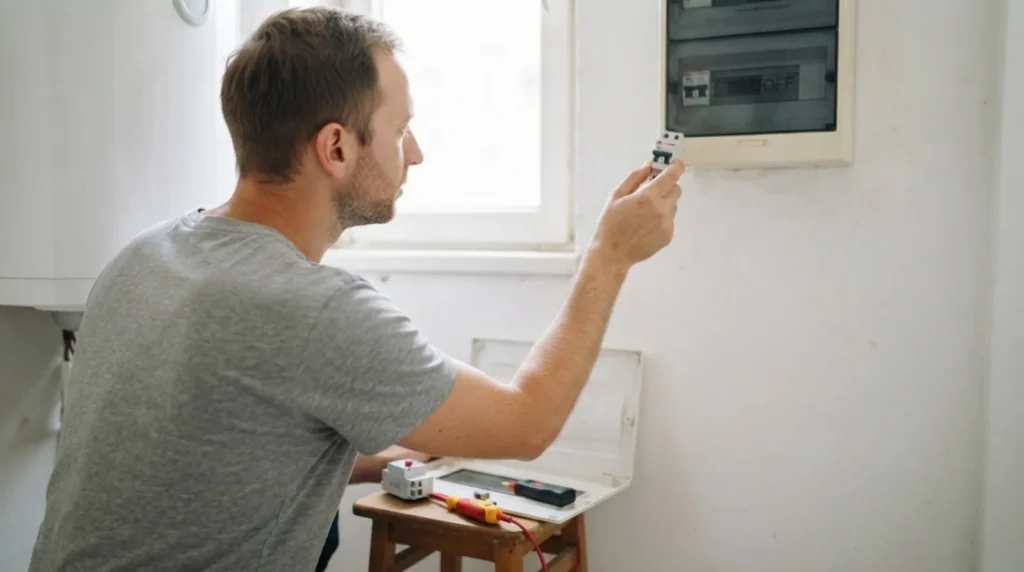
A heating element can be electrically bad even though it looks fine from the outside, and that's not something you can tell by eye. Once you reach the point of needing to measure resistance and insulation, it's better to stop than to work blindly in a combination of water and electricity.
When to call a professional: If the job involves changes to the electrical panel, the main gas line, or load-bearing walls/beams — or if you're not sure how it will turn out — this is not a DIY task. Hire a licensed professional.
Final check
- The water heater stays switched off until the exact cause of the protection tripping is clarified.
- It's clear whether it's the breaker or the RCD that trips, and at what point it happens.
- There's no more randomly switching it back on without an inspection and a plan.
Common problems
- The RCD trips only after a few minutes of heating.
- That often points to the heating element or insulation failing once it heats up, not necessarily an immediate short circuit. Measurement is needed, not just resetting the switch.
- The breaker trips immediately on switch-on.
- Then suspect a more serious electrical fault, a damaged cable, or connection, and the water heater shouldn't be switched on again until it's inspected.