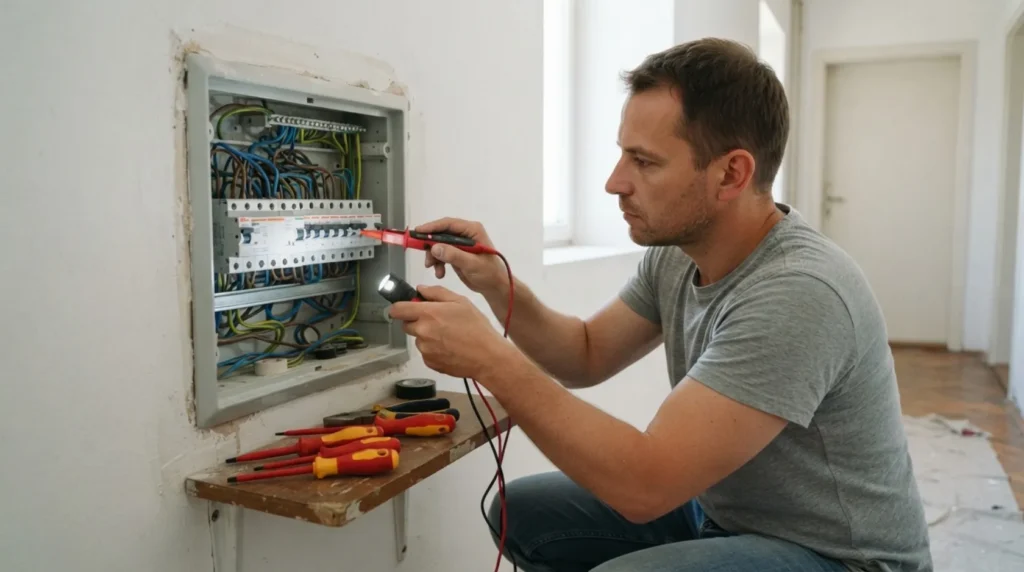
When the RCD (residual current device) trips, the goal isn't to blindly flip the switch back up, but to calmly figure out which circuit or appliance is causing a fault to earth. A DIY check is acceptable only without working live, and only at the level of switching off appliances, visual inspection and basic isolation of the cause. If there's moisture in the junction box, a burning smell, dark marks, or it trips with absolutely nothing plugged in, stop immediately and call an electrician.
You must be able to safely switch off the breaker, tell an RCD apart from a regular circuit breaker, and work with completely dry hands. It helps to be able to keep a simple log of which appliance was on when the problem occurred.
⚠ Safety note: This guide involves working with electricity. If you're not completely sure about every step, stop and call a licensed professional. Before you start, always switch off the power at the breaker or close the main water/gas valve.
1 Note the tripping pattern before touching anything
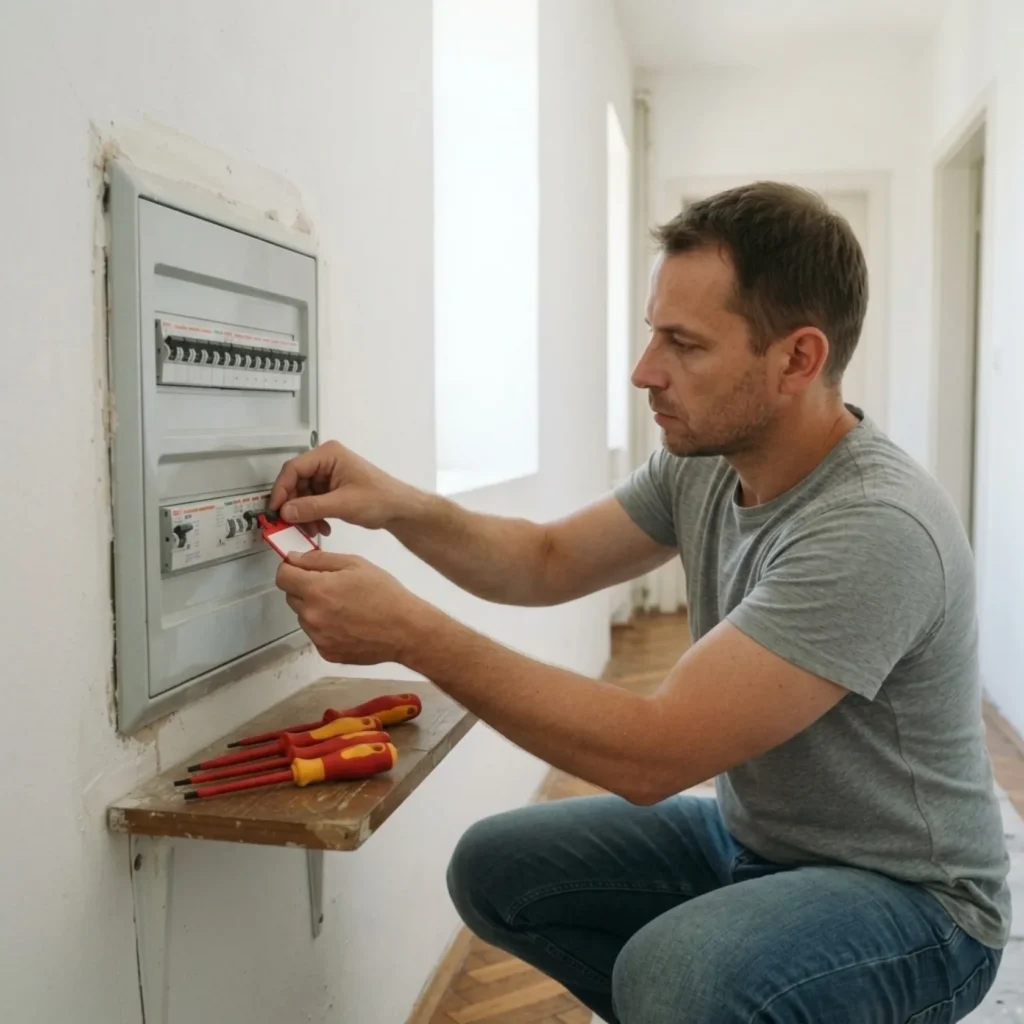
Check whether the RCD trips immediately, only after switching on a specific appliance, or after some time running. That information matters more than it seems, since it immediately separates a fault on a single appliance from a wider problem in the wiring. If the switch won't stay up even with everything unplugged, that's already a more serious signal.
2 Switch off and unplug all suspect appliances

Unplug the water heater, washing machine, extension cords and other higher-power appliances on the problem circuit. Don't just turn the appliance off at its own switch, since a fault to earth can still be present even then. Once everything is unplugged, try resetting the RCD and watch whether it now stays on.
3 Plug appliances back in one at a time
If the RCD stays on with nothing plugged in, switch on appliances one by one, pausing briefly after each one. This quickly shows which appliance triggers the trip. This step requires discipline: if you plug everything back in at once, you'll lose track and be back at square one.
4 Inspect accessible outlets and connections without opening anything live

On the suspect branch, look for moisture, dark marks, cracked plastic, a burning smell, or loose outlet and switch covers. Bathrooms, basements and outdoor outlets are especially prone to this because of moisture. Don't open anything until the circuit is safely switched off, and if you already see signs of overheating on the surface, don't continue the DIY diagnosis.
5 Confirm the limit of a DIY check
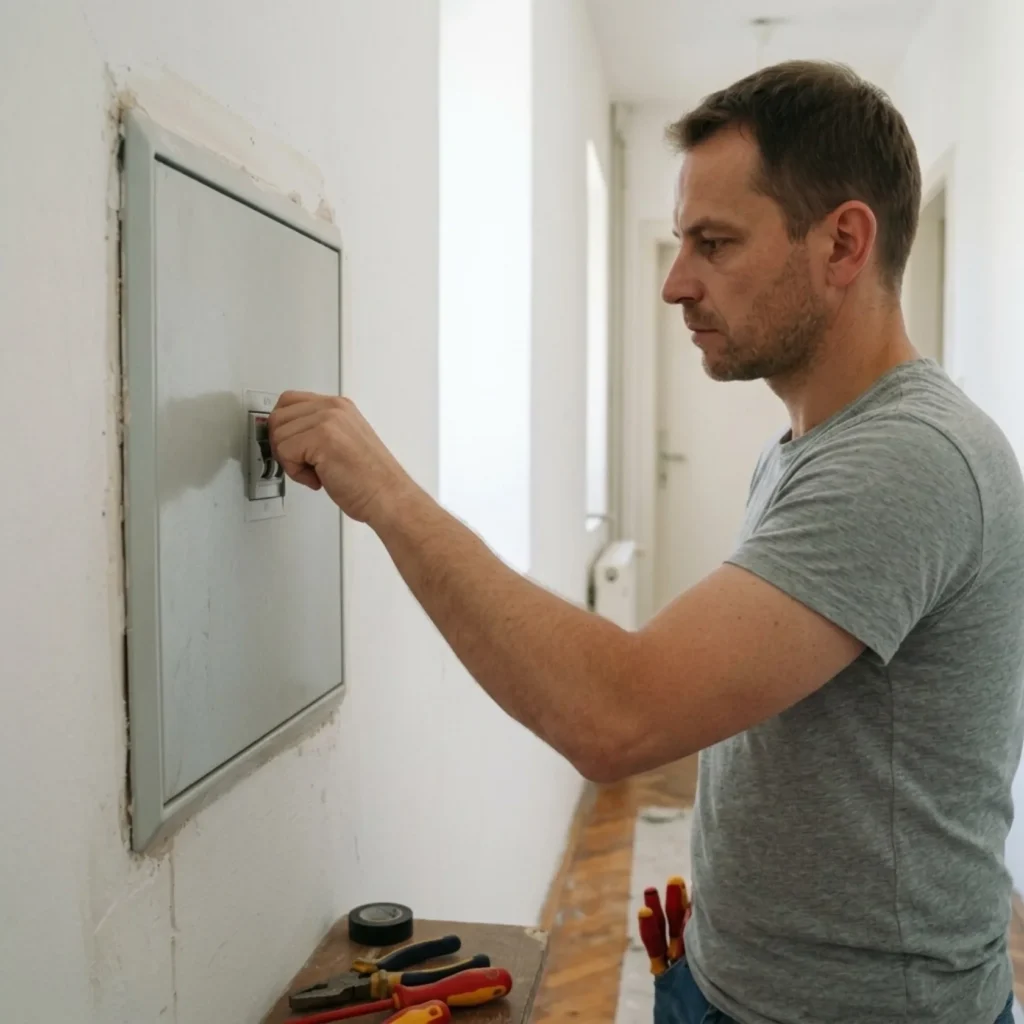
Once you find a suspect appliance, leave it switched off and check whether the rest of the circuit runs stable without tripping. If the RCD still trips without that appliance, or trips as soon as you switch on a specific part of the wiring, the problem is likely in the wiring, a connection, or moisture in the circuit. That's the point where you stop trying and move to a professional check with insulation resistance measurement.
When to call a professional: If the job involves changes to the electrical panel, the main gas line, or load-bearing walls/beams — or if you're not sure how it will turn out — this is not a DIY task. Hire a licensed professional.
Final check
- The RCD stays on when the problem appliance or suspect branch is switched off.
- During testing there's no heating of an outlet, burning smell, or unusual sound when switching on.
- It's clearly established whether the fault follows one appliance or remains on the circuit itself.
- If the RCD still trips with nothing plugged in, the DIY check is done and an electrician is needed.
Common problems
- The RCD trips only when you switch on the water heater, washing machine or another specific appliance.
- That's a strong sign the problem follows that particular appliance, often due to current leaking to the casing or moisture inside the unit. Don't keep using it until it's inspected or replaced.
- The RCD won't stay on even with everything unplugged.
- Then a fault in the wiring, an outlet, a connection, or moisture in the circuit is more likely than in a single appliance. Continuing to randomly switch things on only extends the risk.
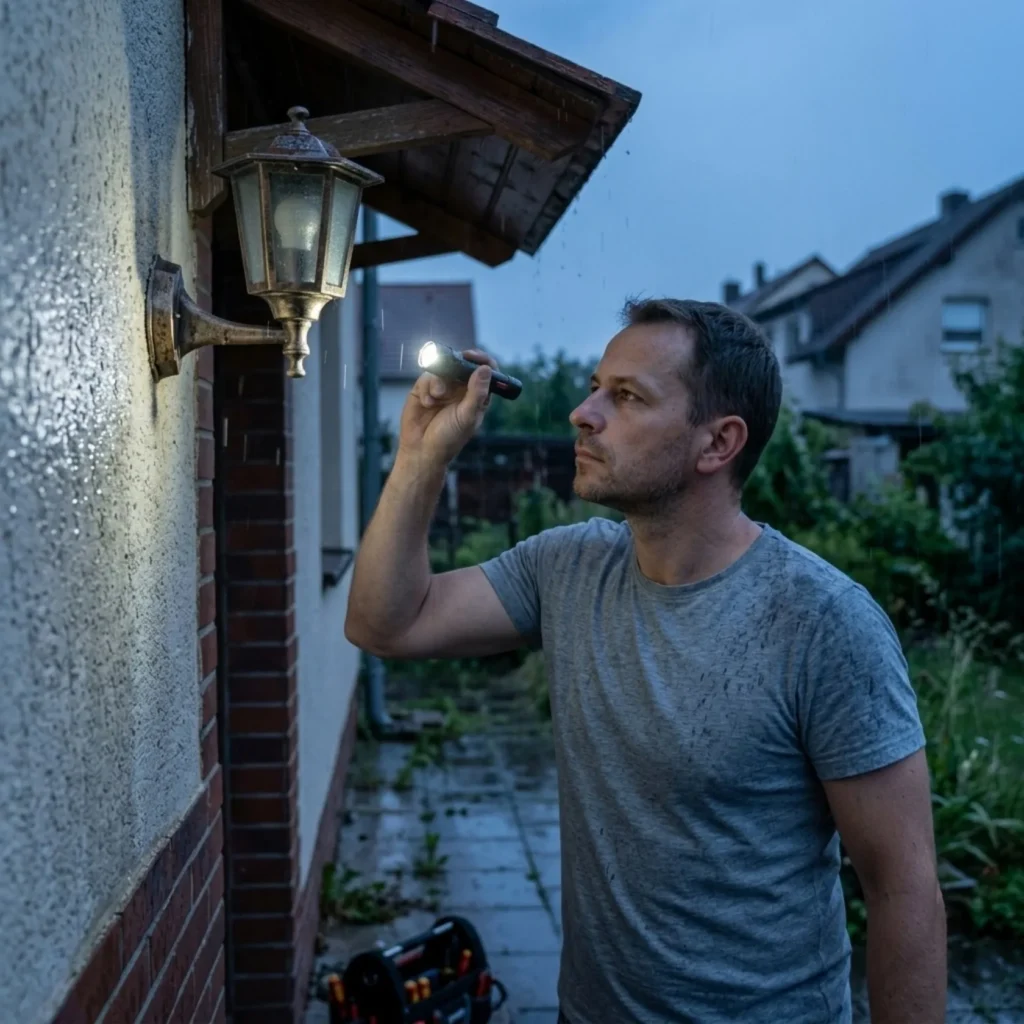
- The problem only shows up after rain or in a damp area.
- Moisture in an outdoor outlet, bathroom fixture, or junction box very often triggers the RCD. That spot needs to be dried and inspected first, and if the problem repeats, the job goes to an electrician.