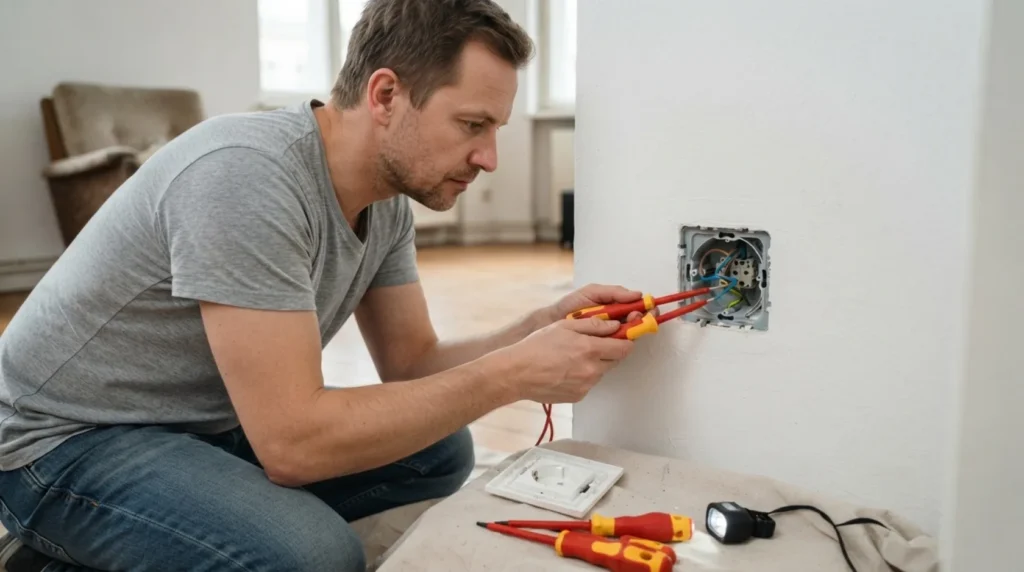
An outlet that sparks or gets hot isn't something to put off, since that symptom often means a poor contact, an overload, or a connection that's already damaged. The goal here is to safely recognize the risk and stop at the limit of a DIY check if you're not confident with electrical connections.
You need to be able to safely switch off the relevant circuit and recognize basic signs of overheating. If you can't reliably confirm the power is off, don't open the outlet.
⚠ Safety note: This guide involves working with electricity. If you're not completely sure about every step, stop and call a licensed professional. Before you start, always switch off the power at the breaker or close the main water/gas valve.
1 Immediately remove the load and switch off the circuit for that outlet
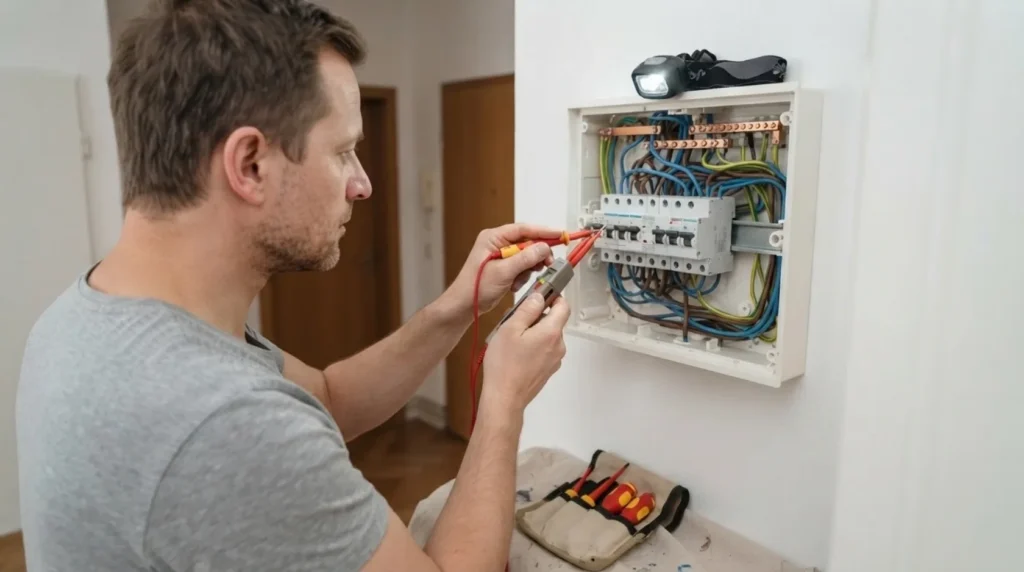
Unplug the appliance if it's safe to do so, and switch off the breaker or main switch for that circuit. Warm plastic, a burning smell, or darkening around the opening mean you shouldn't wait for 'later,' since a poor contact deteriorates quickly.
2 Tell a small initial spark apart from a dangerous symptom
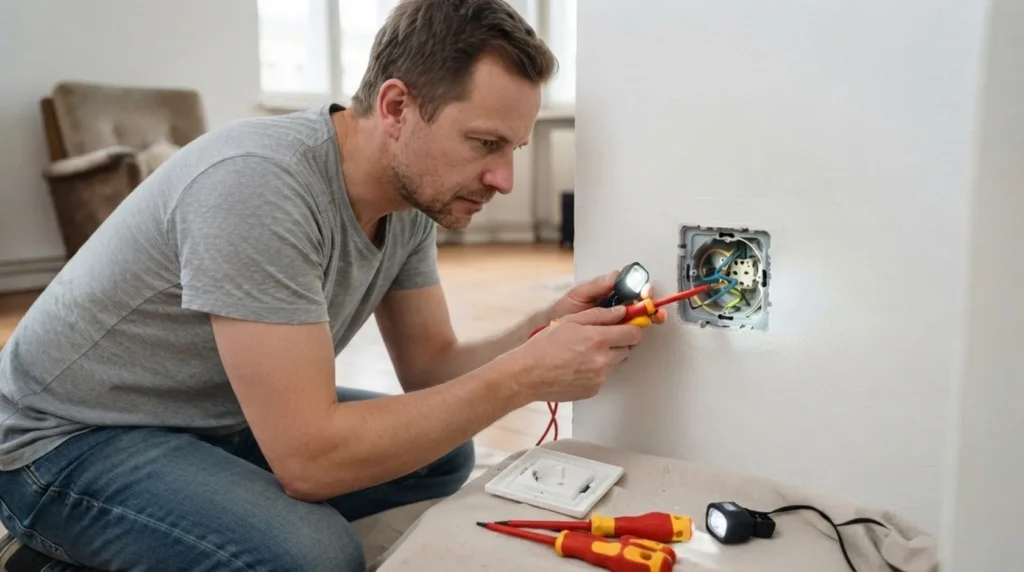
A very brief, small spark when switching on a powerful appliance can be different from constant crackling, buzzing and heating of the outlet. When heat or a change in the plastic's color appears along with the spark, the problem is already outside normal behavior.
3 Check whether the problem is in the appliance, the plug, or the outlet itself
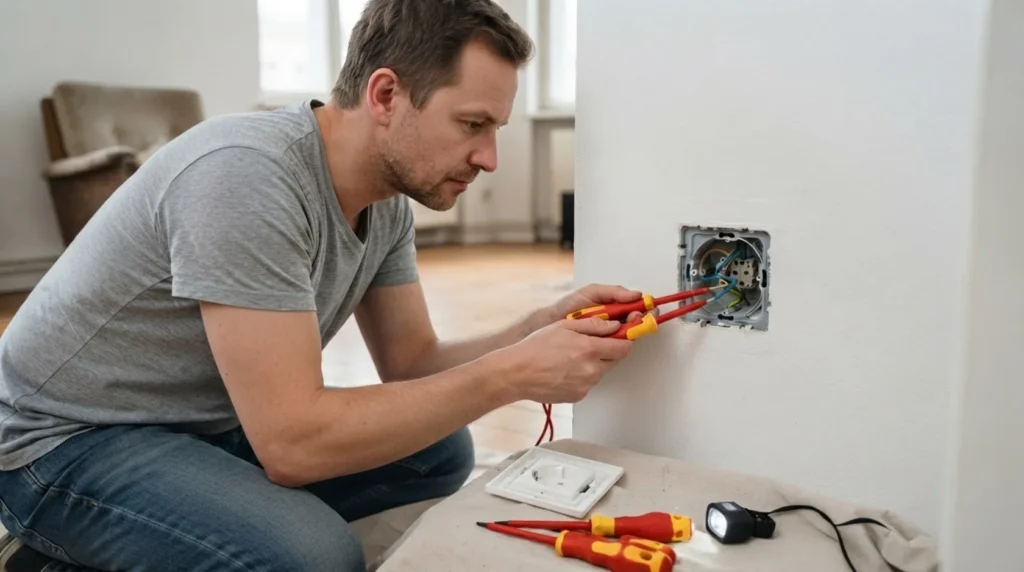
A damaged or loose plug can cause the same symptom as a bad outlet. Compare with another appliance you know works only if you're sure the outlet is cold and not already visibly damaged; a burnt connection shouldn't be tested blindly with a new device.
4 Only open the outlet once the absence of voltage is confirmed
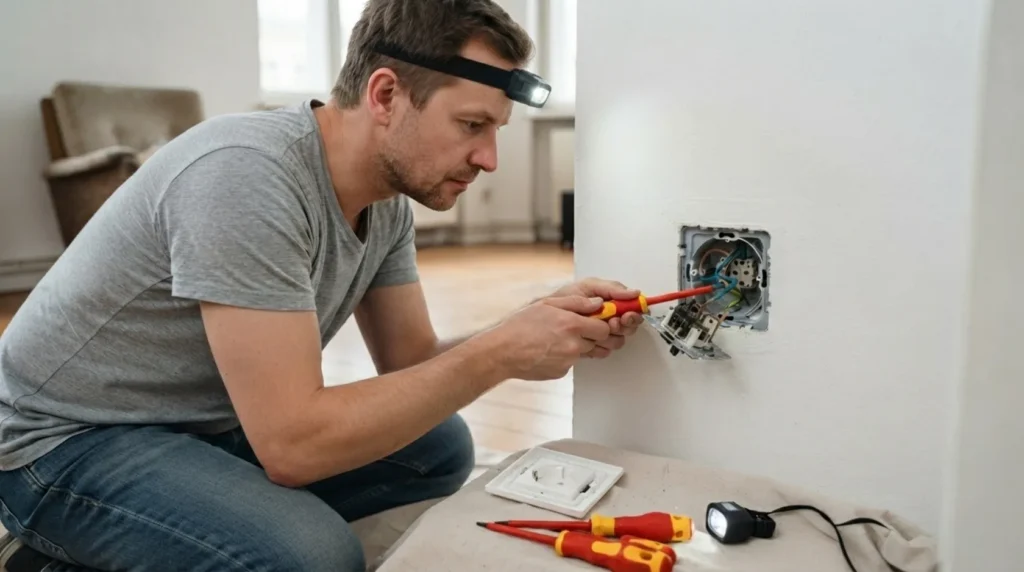
If you have the knowledge and the tools, check the state of the contacts, the terminals and any signs of overheating after switching off and confirming there's no voltage present. Don't try to save blackened or softened parts by tightening them further if the material is already damaged.
5 Replace the damaged outlet or call an electrician before using it again
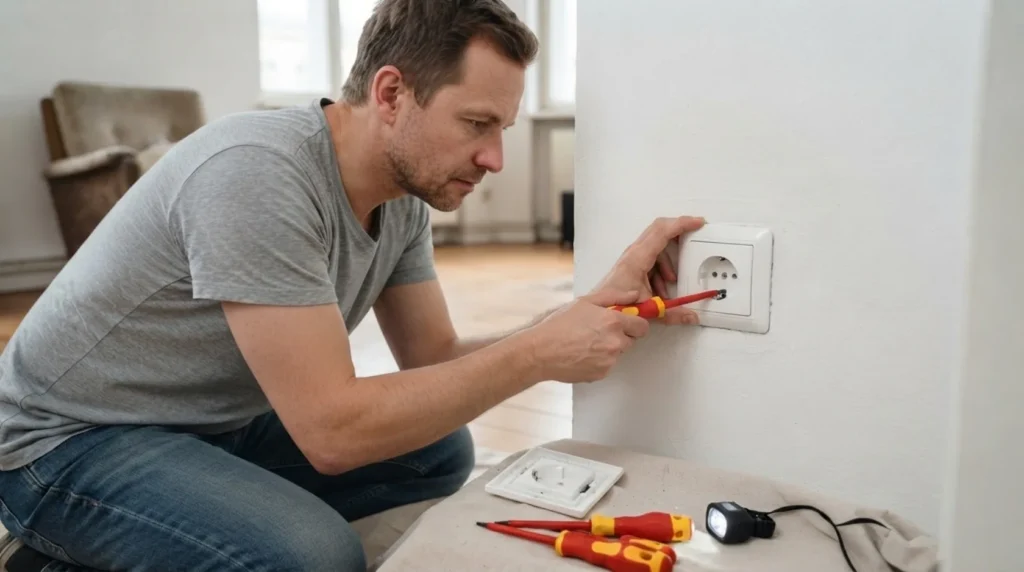
For an outlet that overheats or sparks, the priority is safety, not a temporary patch. If the wires are brittle, the insulation is dark, or you don't understand the wiring layout, stop and call an electrician instead of guessing.
When to call a professional: If the job involves changes to the electrical panel, the main gas line, or load-bearing walls/beams — or if you're not sure how it will turn out — this is not a DIY task. Hire a licensed professional.
Final check
- The outlet no longer shows signs of heating, crackling or a burning smell.
- The connections have been inspected, or the outlet has been replaced, before regular use resumes.
- No appliance is plugged back into that point until the cause is clarified.
Common problems
- The plug is warm, but the outlet is only slightly lukewarm.
- It's possible the problem is in the plug itself or the appliance's cord, not just in the wall. Check both ends before drawing a conclusion.
- The outlet works, but occasionally crackles.
- Occasional crackling isn't something to ignore. A poor contact can keep working briefly and then suddenly burn out or overheat under a heavier load.