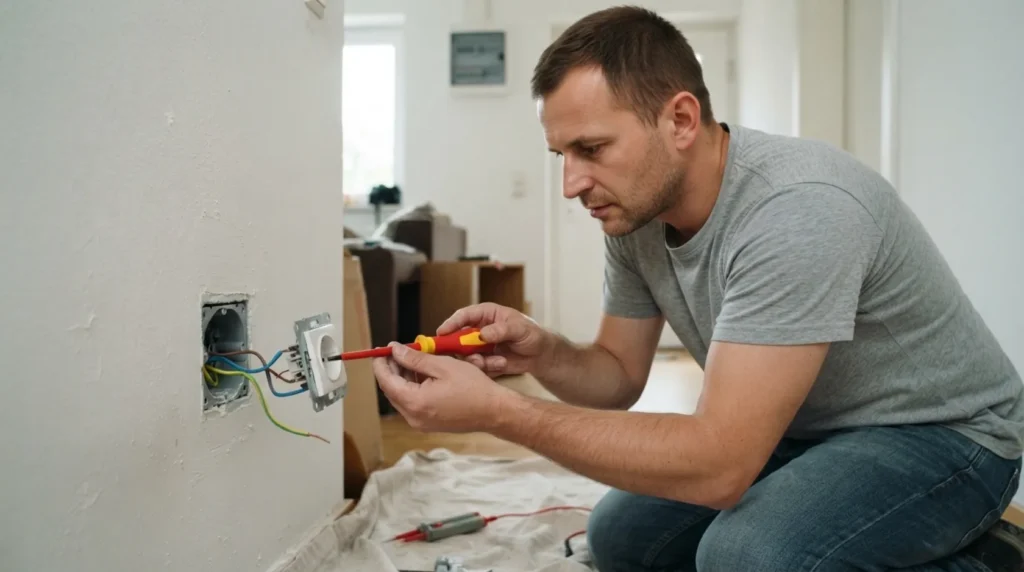
An extension cord that overheats is warning you that the load is too high, a contact is poor, or the cord isn't adequate for what it's powering. The goal here isn't an excuse to keep working, but a clear reason why the cord got hot before it causes bigger damage.
You need to understand roughly the power draw of the connected appliances and know the difference between a thin extension cord for light loads and a heavier cord for serious loads. If you smell plastic or see darkening, stop using it immediately.
⚠ Safety note: This guide involves working with electricity. If you're not completely sure about every step, stop and call a licensed professional. Before you start, always switch off the power at the breaker or close the main water/gas valve.
1 Immediately switch off the appliances and feel exactly where the heat is coming from
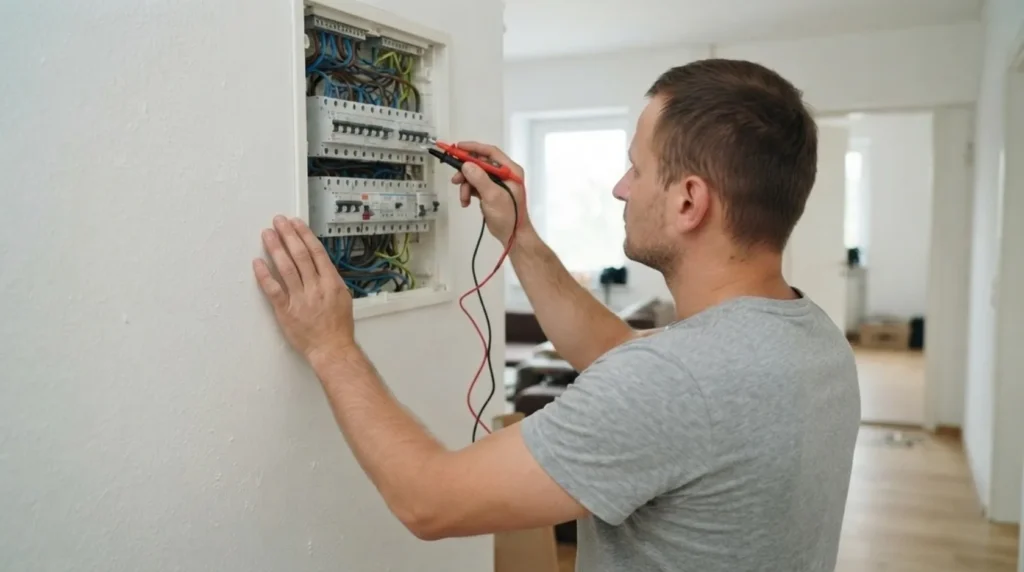
Once it's safe, unplug everything from the cord and determine whether the heat is at the plug, the middle of the cable, the reel, or the socket outlet block itself. The location of the heating tells you a lot: one thing is overload of the whole cable, and another is a poor contact at a connection.
2 Calculate what was plugged in at the same time
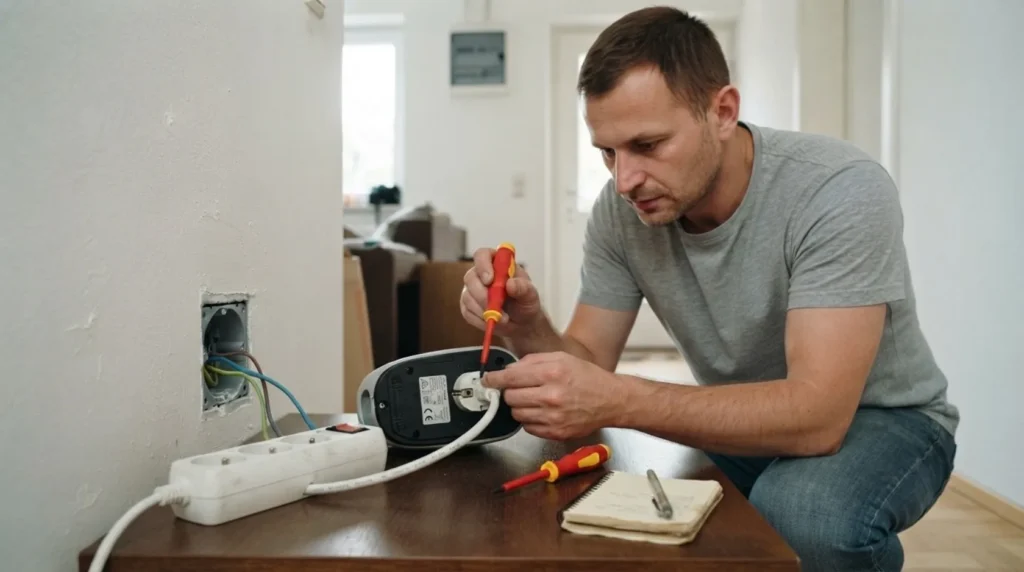
Heaters, kettles, irons and other powerful appliances quickly add up to more load than a light extension cord can handle. The problem isn't always 'a broken cord,' but an unrealistic combination of appliances on one line.
3 If the cord is on a reel, fully unwind it before testing again
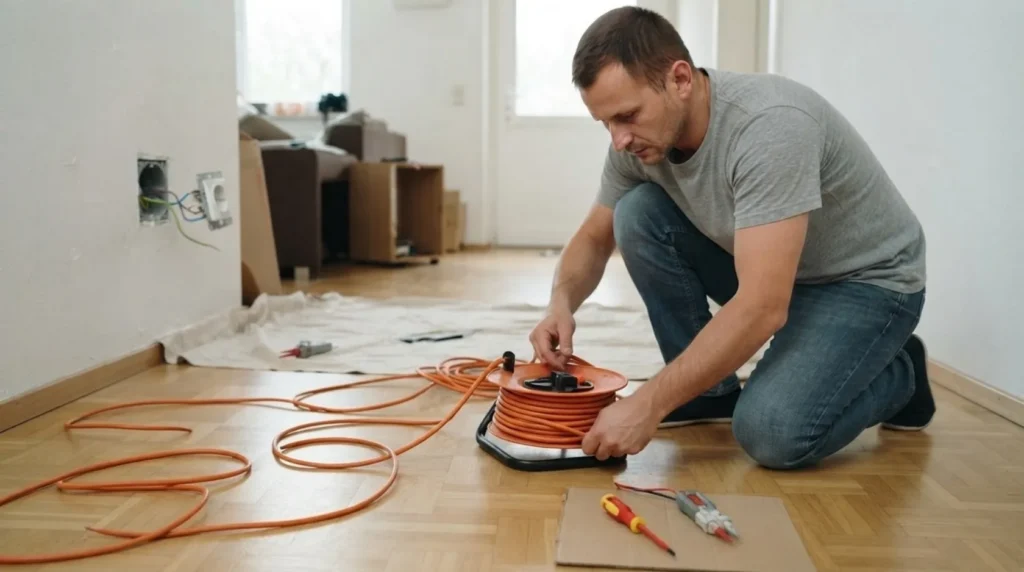
A coiled cord dissipates heat poorly and, under a heavier load, gets much hotter than an uncoiled one. This detail is often overlooked, especially when the reel 'has worked for years,' leading the user to think that's the normal state.
4 Inspect the plug, the sockets and the whole length for damage
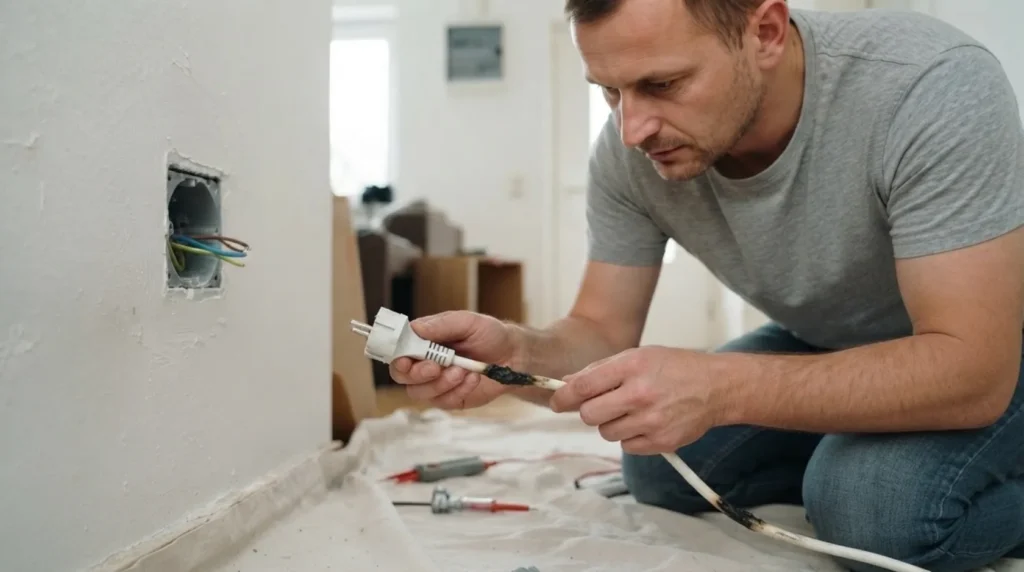
Look for softened plastic, darkening, cracked insulation, and spots where the cable is kinked or has been pinched before by doors or furniture. One bad contact point can cause heating even when the total power isn't excessive.
5 Don't put the cord back into use until you remove the cause
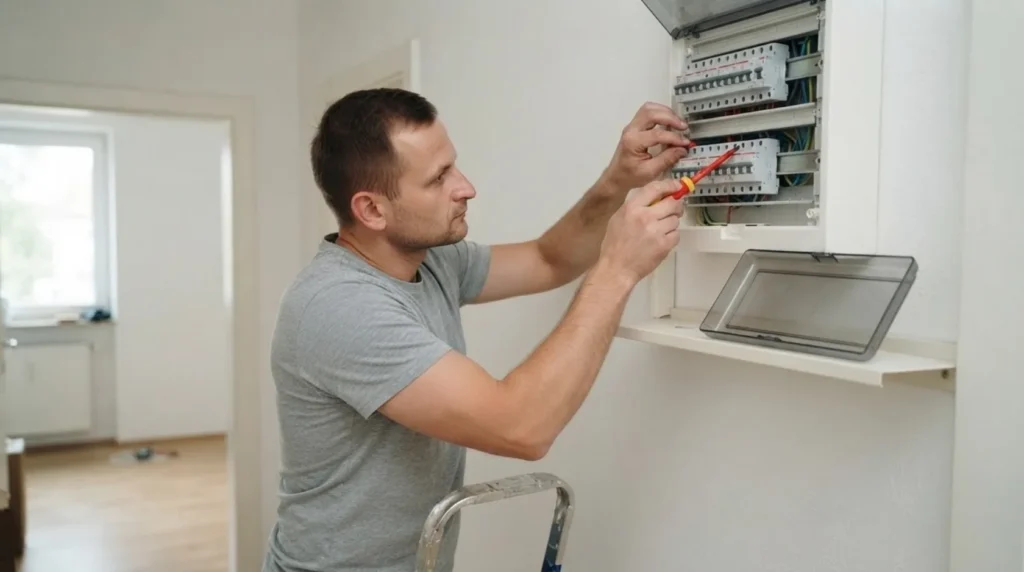
If the cause is overload, reduce the load; if the contact is damaged, replace the cord or the part. An extension cord that has already overheated doesn't deserve another chance just because it currently 'seems to work.'
When to call a professional: If the job involves changes to the electrical panel, the main gas line, or load-bearing walls/beams — or if you're not sure how it will turn out — this is not a DIY task. Hire a licensed professional.
Final check
- The cord is no longer used under the load that previously overheated it.
- There are no traces of melting, darkening or a poor contact at the plug or the socket block.
- It's clear going forward which appliances may and may not run through that cord.
Common problems
- Only the section near the plug is warm.
- That often points to a poor contact in the plug or the outlet, not necessarily the whole cord. Check both ends of the connection, not just the length of the cable.
- The cord is on a reel and only heats up when a heavier tool is running.
- You're very likely using it coiled under load. Fully unwind it and re-assess whether the cross-section is even adequate for that tool.