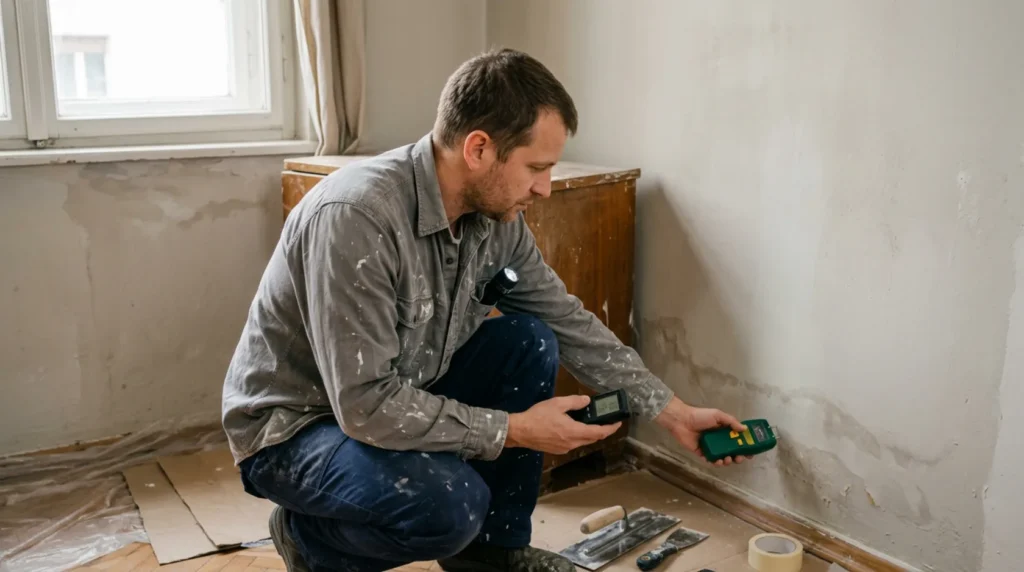
Damp corners in a house during winter are most often the result of condensation on cold surfaces, not some mysterious 'moisture from the air' with no cause. A cold bridge, weaker heating, poor ventilation, and furniture pushed against the wall often combine to create ideal conditions for dampness and later mold.
You need basic observation of the room, a habit of airing it out, and willingness to check the temperature and furniture layout. If the walls are wet even without cold weather, or yellow stains and crumbling plaster appear, the cause may be something other than plain condensation.
1 Observe when the corners get the most damp
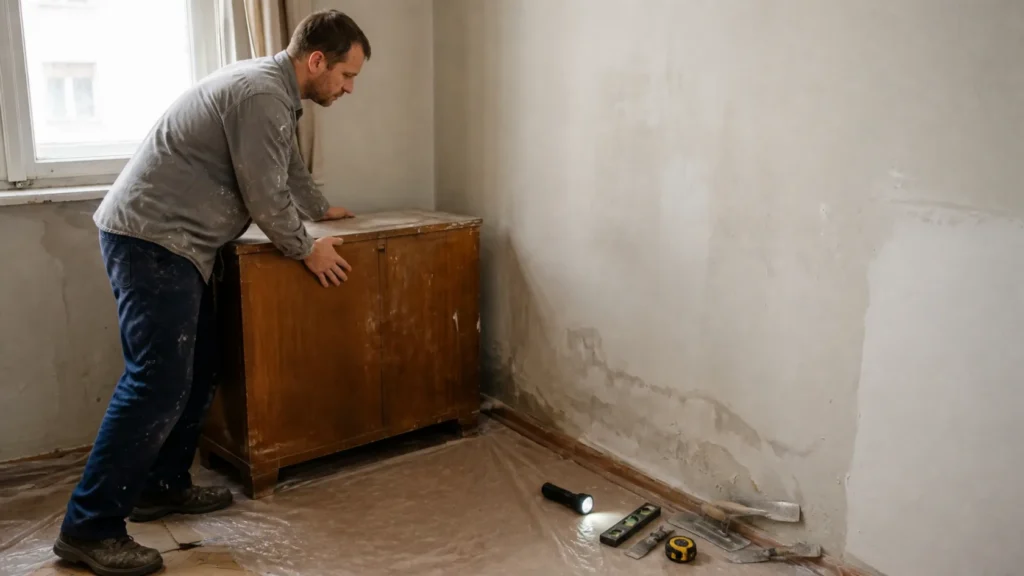
Note whether the problem appears early in the morning, after cooking, drying laundry, or showering, or only during severe cold. That pattern often reveals that the moisture comes from everyday habits and a cold surface, not necessarily from a structural leak.
2 Check whether the corner is colder than the rest of the wall
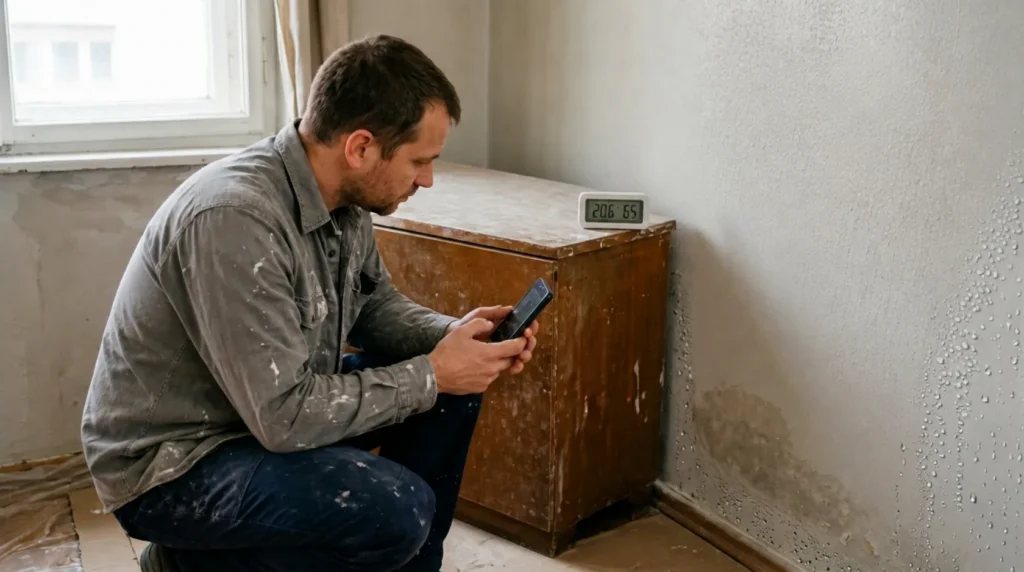
External corners, joints at slabs and ring beams, or areas blocked by furniture are often noticeably colder to the touch or by meter. A colder surface is the first to draw condensation out of the warmer, moist air in the room.
3 See how closed off the corner is by furniture and poor air circulation
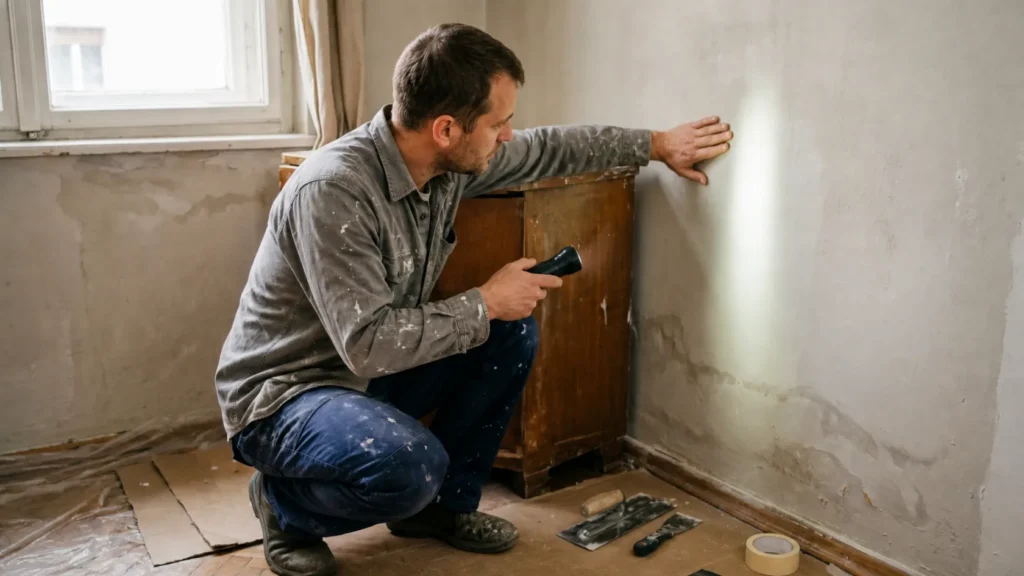
A wardrobe, a corner sofa, or a curtain right against the wall can completely block air movement and locally cool the surface. Then even a normal amount of moisture in the apartment becomes a problem right at that spot, instead of being distributed evenly.
4 Adjust the heating and do short but regular airing
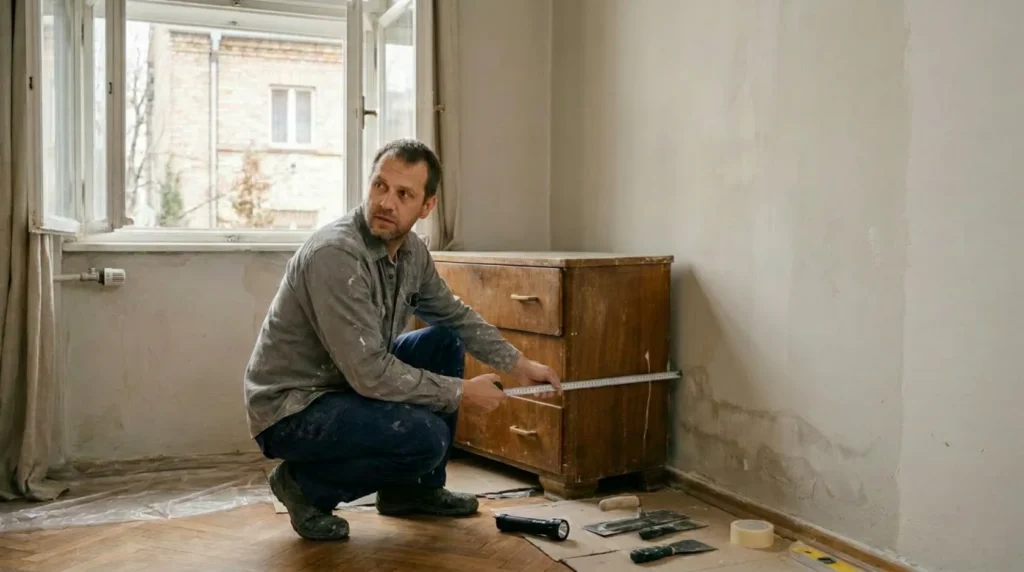
Short, intense airing is better than a tilted window left open all the time, which just cools the walls down. At the same time, it's important that the corner doesn't stay the coldest point in the room, since it will always be the first to collect moisture.
5 If the problem persists, consider a cold bridge or a deeper moisture source
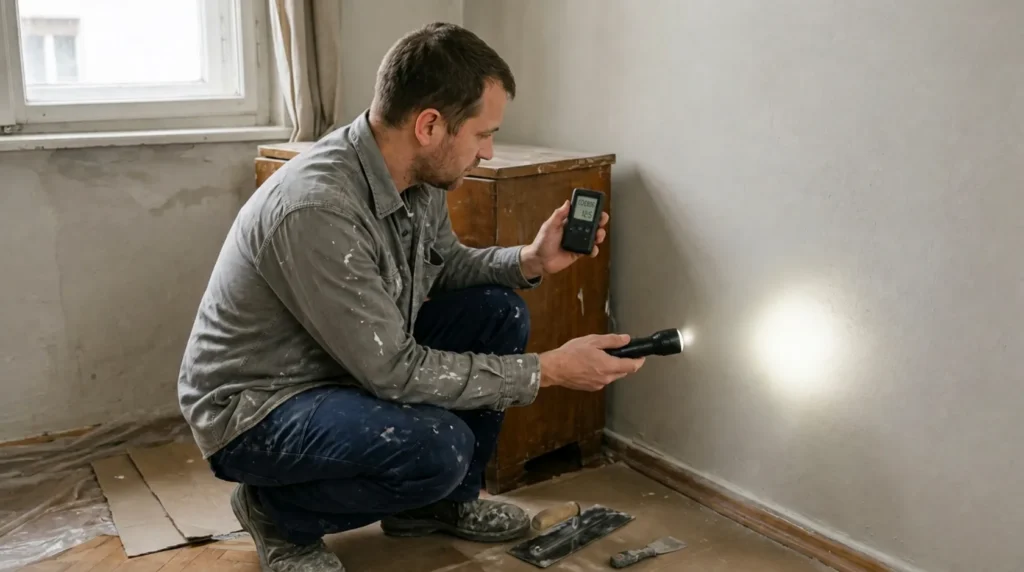
When proper heating, ventilation, and furniture spacing don't change the situation, suspicion increasingly falls on a structural cold bridge or another moisture source. That's where DIY guessing ends and the need for a broader wall inspection begins.
Final check
- It's clear whether the dampness increases with condensation and cold weather.
- The corner has been cleared of furniture and given better air circulation.
- After adjusting the heating and airing, the dampness decreases or at least changes pattern.
Common problems
- The corner is wet only in winter, and completely fine in summer.
- That strongly points to condensation and a cold surface, not necessarily a leak. Focus on the wall's warmth and the room's air moisture.
- I air the room out, but the corner behind the wardrobe still gets damp.
- If there isn't enough room for air to circulate, opening a window alone may not be enough. Spacing furniture away and locally heating that wall are often just as important.