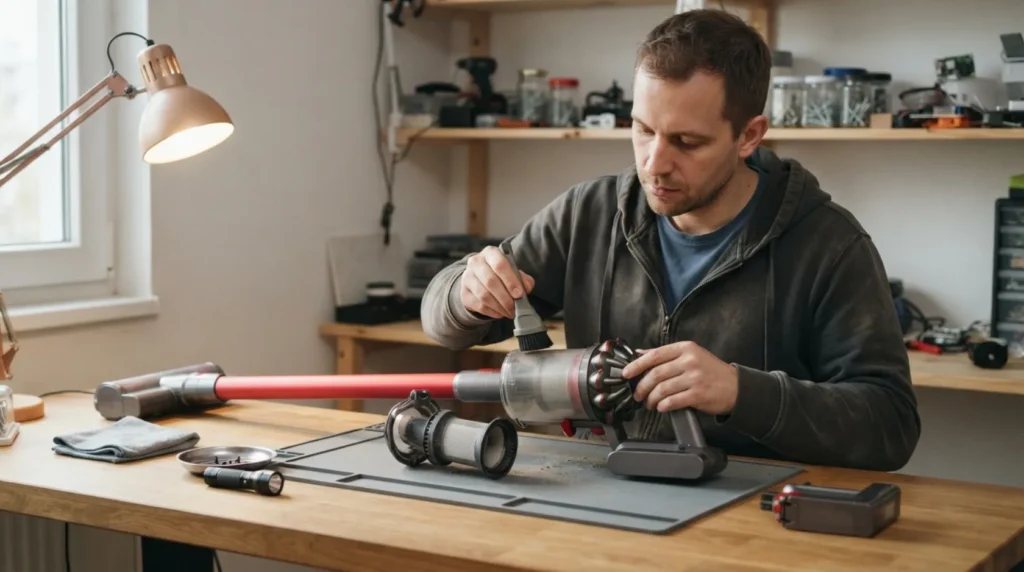
A vacuum cleaner that shuts off after a few minutes is often triggering thermal protection due to poor airflow, a blockage, or dirty filters. This doesn't always mean a motor fault, but it does mean you shouldn't keep forcing the appliance back on without looking for the cause of overheating.
You need basic handling of filters, the bag or canister, and the vacuum's hose. If burning smells, sparking, or unusual motor noises appear along with the shutdowns, stop earlier and don't wait for the protection to kick in again.
⚠ Safety note: This guide involves working with electricity. If you're not completely sure about every step, stop and call a licensed professional. Before you start, always switch off the power at the breaker or close the main water/gas valve.
1 Turn off the vacuum and let it cool down completely
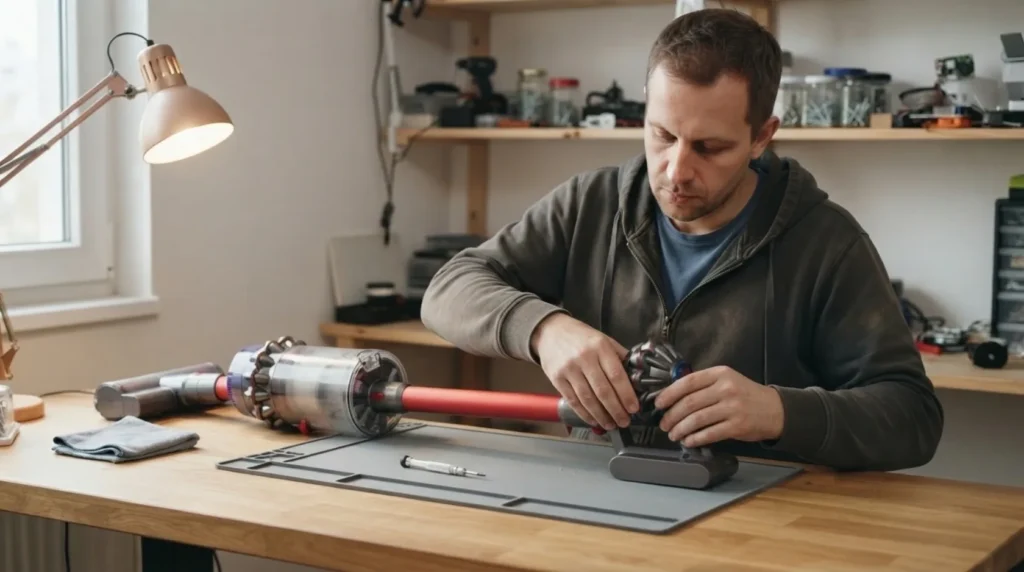
Once it shuts off, don't try turning it on repeatedly right away, since thermal protection often triggers exactly because of overheating. Let it rest, and only then start working through the causes of poor cooling and airflow.
2 Check the bag or canister and the main filter
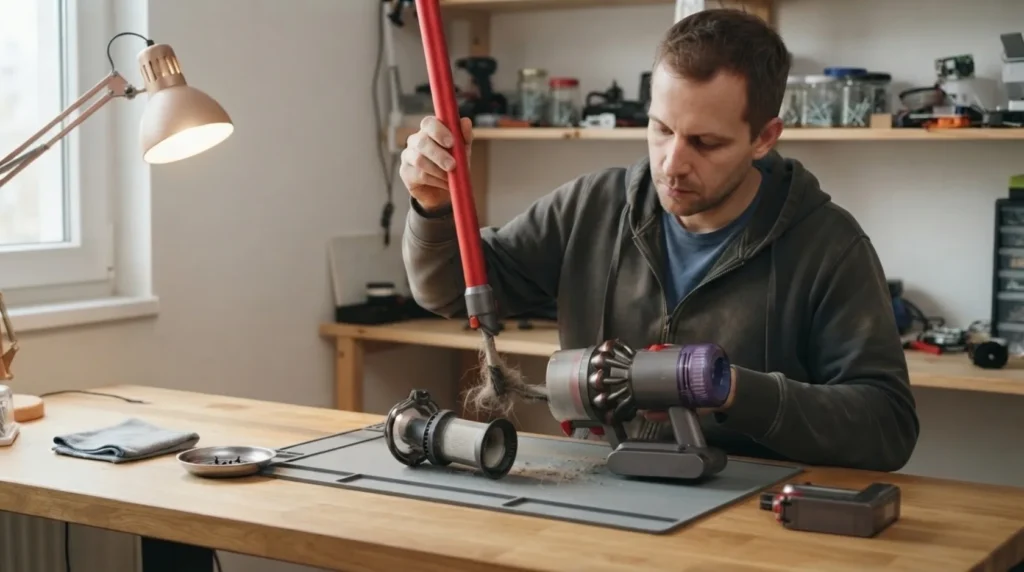
A full bag, an overfull canister, or a dirty main filter very quickly choke airflow through the motor. Many people only check whether the vacuum 'pulls', but forget that the motor also needs enough air for cooling.
3 Inspect the hose, pipes, and brush head for hidden blockages
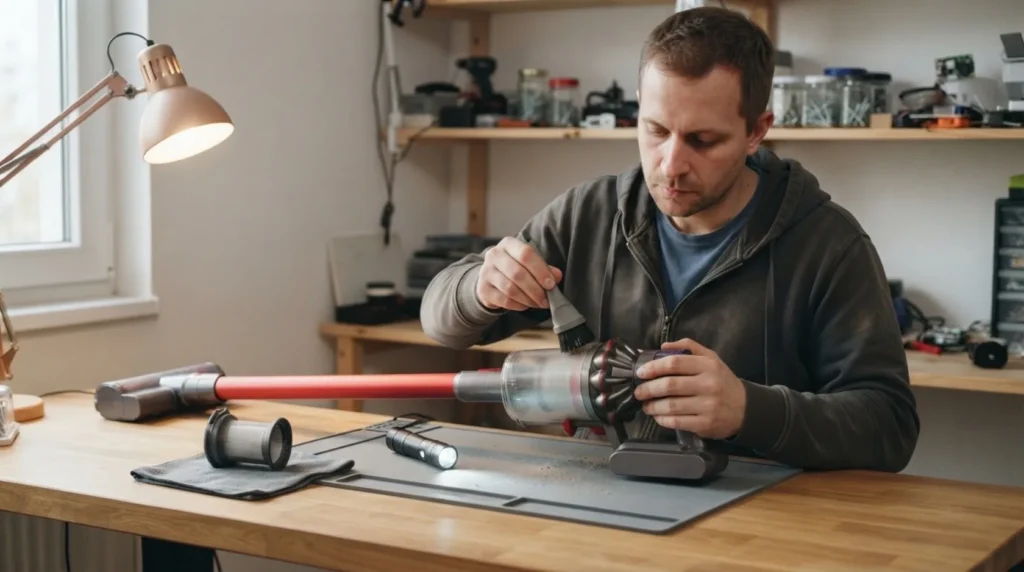
A partial blockage in a bend of the hose or in the brush head can be enough for the appliance to run for a few minutes and then overheat. Pay particular attention to spots where hair, bits of paper, and larger debris tend to collect.
4 Check the exhaust or HEPA filter and the outflow
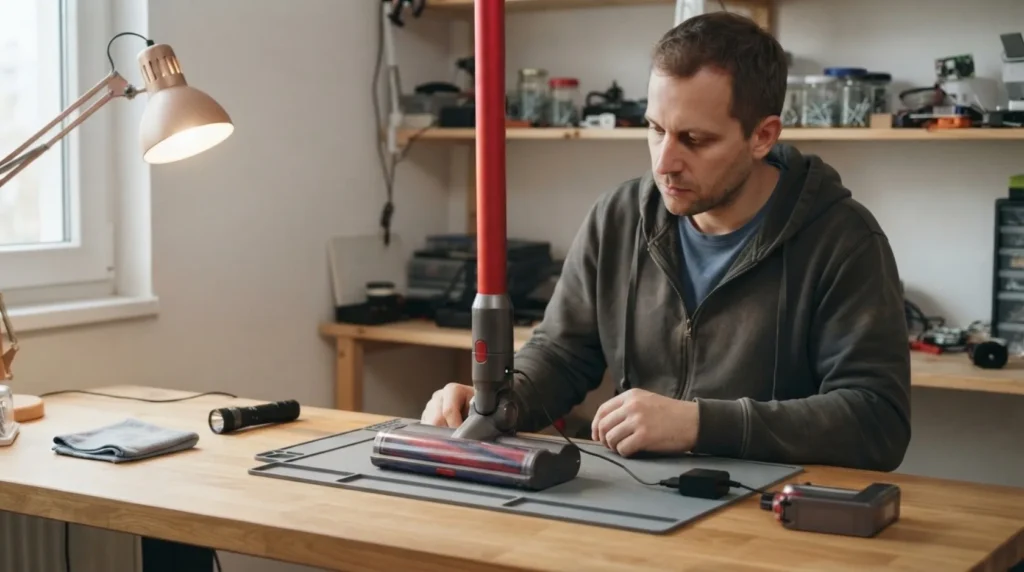
If the exhaust filter isn't flowing properly, the vacuum can seem to run normally while the motor endures high temperatures. Weak or unusually warm exhaust air is often a useful clue that airflow isn't healthy through the whole appliance.
5 If a clean appliance still shuts off, assess the motor and the service threshold
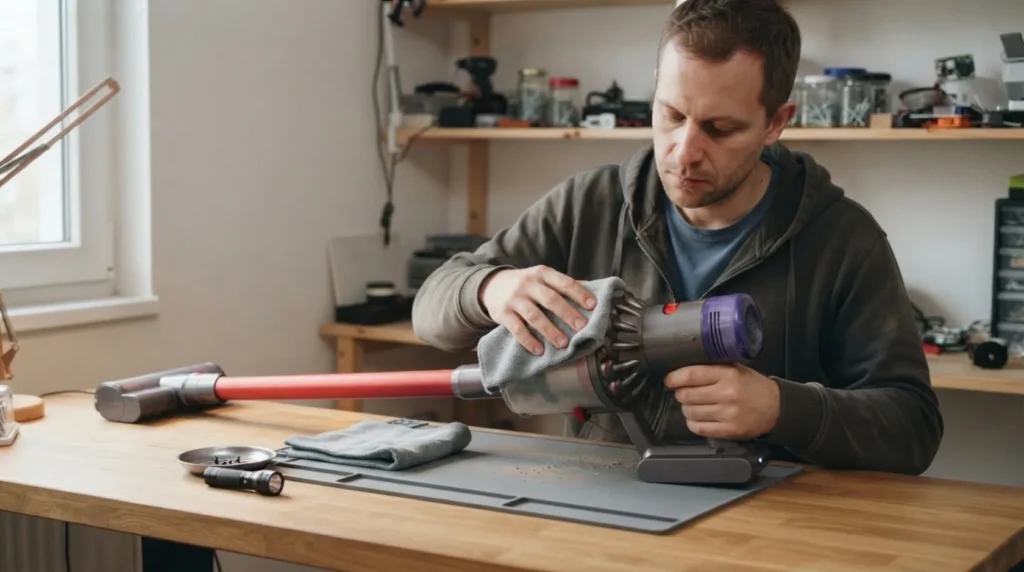
When the bag, filters, and air paths are all clean and the shutdowns keep repeating, suspicion increasingly falls on the motor, a bearing, or an electrical component. At that point, there's no more sense in endlessly cleaning the same parts and expecting a different result.
When to call a professional: If the job involves changes to the electrical panel, the main gas line, or load-bearing walls/beams — or if you're not sure how it will turn out — this is not a DIY task. Hire a licensed professional.
Final check
- After cleaning the airflow path and filters, the vacuum runs longer without triggering protection.
- There's no obvious blockage in the hose, pipe, or brush head.
- If it still shuts off, it's clear the cause is probably not just dirt but a deeper fault.
Common problems
- The vacuum only shuts off when running on carpet, not on hard floors.
- This often means airflow is already at its limit and the extra resistance from the brush or carpet pushes it into overheating. Focus on the filters and partial blockages.
- After cooling down, it runs briefly again and then shuts off again.
- This is typical thermal-protection behavior. The problem is still there; the appliance is just getting a short break before overheating again.