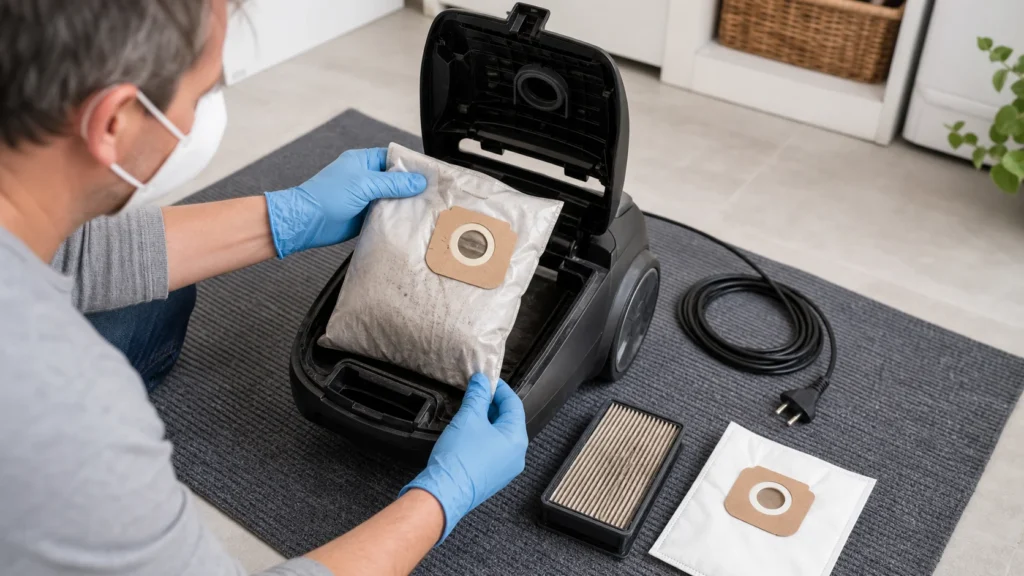
A vacuum cleaner that 'buzzes more than it sucks' usually doesn't need a new motor, but a clean airflow: an empty bag or bin, a dry filter, and a clear hose. People often skip the order and jump straight to taking apart the motor, even though the problem in most cases sits at the air intake or outlet. This guide stays in the safe zone of basic maintenance, without opening the motor itself.
No special knowledge is needed. It's only important that you put the filters back once they're completely dry, and that you don't test the vacuum with the housing half-assembled.
⚠ Safety note: This guide involves working with electricity. If you're not completely sure about every step, stop and call a licensed professional. Before you start, always switch off the power at the breaker or close the main water/gas valve.
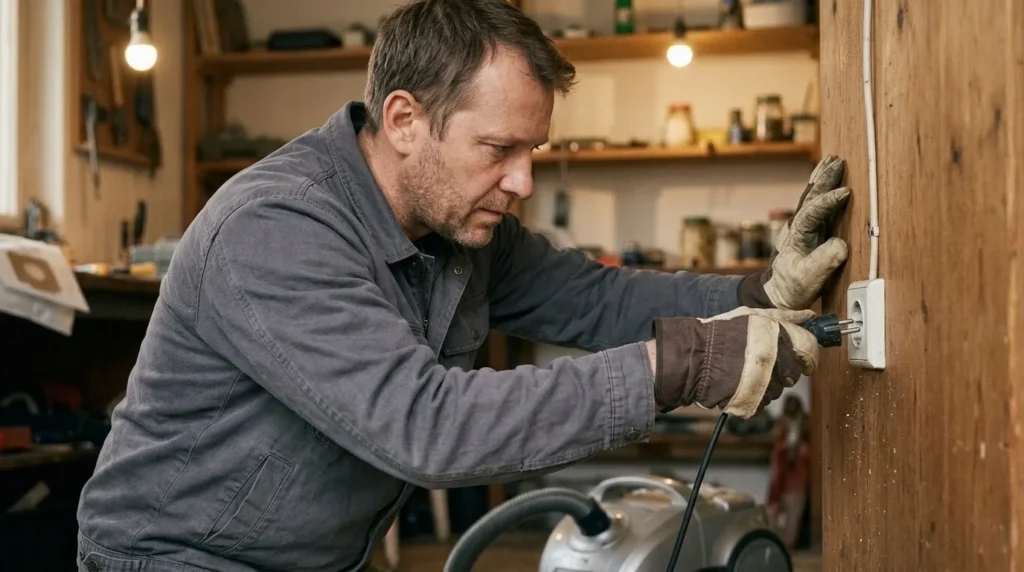
1 Turn off the vacuum and assess what kind of power loss you have
Before taking anything apart, think about whether the drop in suction is gradual or sudden. A gradual drop usually points to a clog or a saturated filter, while a sudden change sometimes means a burst hose, an open cover, or a more serious fault.
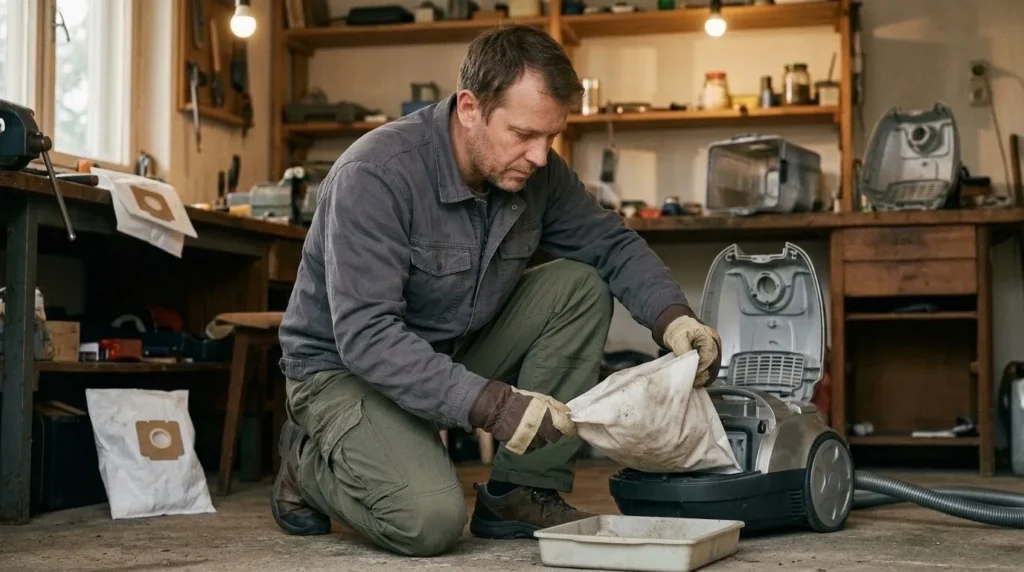
2 Empty the bag or bin completely
In bag models, a full bag is still the most common reason for weak suction, and in bagless models, packed dust around the cyclone assembly has a similar effect. Don't just glance at 'is there still room' — actually empty or replace the element.
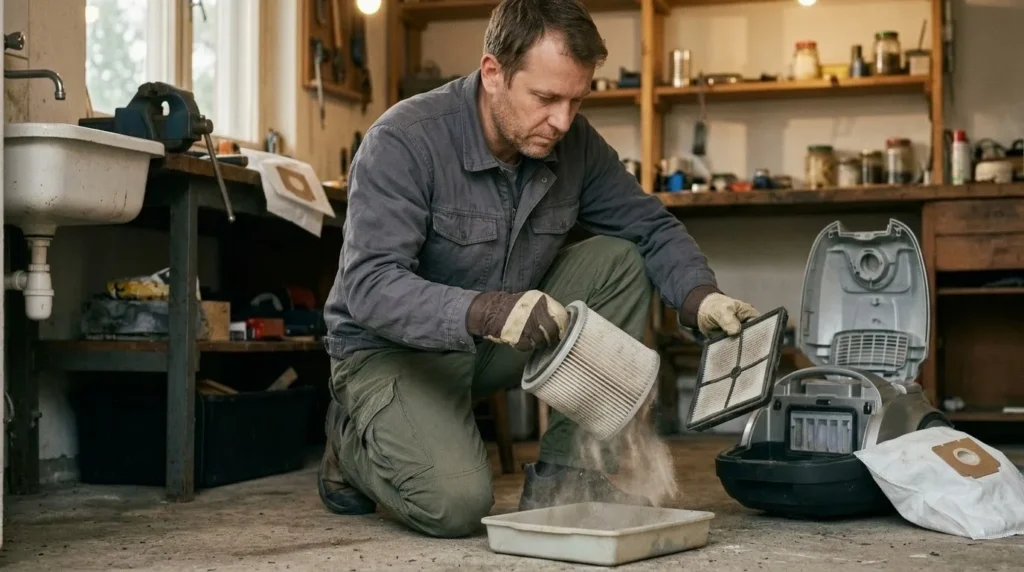
3 Take out and inspect all the filters, not just one
Many models have a pre-filter and an exhaust filter, and weak flow can come from either one. If the manufacturer allows washing, rinse the filter in cold water and let it dry naturally all the way, not just 'almost dry.'
4 Inspect the hose along its entire length
A clog in the hose is often not visible from the outside, yet it causes a huge drop in suction. Run a brush or a flexible object through the entire length, and check the bends and transitions in particular, where hair and small objects most like to get stuck.
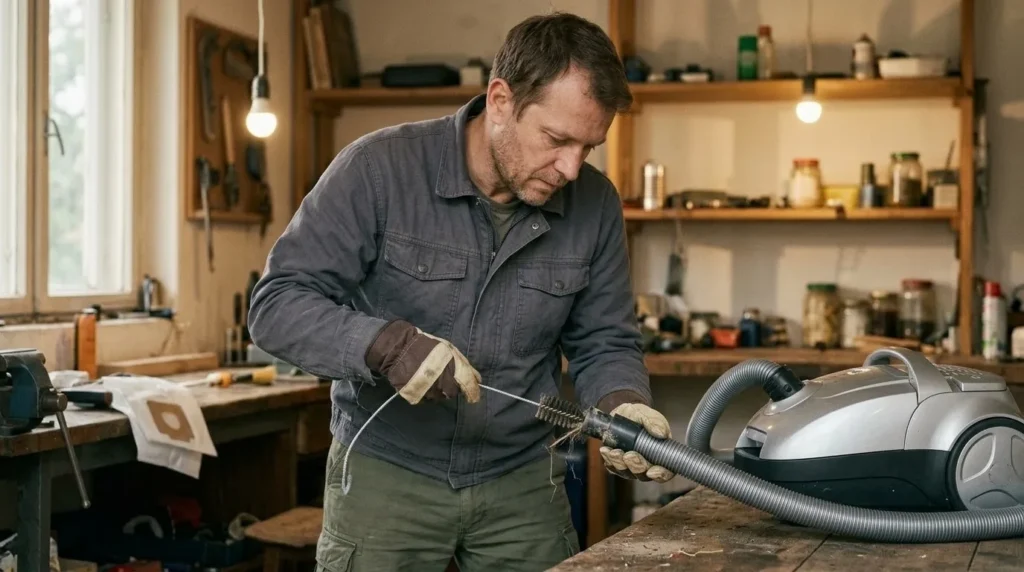
5 Clean the tube, attachments, and brush head as a separate system
A suction brush full of hair, thread, and fibers can choke the suction almost as much as a full filter. On attachments with a rotating roller, also check whether the roller spins freely or is blocked by everything wound around it.
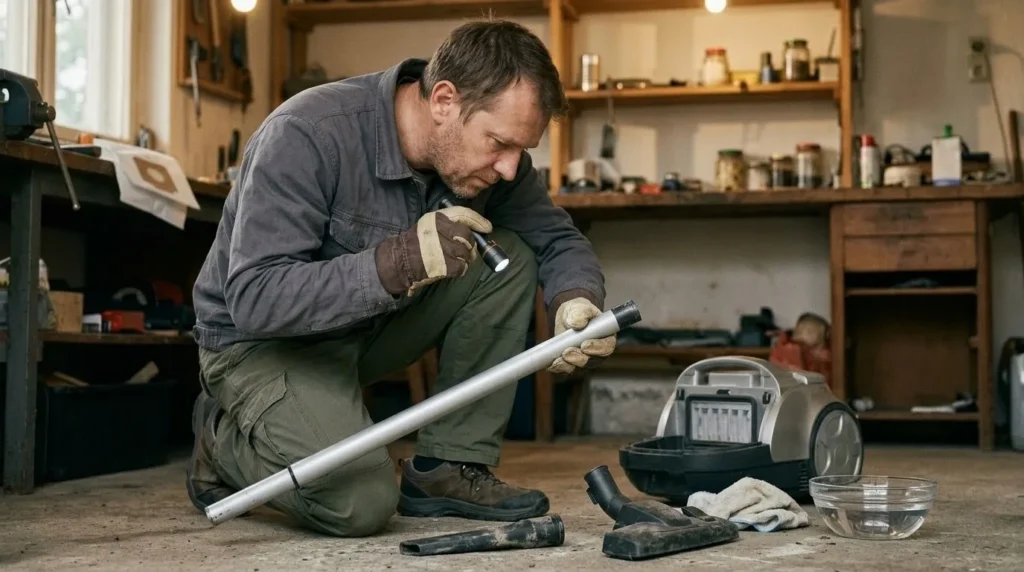
6 Check the seals on the covers and joints
Wherever false air leaks in, the motor runs but suction on the floor drops. The bag cover, the bin seal, and the hose and filter joints need to close the system without gaps.
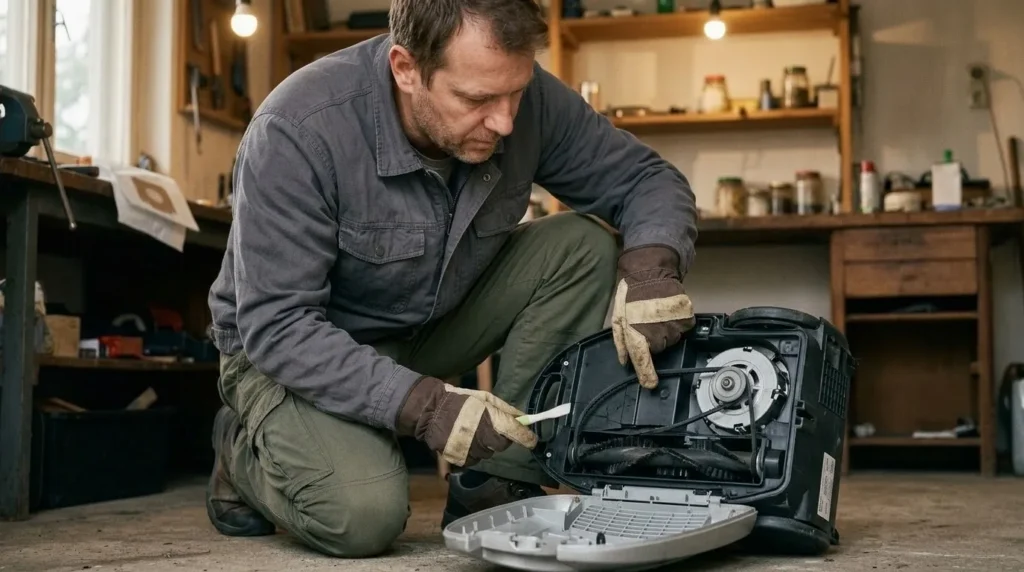
7 Reassemble it only with completely dry, correctly replaced parts
A filter that's even slightly damp quickly picks up fine dust and brings the problem right back at the start. So reassembling only makes sense once all parts are dry and every latch and cover has clicked into place.
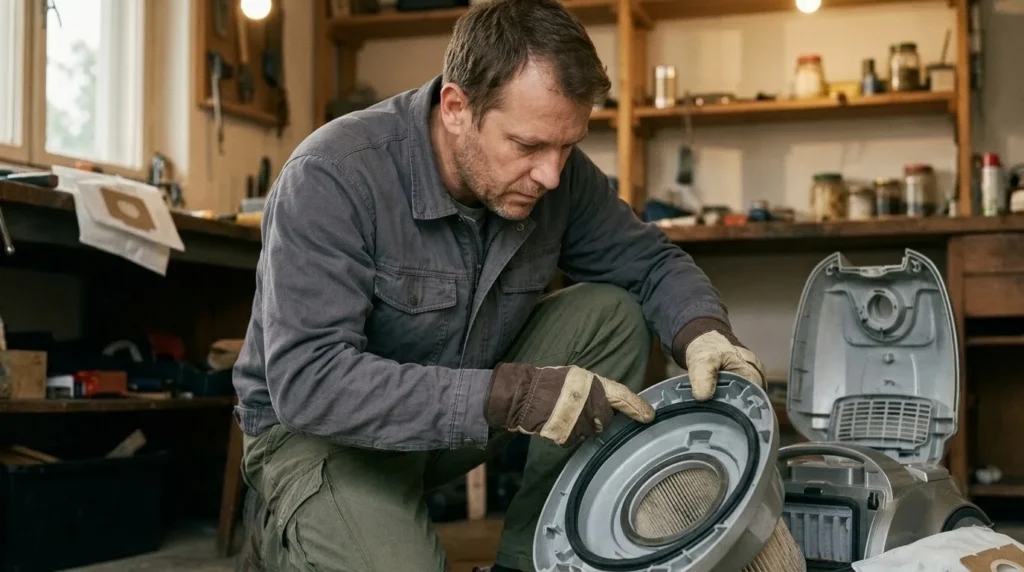
8 Test suction on the same surface as before cleaning
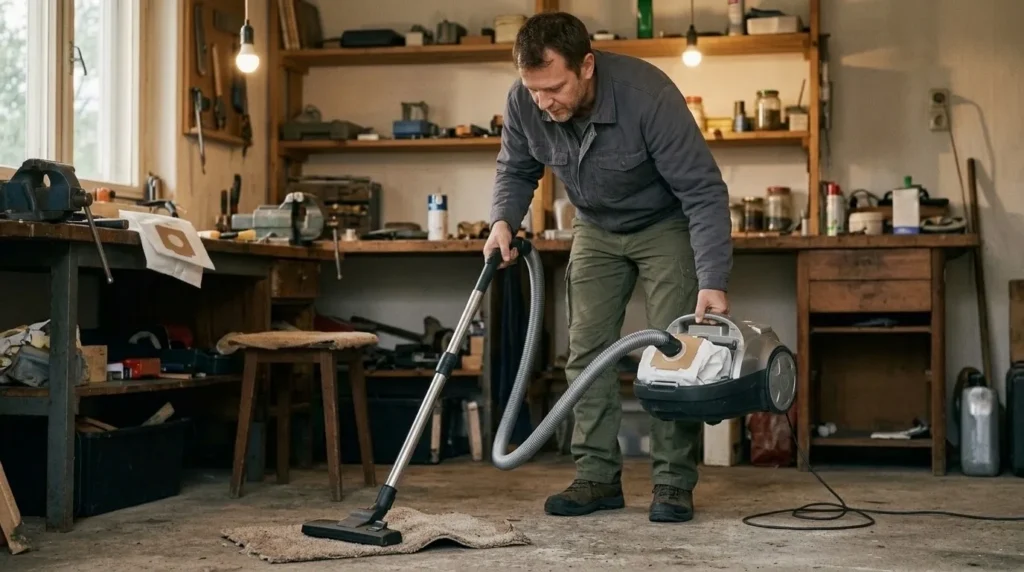
The best comparison is going over the same rug or surface where you noticed the problem, instead of testing suction only in the air. That way you immediately see whether the airflow is truly restored or just the sound seems different.
When to call a professional: If the job involves changes to the electrical panel, the main gas line, or load-bearing walls/beams — or if you're not sure how it will turn out — this is not a DIY task. Hire a licensed professional.
Final check
- The bag or bin is empty, and the filters have been put back completely dry.
- The hose, tube, and attachments are clear, with no wound-up hair or major obstructions.
- The covers and seals fit properly and there's no false air leaking in anywhere.
- Suction power is visibly better on the same surface where the problem was noticeable.
Common problems
- After cleaning, suction is still weak, but the motor sounds normal.
- That usually still means there's a clog somewhere or a poorly seated cover and seal. Go back through the hose, joints, and filter position in order before suspecting the motor.
- The filter was washed, but afterward the vacuum smells odd or quickly loses power.
- It was very likely put back while still damp. Let it dry completely and, if needed, clean off the fine deposits that stuck to the wet material again.
- The rotating brush doesn't spin, or spins with difficulty.
- Wound-up hair, thread, or a worn belt are the most common reasons. Remove the tangles and check whether the roller turns freely and whether the belt is actually transmitting drive at all.