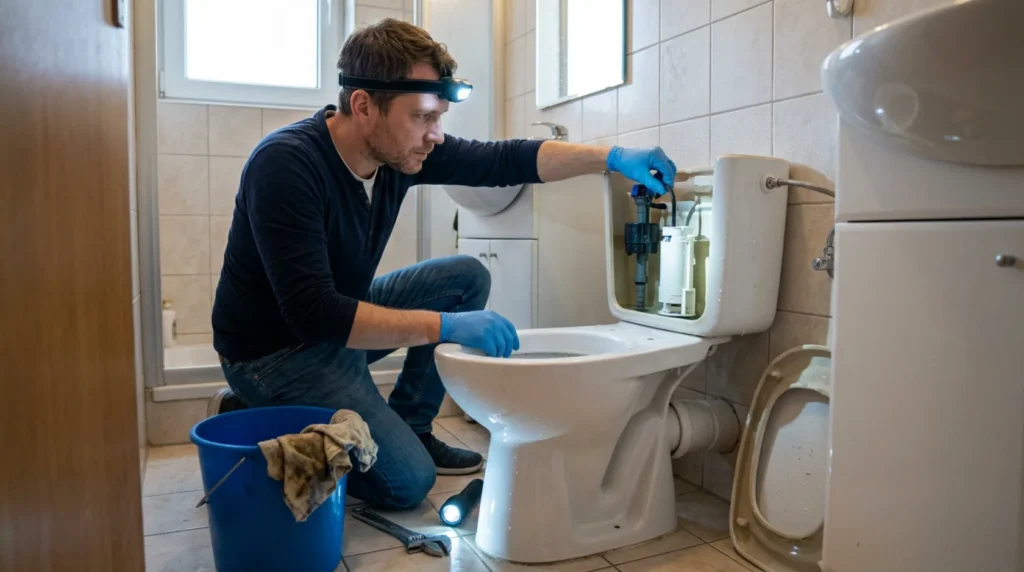
A toilet bowl that flushes poorly does not always mean the same thing: sometimes the problem is in the too low water level in the cistern, sometimes in clogged channels under the rim, and sometimes in the drain itself that does not drain properly. The biggest mistake is to immediately disassemble everything in order without distinguishing whether the shell does not have enough water or it has enough, but does not distribute and drain it properly. This guide walks you through just that difference.
You need to know how to open the cistern, recognize the water level and safely clean the available openings without damaging the ceramics. It is also useful to distinguish a weak flushing stream from a slow withdrawal of water from the shell, because these are not the same malfunctions.
1 First determine whether the problem is in the amount of water or in the drain
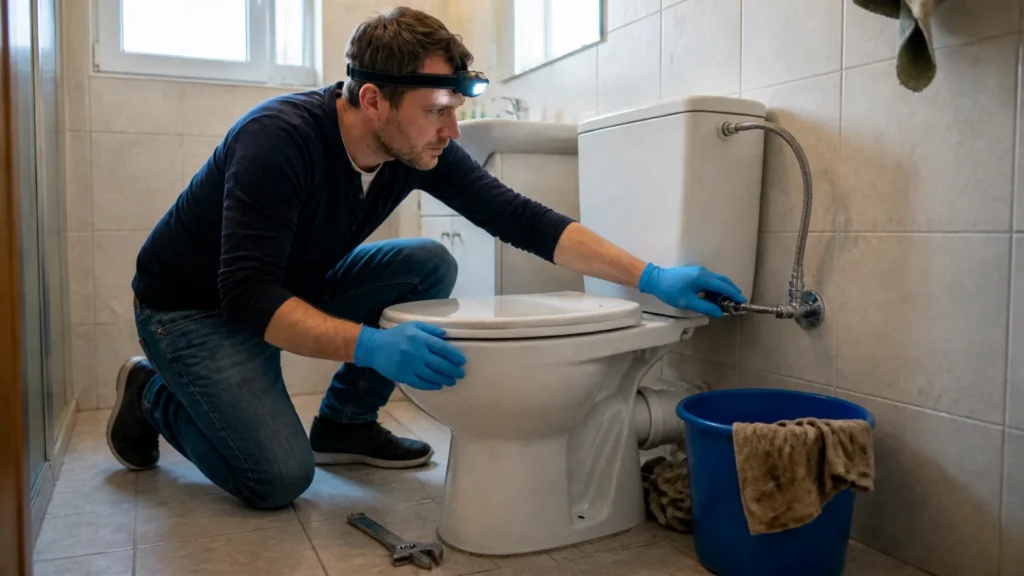
See if the cistern fills to the normal level and if the discharge mechanism opens sufficiently when flushing. Then pour a bucket of water directly into the shell and watch it leave. If the bucket goes strong, and the regular flush is weak, the trail leads to the cistern and the stream; if the bucket also goes badly, the suspicion shifts to the drain.
2 Check the water level and the operation of the mechanism in the cistern
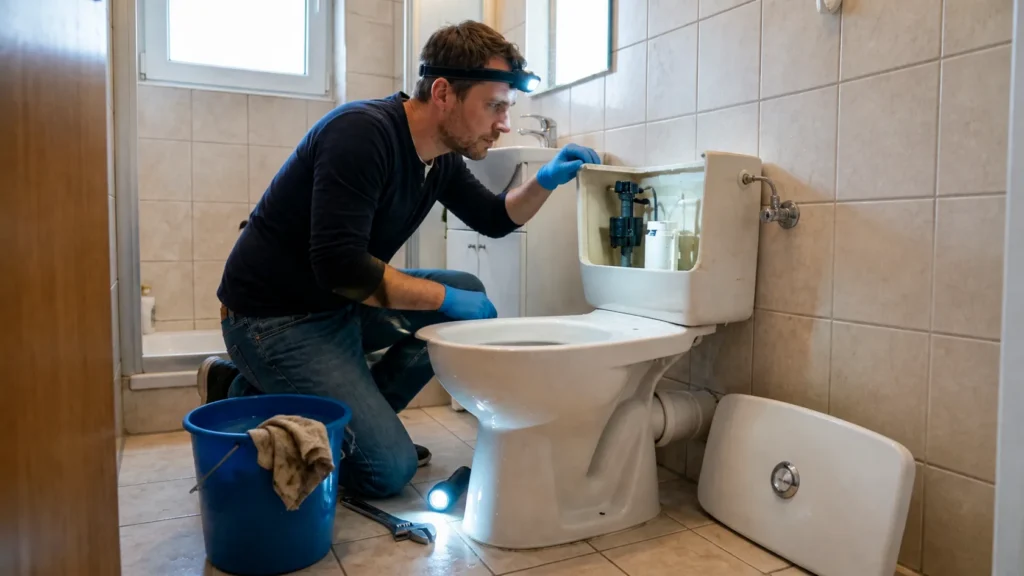
Too low water level is often the main reason for poor flushing, especially if the float closes too early. Also watch if the discharge valve opens fully or if the button/chain only partially raises the mechanism. The shell cannot be rinsed well if there is not enough water and full opening at the start.
3 Clean the holes under the rim and the main jet opening
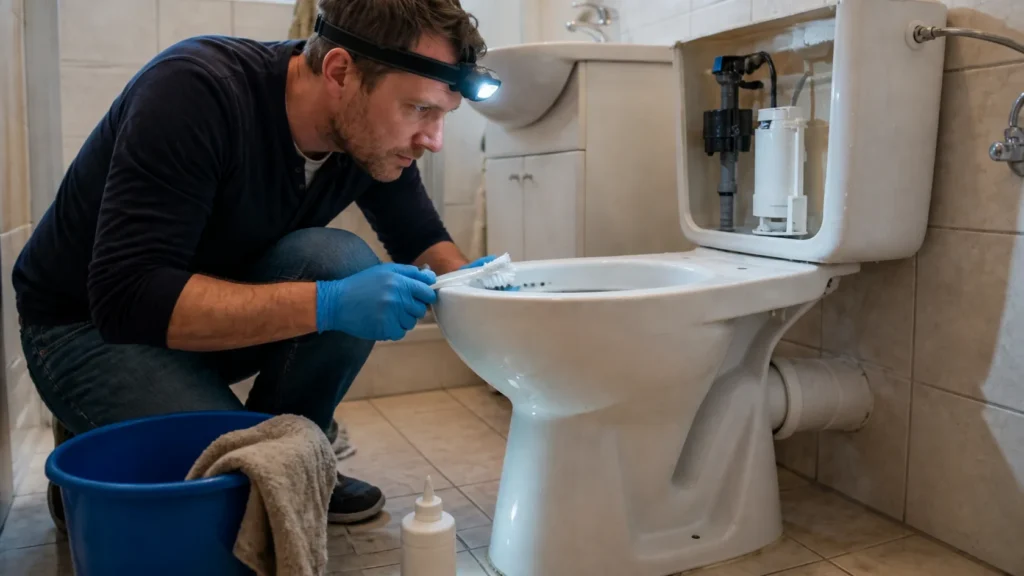
Deposits of scale and dirt often choke the stream so that there is formally enough water, but it does not come out evenly and strongly. Clean the holes under the rim and the main opening with a product suitable for ceramics and a plastic or wooden tool, not with metal that can damage the glaze. Here, patience is worth more than force.
Tip: If the limescale returns quickly, it is useful to periodically clean the holes under the rim as a preventive measure before the flow weakens again. In hard water it makes a big difference.
4 Adjust the float only after you know that the drain is not the main culprit
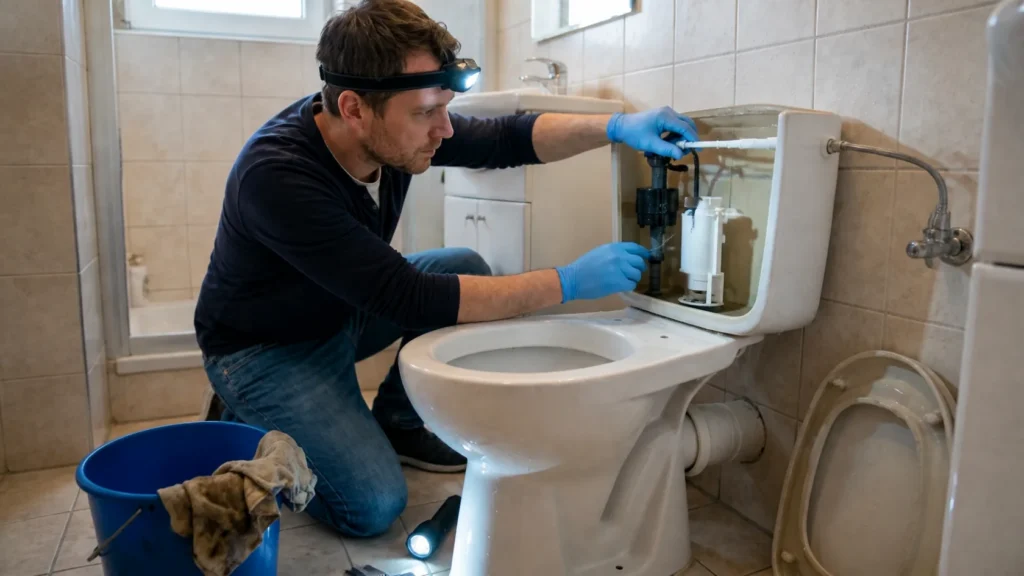
Increasing the water level only makes sense if the shell and drain are otherwise working properly. If the drain is slow or partially blocked, more water will not solve the real problem but will only cover it up for a while. That is why the adjustment is done only when the diagnosis is clear.
5 After the intervention, watch the full flushing cycle, not just the first jet
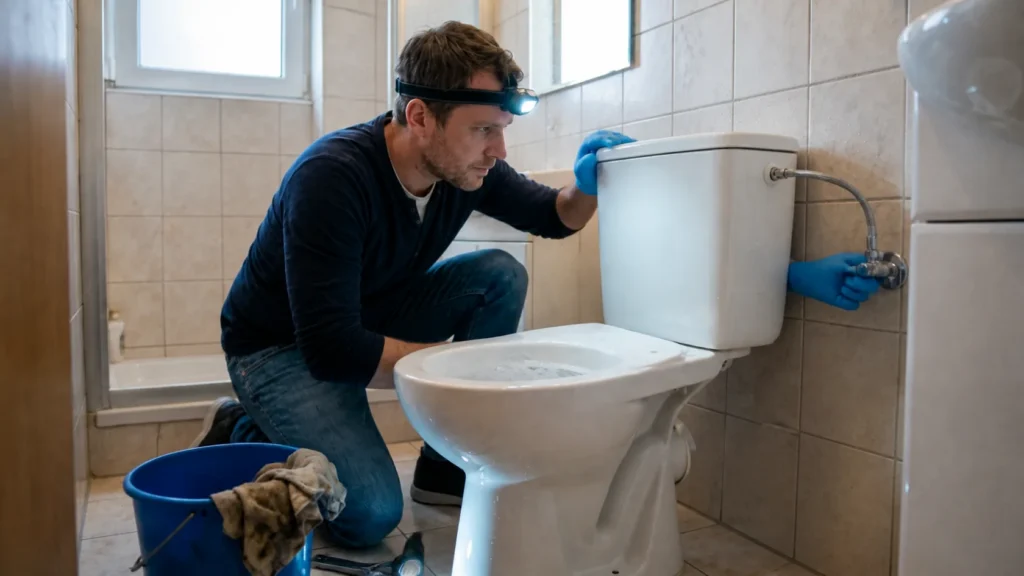
A good result is not only that the initial jet seems stronger, but that the shell pulls the contents convincingly and that the water level returns properly after filling. Try several rinses in a row and see if the effect repeats itself. If one flush is good and the other is poor, the mechanism is not really solved yet.
Final check
- It is separated whether the shell has a problem with the amount of water, the arrangement of the jets or the drain itself.
- The water level and the full opening of the discharge mechanism in the cistern were checked.
- The holes under the rim and the main jet hole were cleaned without damaging the glaze.
- The shell reliably rinses through several consecutive cycles, and not just on the first try.
Common problems
- The water level rises, but the shell still pulls poorly.
- This often means that the problem was not only in the amount of water, but in the arrangement of the jets or the drain itself. More water doesn't help if it doesn't go where it should or has nowhere to go.
- A bucket of water goes well, but regular flushing remains weak.
- That test usually shows that the drain is mostly fine, and that the cistern, mechanism, or clogged drains should be looked at. It's a very useful way to avoid blindly searching for a fault.
- The holes are cleaned with a metal object and the glaze is damaged.
- Damaged glaze collects new dirt and scale even more easily. That's why it's done more gently, but thoroughly, with a suitable tool and a non-invasive tool.