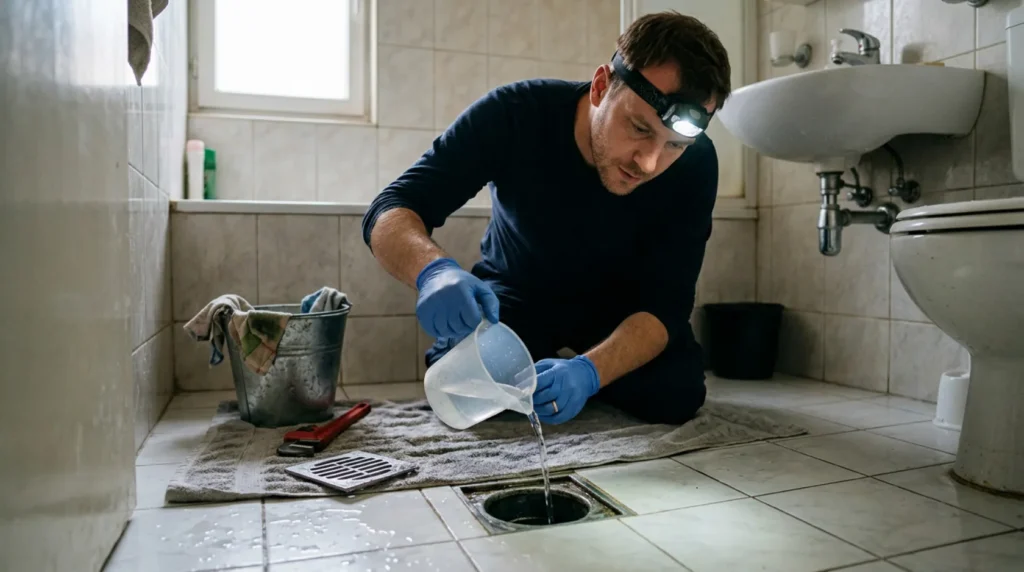
The floor siphon that spreads the smell very often does not have any problem with the pipe, but simply ran out of a water plug that normally stops sewer gases. However, not every such case is only due to a dry siphon: sometimes the water disappears too quickly, sometimes the siphon is dirty, and sometimes the sewer ventilation pulls the water plug. This guide will help you distinguish between a simple water leak and a sign that the problem goes deeper into the installation.
You need to be able to remove the grate and clean the available sediment without pushing the dirt deeper into the pipe. It is also useful to understand what the water plug does and why siphons in rarely used spaces often remain dry.
1 First, check if there is any water in the siphon
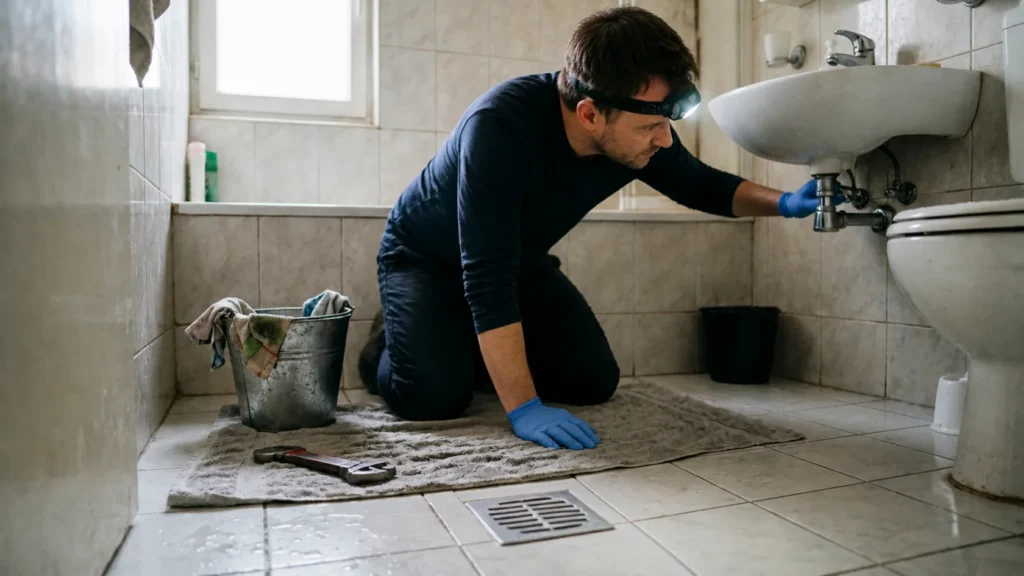
Remove the grate and see if you can see the water in the siphon, creating a water plug. If it is dry inside or the water level is barely there, the smell is most likely because the sewer gases no longer have an obstacle. It is the simplest cause and worth confirming first.
2 Clean available hair and sediment before topping up
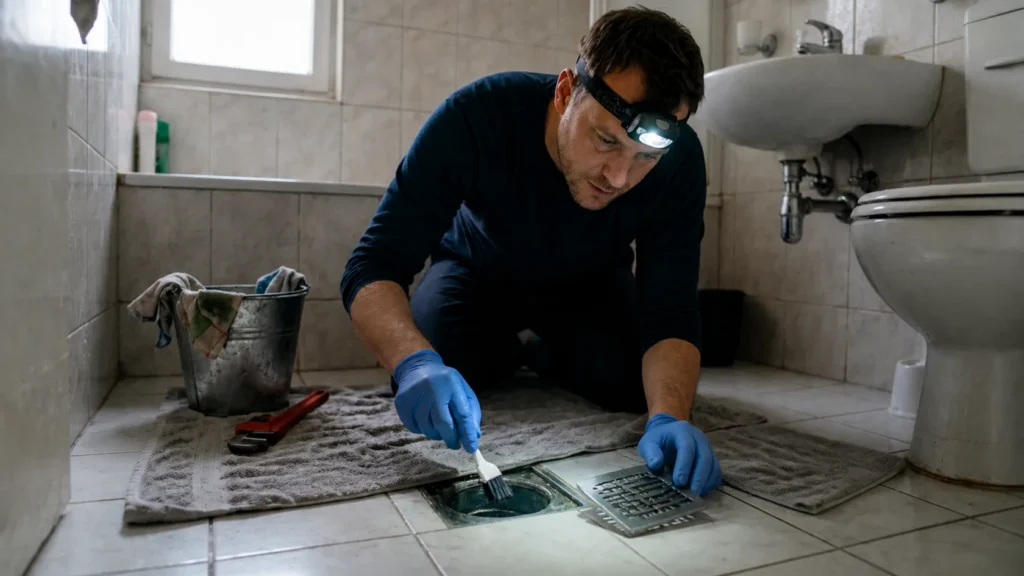
If the siphon is full of sediment, soap scum and hair, water alone sometimes helps for a short time, but the unpleasant smell remains or returns quickly. First remove what is available without pushing deeper into the pipe. A clean siphon holds the water plug better and smells less of itself.
3 Renew the water plug with a sufficient amount of clean water
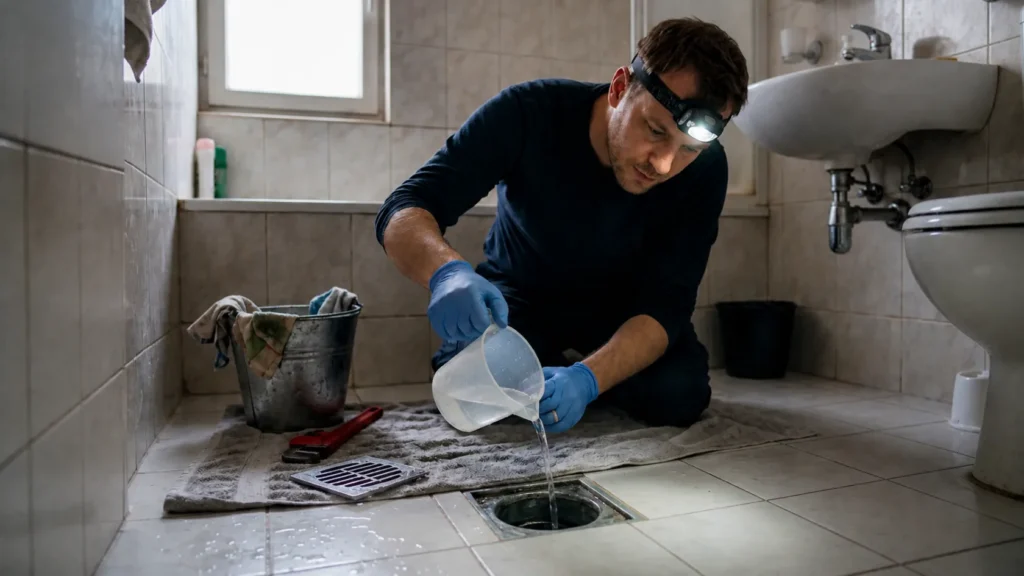
It is not enough to pour just a little water so that the surface is wet. The siphon needs to get enough water for the water plug to actually form and stay in place. In a room that is rarely used this is often the whole solution, but sometimes it needs to be repeated from time to time.
4 Monitor if the water disappears too quickly again
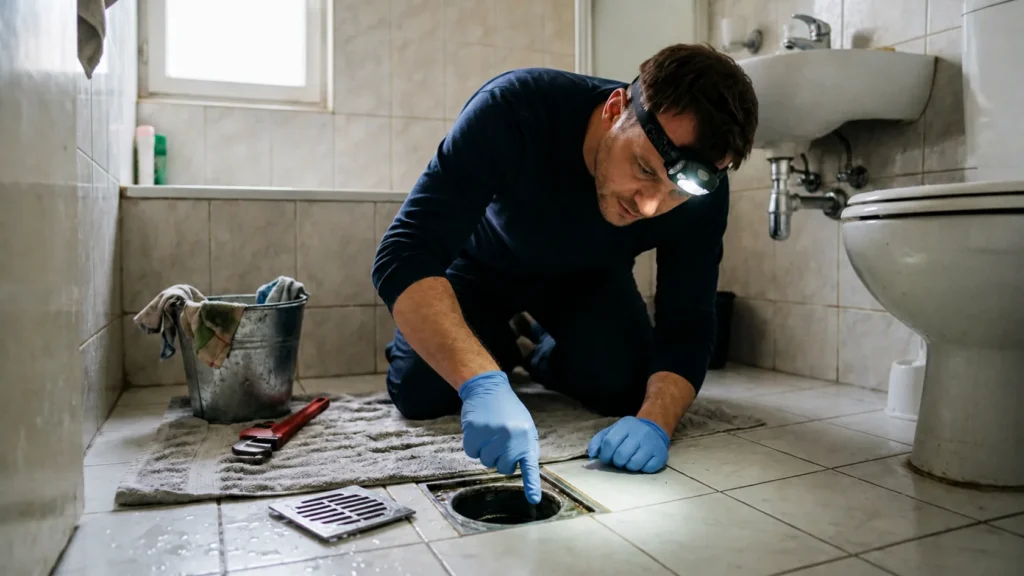
If the odor returns shortly after topping up, it is important to know whether the water is being lost to evaporation over a long period of time or is disappearing unusually quickly. A rapid disappearance may indicate a siphon leak, a poorly fitting part, or a sewer ventilation problem that is pulling the water plug. Then the story is no longer just 'add some more water'.
Warning: If the siphon quickly runs out of water even though the space is normally used, don’t just stop at filling. This may indicate a leak or sewer ventilation problem.
5 In rarely used areas, introduce a short maintenance routine
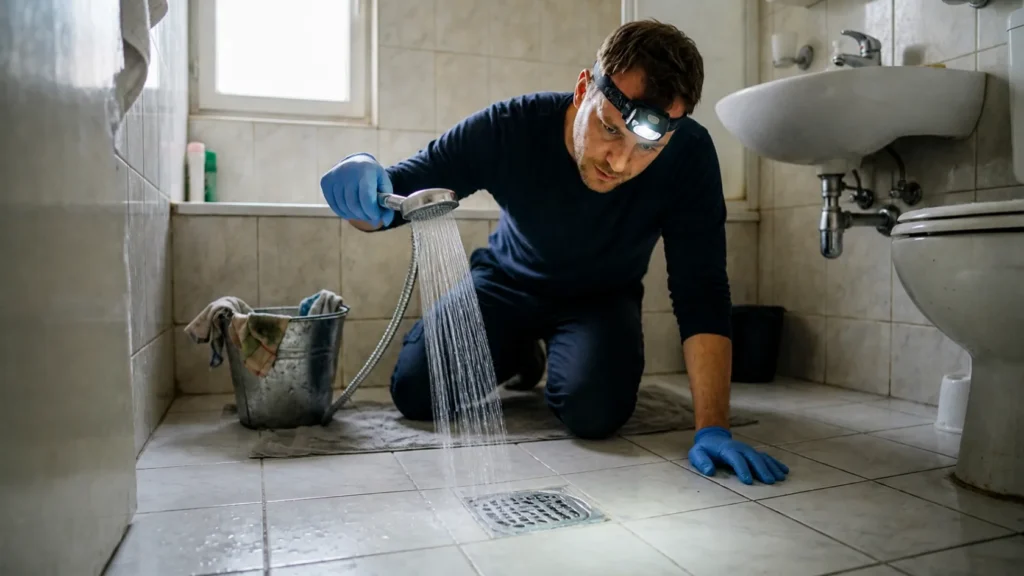
Floor siphons in the basement, laundry room, garage or spare bathroom often remain dry precisely because no one turns on the water for a long time. If that’s your case, it’s more useful to make a small routine of occasional topping up and cleaning than to look for a fault every time. The smell that persistently returns despite water and cleaning then already requires an inspection of the installation.
Final check
- It was checked whether the water plug really disappeared or if the problem is something else.
- The siphon was cleaned of available sediment before the water plug was renewed.
- Sufficient water was added to actually restore the plug.
- It was monitored whether the smell returned due to infrequent use or due to faster water loss than normal.
Common problems
- A little water is added, but the smell quickly returns.
- Maybe the water plug has not really been renewed or the siphon is still full of sediment. If this happens repeatedly, you should also monitor whether the water is disappearing unusually quickly.
- The siphon is rarely used, so every time a malfunction is sought.
- In such areas, siphon drying is a very common and quite logical cause. A simple routine of occasional topping up often solves the problem without major intervention.
- The smell persistently returns even though the trap has been cleaned and refilled.
- Then you should suspect a leak in part of the siphon or a problem with sewer ventilation. It is no longer just a matter of cleaning and water.