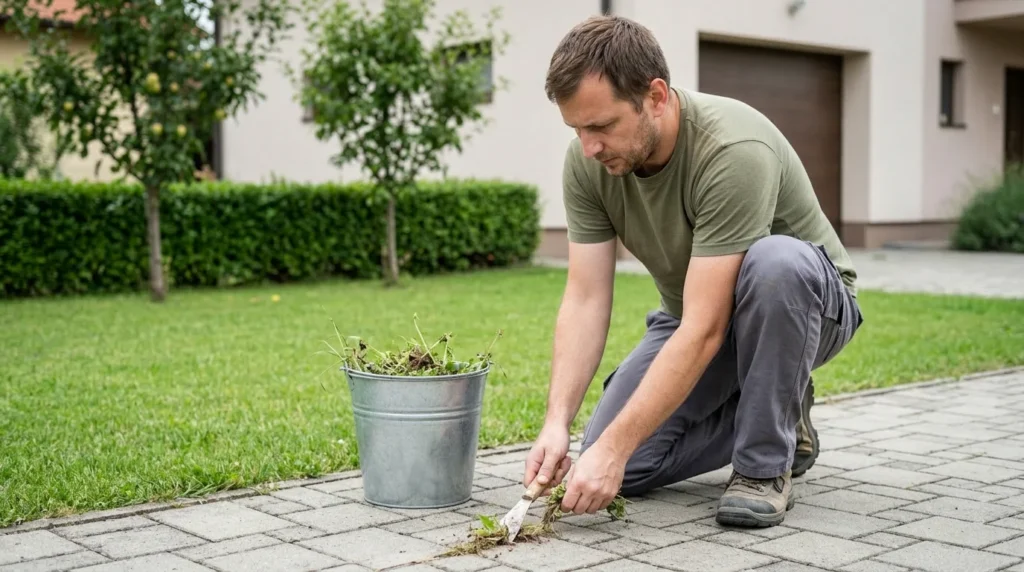
1 Choose a dry day
Work after a few dry days when the soil in the joints crumbles, but before the weeds form seeds. Sweep the surface and remove leaves and small stones.
2 Pull out weeds along with the roots
Run a joint scraper along both sides of the joint and pull the plant from the base. For deep roots, first moisten only the joint, wait a few minutes, and try again.
? Tip: A small weed burner can damage joint sand, installations, or surrounding plants; mechanical extraction is slower but more predictable.
3 Clean the joints and surface
Remove small roots, moss, and soil with a stiff brush. Dispose of the collected plant material, and do not put weeds with mature seeds into a cold compost.

4 Use herbicide only target-specifically if needed
If mechanical removal is not enough, choose an approved agent for non-agricultural surfaces and apply it only to the weed leaves according to the label. Do not spray before rain, in high wind, or near drains and edible plants.
⚠ Warning: Do not mix herbicides, increase the dose, or use salt, diesel, or bleach. Such agents pollute the soil, damage the paving blocks, and can end up in the drain.
5 Refill the joints
Spread suitable sand on a completely dry surface and sweep it into the joints. A well-filled joint leaves less space for new seeds and slows down regrowth.