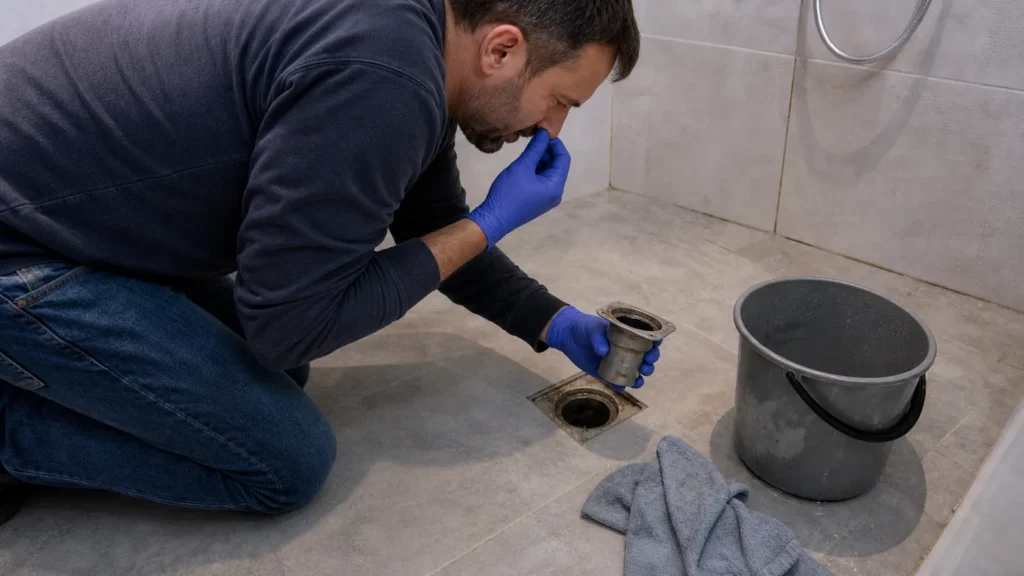
⚠ Safety note: This guide involves working with plumbing. If you're not completely sure about every step, stop and call a licensed professional. Before you start, always switch off the power at the breaker or close the main water/gas valve.
1 Prepare for safe work
Close the corresponding valve, turn off the electrical power to the appliance if any, and wait for the water to cool. Protect the area with a bucket and cloths, and photograph the initial position of the joints.
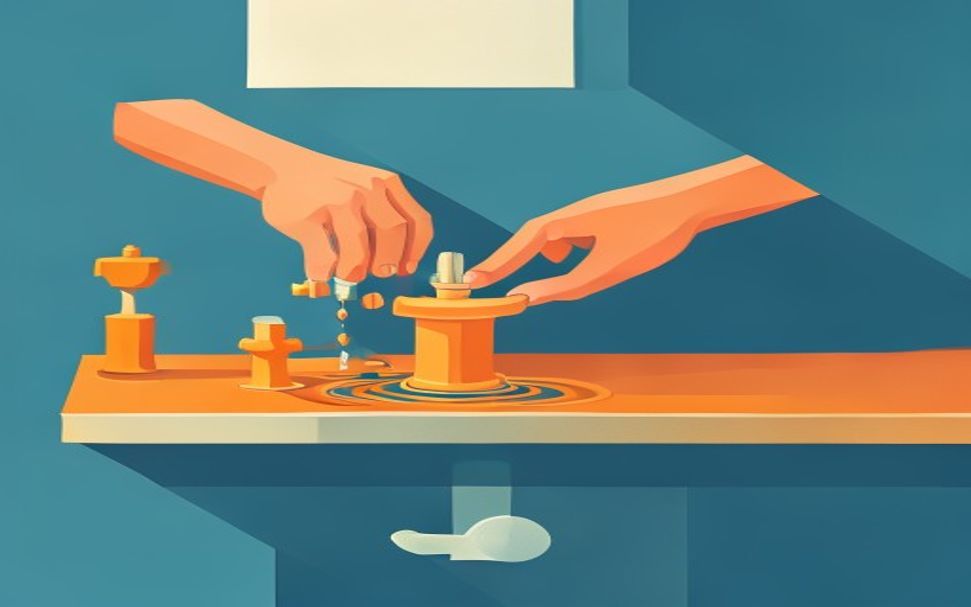
⚠ Warning: Do not enter manholes and do not mix drain openers with bleach or acids.
2 Determine the pattern of the problem
Pour water into rarely used traps and check if the smell disappears after restoring the water seal.
3 Check the most common cause
Clean the floor drain, sink overflow, and buildup under the grate, then inspect the seals and the toilet bowl cuff.
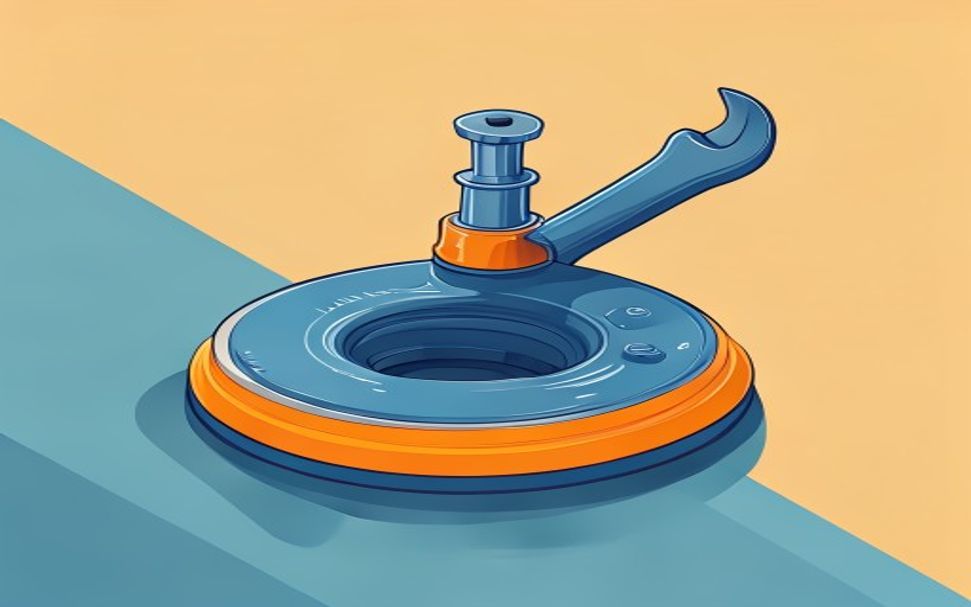
4 Apply the appropriate solution
A smell that returns during flushing may indicate poor sewer ventilation or underpressure in the vertical stack and requires a professional inspection.
? Tip: Photograph the initial state and change only one thing at a time so that you know which check really affected the result.
5 Test the result and set limits
Assemble the connections without overtightening, slowly open the water, and monitor for leaks, pressure, and drainage for at least a few minutes. If the problem returns, turn off the supply and call a plumber.