
A manual transmission that's hard to shift into gear can have its cause in cables, the shift-lever mechanism, oil level, the clutch, or internal synchro wear. First you need to tell whether the problem exists only with the engine running or also when it's off. That distinction alone narrows down where it's worth looking for the cause.
It's enough to know how to park the vehicle safely, observe how the shift lever behaves, and recognize basic signs of leaks or resistance in the shift mechanism. It also helps not to force the lever while the cause is still unclear.
1 Let the vehicle cool down and secure it before inspection
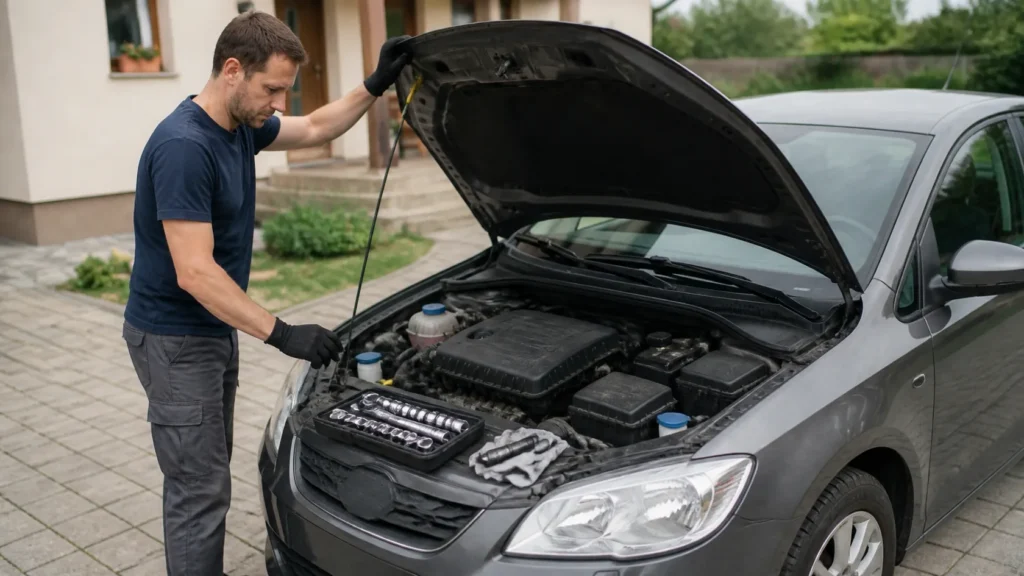
Park on level ground, turn off the engine, and wait for the assembly to settle if it was under heavier load. Don't start the inspection while everything is still hot and fresh from the last drive. A calm start helps you separate a real fault from a momentary feeling of stiffness.
2 Separate the behavior with the engine off and running
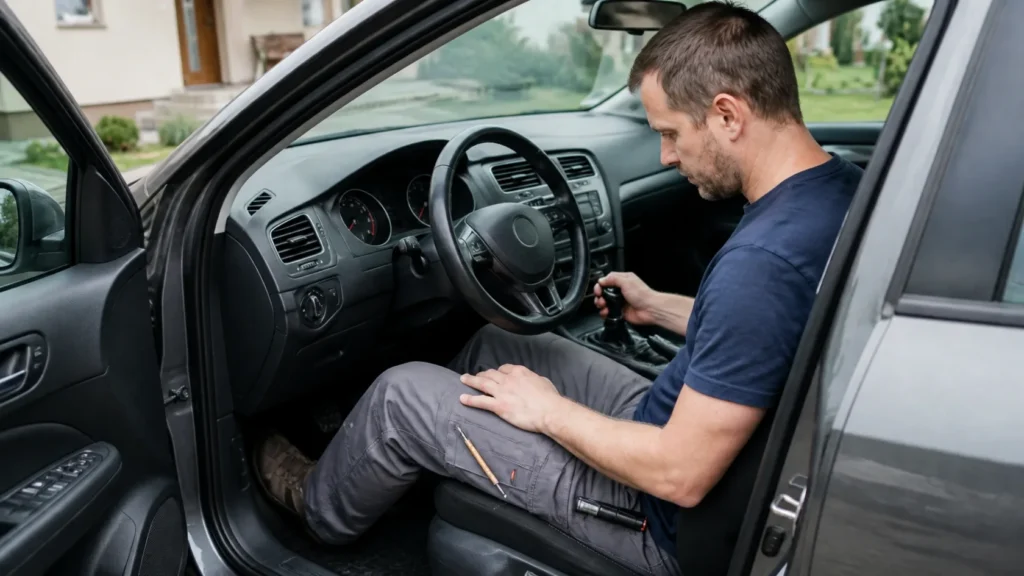
Try moving the lever through the gears with the engine off, then compare with how it feels when running. If it shifts easily with the engine off but hard when running, suspicion often points to the clutch or its release mechanism. If it's hard to shift even without the engine running, look more at the lever, cables, and the selector mechanism.
3 Inspect the lever, cables, and traces of leaks
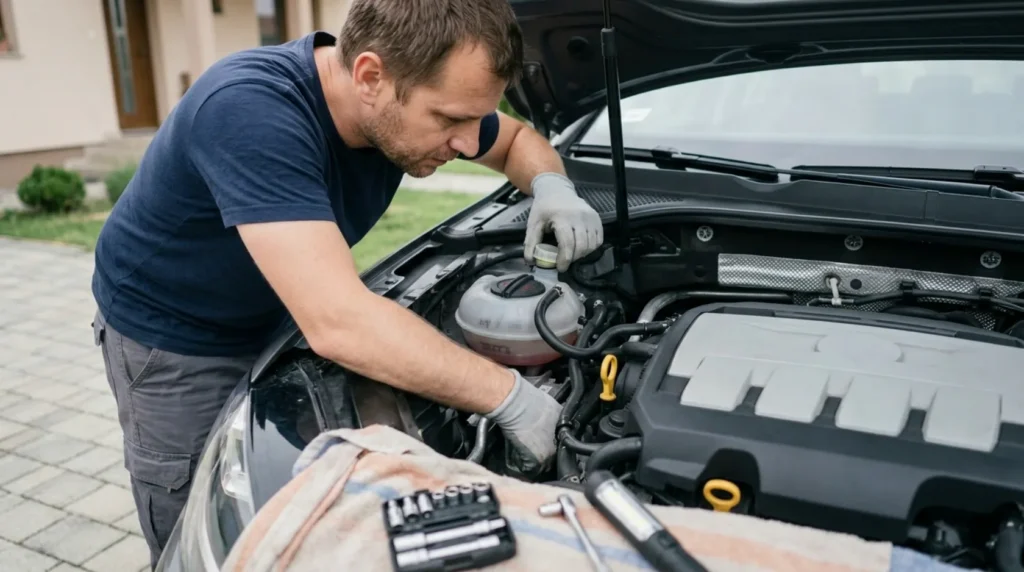
Check for play, corrosion, stiffness, or anything mechanically restricting the movement of the lever and cables. Also pay attention to traces of oil around the transmission or connections if they're accessible for visual inspection. Not every trace has to mean the same fault, but together they point to a direction.
4 Make one meaningful correction
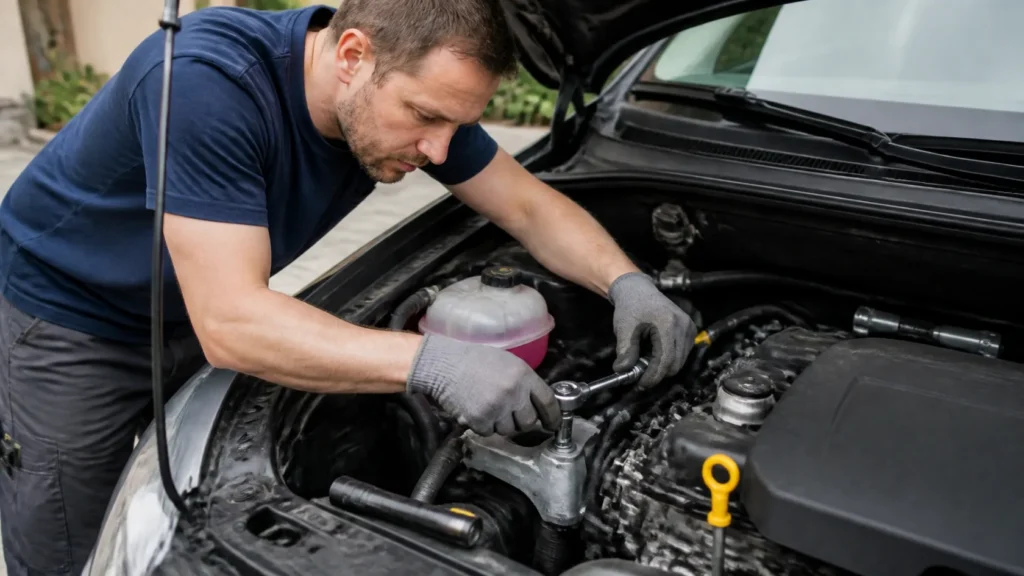
If it's obvious that something is binding or the lever adjustment is off, fix that one confirmed cause first. Don't replace several parts or adjust everything at once, since you'll lose track of what actually caused the change. With a transmission, a disciplined order matters more than speed.
5 Compare the behavior on a short drive
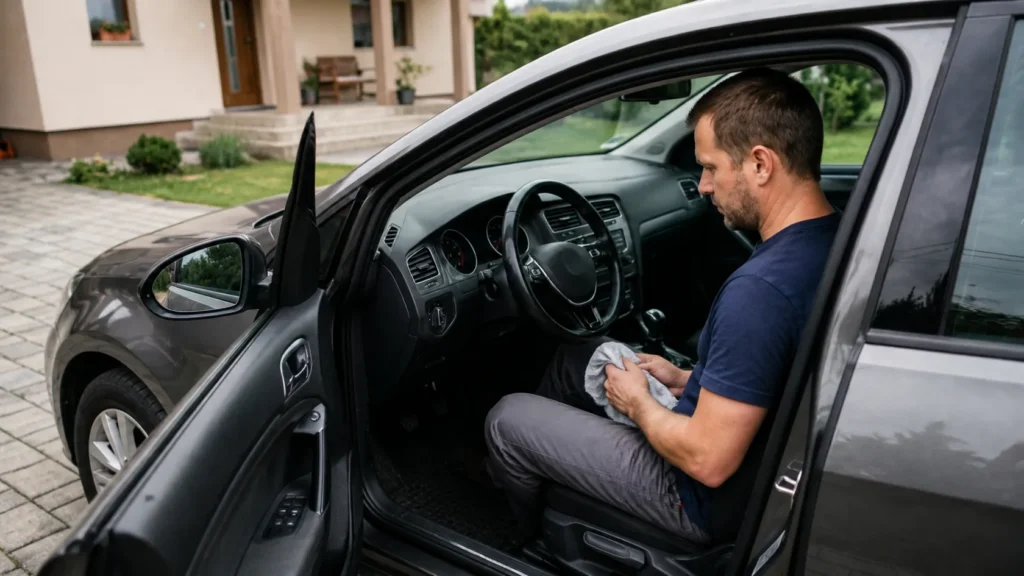
On a short drive, check whether gears go in equally well cold and after a bit of driving, without grinding and without forcing the lever. The problem needs to be genuinely smaller under the same conditions where it showed up before. If it still binds or grinds, the cause isn't resolved and shouldn't be forced.
Final check
- The transmission's behavior with the engine off and running has been distinguished.
- The shift-lever mechanism, cables, and any accessible signs of leaks or corrosion have been inspected.
- No multiple changes were made at once without a clear reason.
- On a short drive, gears go in more convincingly and without forcing the lever.
Common problems
- The lever is forced through resistance to 'somehow get into' gear.
- That often only makes things worse and hides the feel of the real fault. Resistance in the transmission is a call for better diagnosis, not more force.
- The problem only exists with the engine running, but the fault is still sought only in the lever.
- That very often shifts suspicion toward the clutch or its release, not just the external selector mechanism. That's why the difference between engine off and running matters a lot.
- After a small correction it feels better standing still, but grinds again while driving.
- That's why the final check must include a short drive under the same conditions where the symptom appeared before. A stationary test isn't enough for a final verdict.