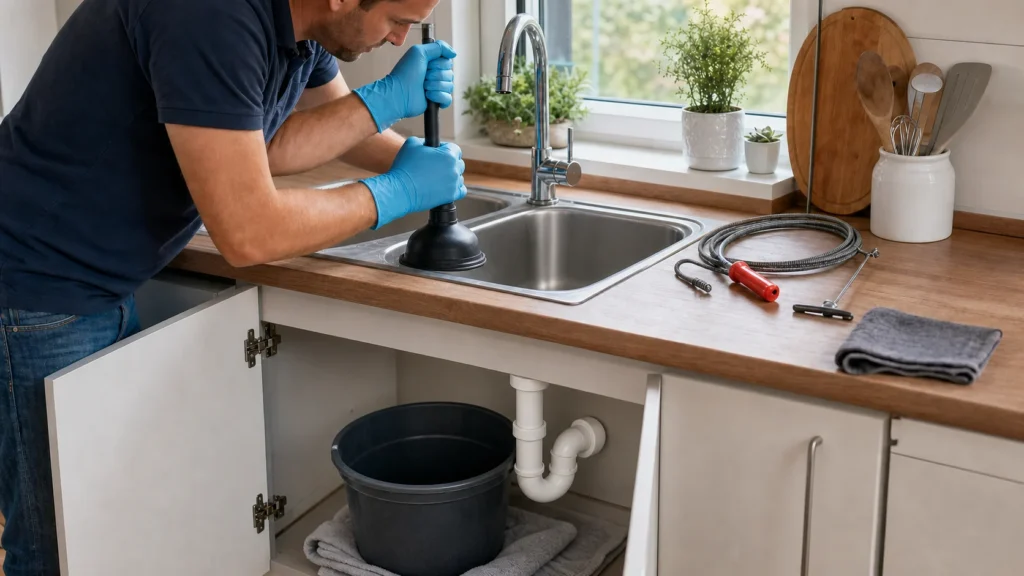
A clogged sink is usually the result of accumulated grease and food waste in the siphon or drain pipe. The good news is that most clogs can be resolved with a plunger, soda and vinegar, or a snake, without aggressive chemicals that can damage pipes and rubber gaskets. You don't need to turn off the main water supply, but stop using the faucet while you work so you don't add water to an already full drain.
No prior knowledge is required – it is enough to know how to unscrew the siphon by hand or with an adjustable wrench and to have a bucket nearby.
⚠ Safety note: This guide involves working with plumbing. If you're not completely sure about every step, stop and call a licensed professional. Before you start, always switch off the power at the breaker or close the main water/gas valve.
1 Prepare the space and stop using the faucet
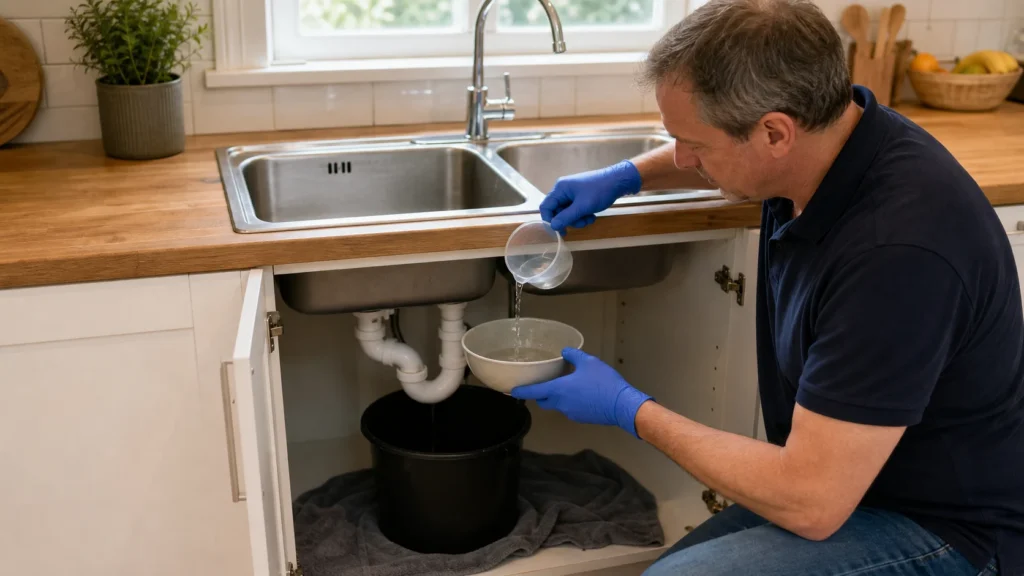
Remove dishes from the sink and scoop out any standing water, then place a bucket and an old rag under the siphon because water will drain out when disassembling the parts. Inform household members not to use that faucet temporarily.
2 Try a plunger first
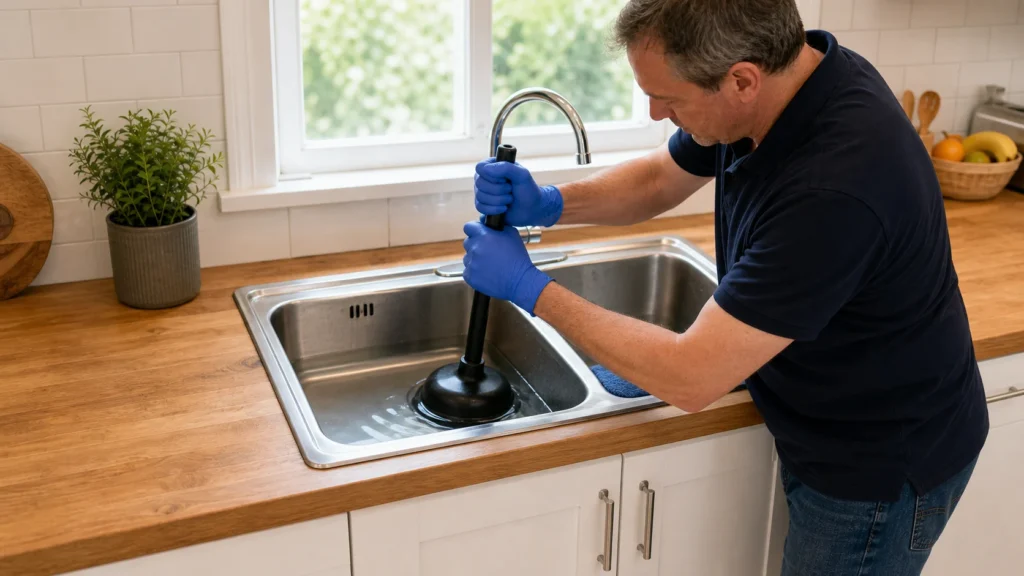
Cover the overflow opening (the hole for draining excess water) with a wet cloth so that the plunger makes a tight vacuum, then press the plunger on the drain opening several times with sudden up-and-down movements.
? Tip: If the sink has two basins, while working with a plunger on one drain, cover the other with a wet cloth – otherwise, the vacuum will not be strong enough.
3 Try baking soda and vinegar
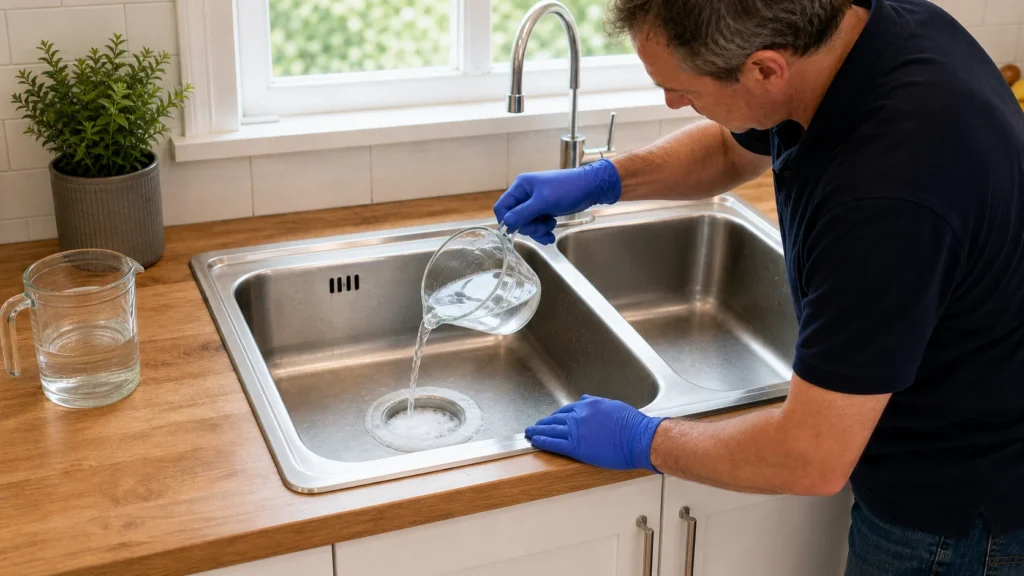
If the plunger does not help, pour half a cup of baking soda into the drain, followed by a cup of vinegar. Cover the opening and wait about 15 minutes while the mixture breaks down grease and buildup, then rinse with a liter of hot (not boiling) water.
⚠ Warning: Do not combine baking soda and vinegar with remnants of commercial chemical unclogging agents that you may have poured in earlier – mixing different chemicals in a closed pipe can splash unpredictably.
4 Use a drain snake for deeper clogs
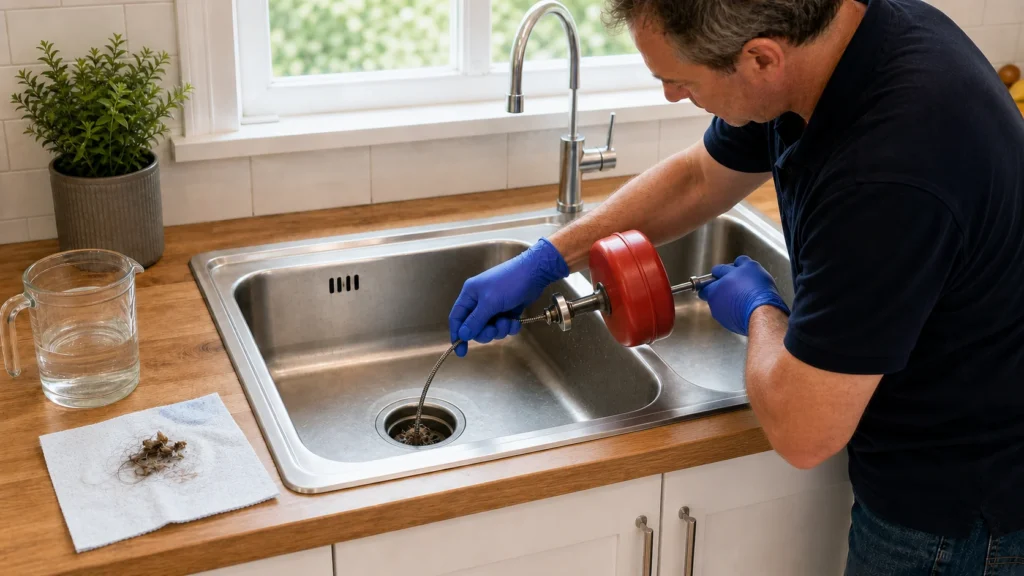
If it still does not drain, push a plumber’s snake through the drain until you feel resistance, then slowly rotate it to break up or pull out the clog and carefully extract the accumulated dirt.
5 Check and clean the siphon manually
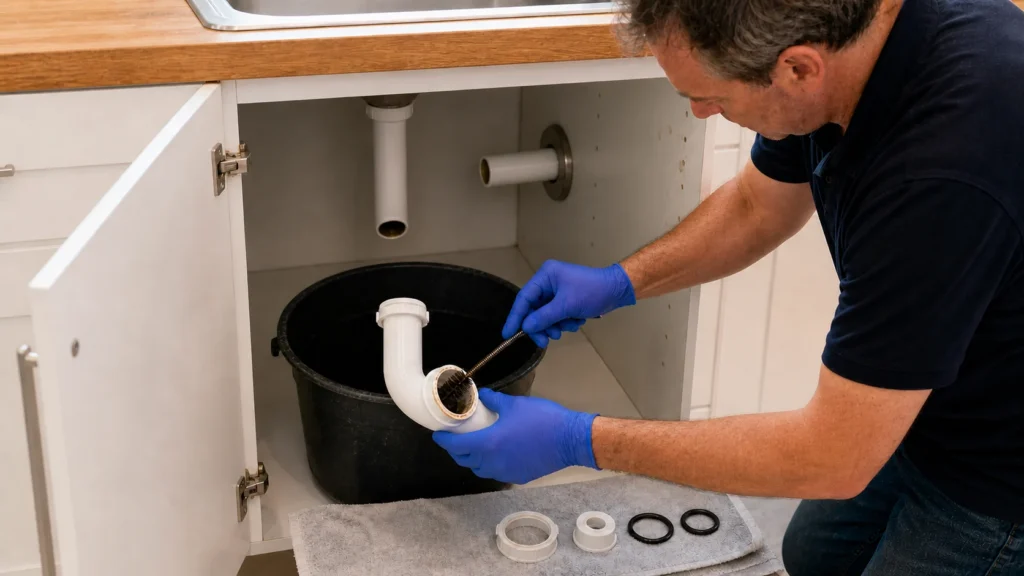
If the clog remains, place a bucket, unscrew the lower part of the siphon by hand or with a wrench, remove it, and clean it of grease and food residue with a brush, then replace and carefully tighten it.
6 Run water and check for leaks
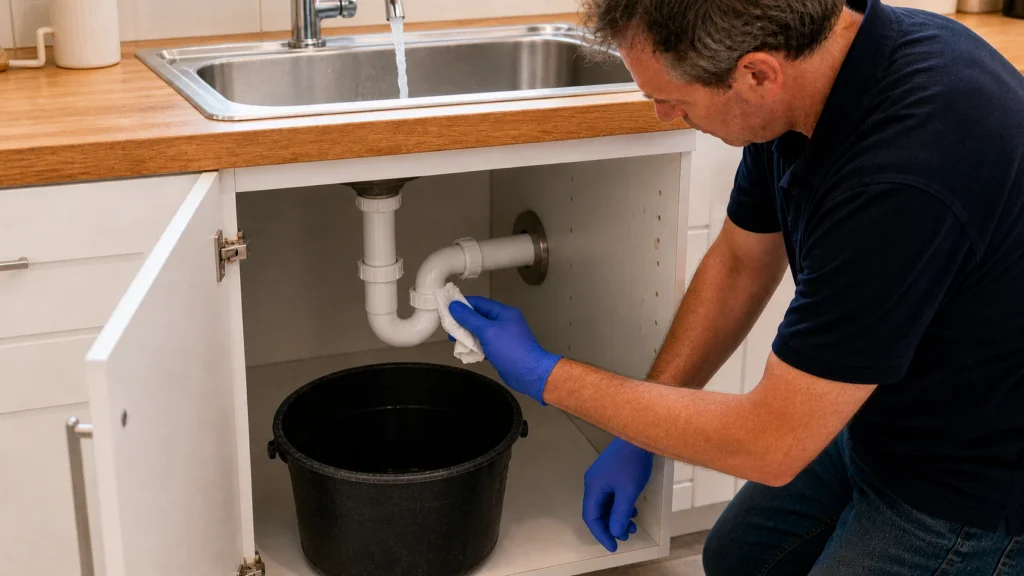
Run a stream of warm water for a few minutes to check if the water flows freely and that there are no leaks at the siphon joints.
7 Prevent future clogs
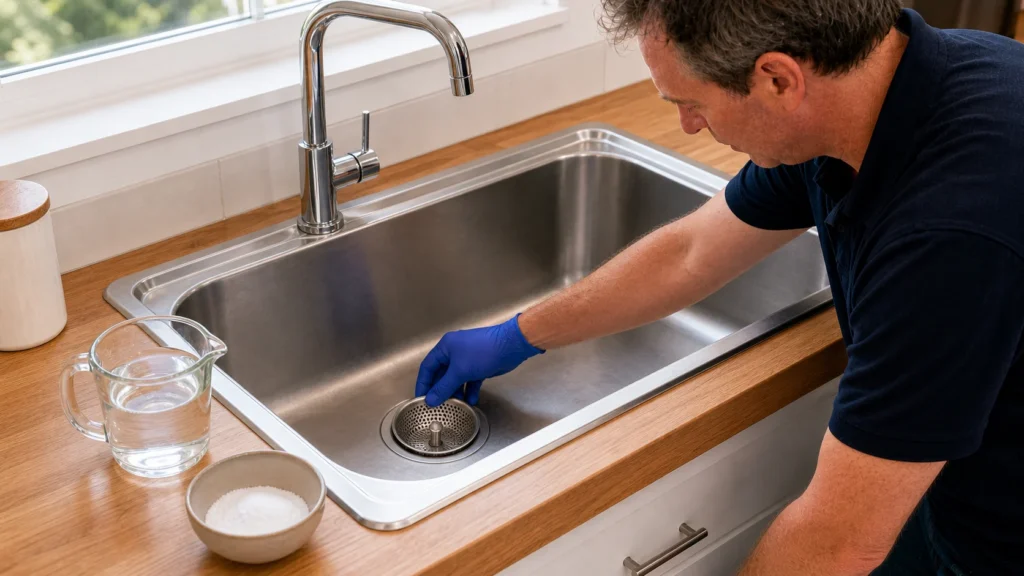
Place a strainer on the drain that catches food particles and hair, and once a month pour hot water with a little baking soda through the drain for prevention.
Final check
- Run hot water at full stream for 2–3 minutes – water drains quickly without standing in the basin
- The siphon is retightened and dry – run a dry finger or paper towel under the joints
- After an hour, check that there are no drops or damp traces under the sink
Common problems
- Water still drains slowly even though the siphon is clean
- The clog is deeper in the drain pipe behind the siphon. Remove the siphon and push the snake directly into the wall pipe, rotate it and gently push until you feel it has passed through the obstacle, then rinse with hot water.
- After reinstallation, the siphon drips at the joints
- The rubber gaskets have moved or cracked. Unscrew the joint, check that the gasket sits flat in the thread and tighten it by hand and then just a little with a wrench – overtightening deforms the plastic thread and worsens the leak.