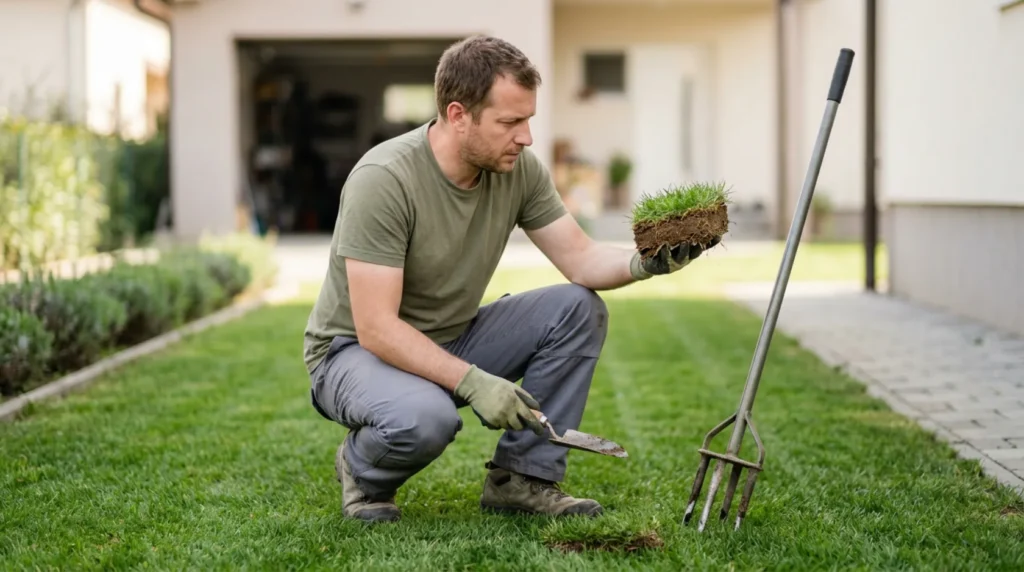
1 Prepare for safe work
Check weather conditions, utilities, and terrain, put on gloves and eye protection, and keep children and pets away from tools and products.
⚠ Warning: Use products only for the purpose and dosage on the label. Do not use electrical tools in the rain, and properly identify diseased plants and unknown pests first.
2 Determine the condition and cause
Check compaction and thatch layer, and select a period of active growth when the soil is moist but not waterlogged.
3 Perform the key check
Mow a bit lower and use an aerator that removes soil plugs, crossing especially over compacted areas in two directions.
4 Do the repair or maintenance
Leave the plugs to decompose, overseed thin areas, and apply a thin layer of compost. Do not stress the lawn while it is recovering.
? Tip: Photograph the initial state and change only one thing at a time. This makes it easier to determine what really solved the problem.
5 Test the result
After finishing, water or test only as much as the procedure requires, clean the tools, and monitor the plants or system in the following days. Do not repeat the treatment before the recommended period.