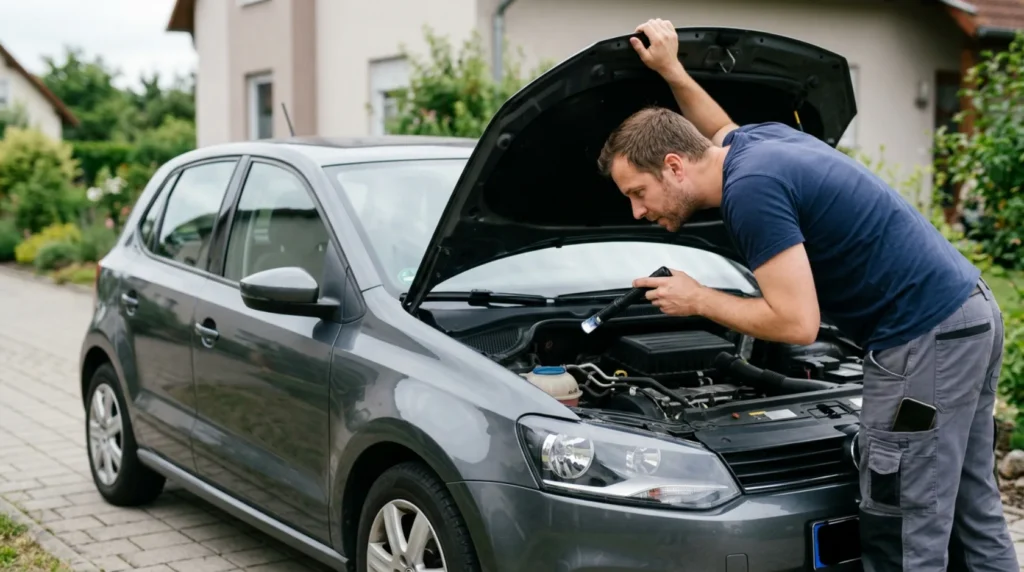
A clutch that slips when accelerating usually first shows up as rising RPM without the vehicle actually pulling, but the cause isn't always just a worn disc. Poor cable adjustment, hydraulics, oil from the engine on the friction surface, or a clutch kit that's already near the end of its life can all be involved. This guide helps you recognize the slipping pattern without aggressive tests that burn the friction surface even more and drive up the repair cost.
You need to be able to tell normal RPM rise during a gear change apart from real slipping under load, when the engine 'revs' but speed doesn't increase as it should. It helps to know that serious clutch work isn't a home job without a lift, transmission-removal tools, and experience. Your part of the job is recognizing the fault, not repairing the assembly.
1 Secure the vehicle and set up a safe condition for the test
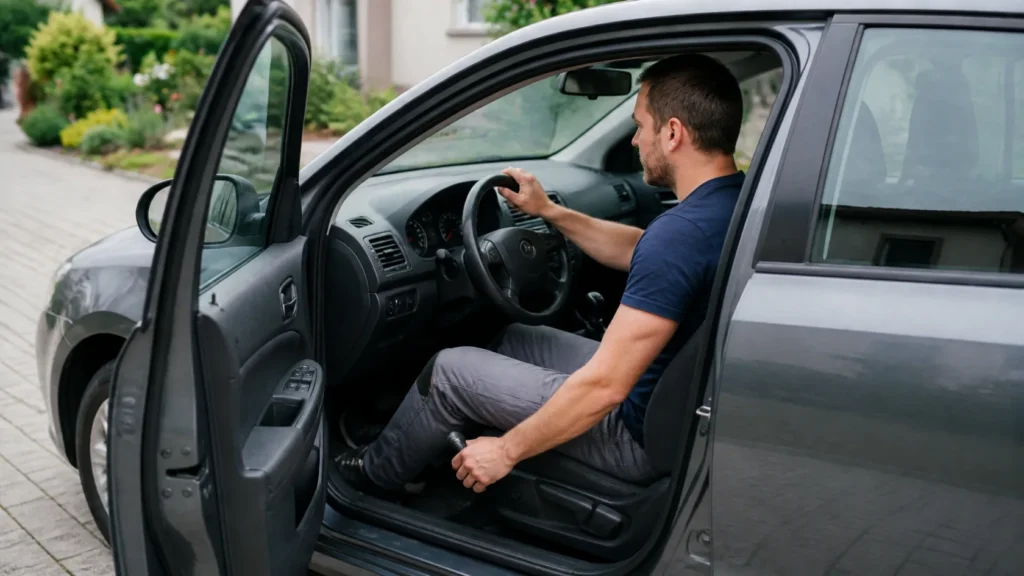
For the under-hood check, park on level ground, apply the parking brake, and turn off the engine while you look at fluid levels and the cable. If you plan a test drive to confirm the slipping, do it on an empty, clear road with no traffic behind you, never in heavy traffic. The most common mistake is nervously revving the engine in place 'just to hear' the slipping, which only overheats the friction surface further.
2 Confirm slipping with one test in a higher gear under load
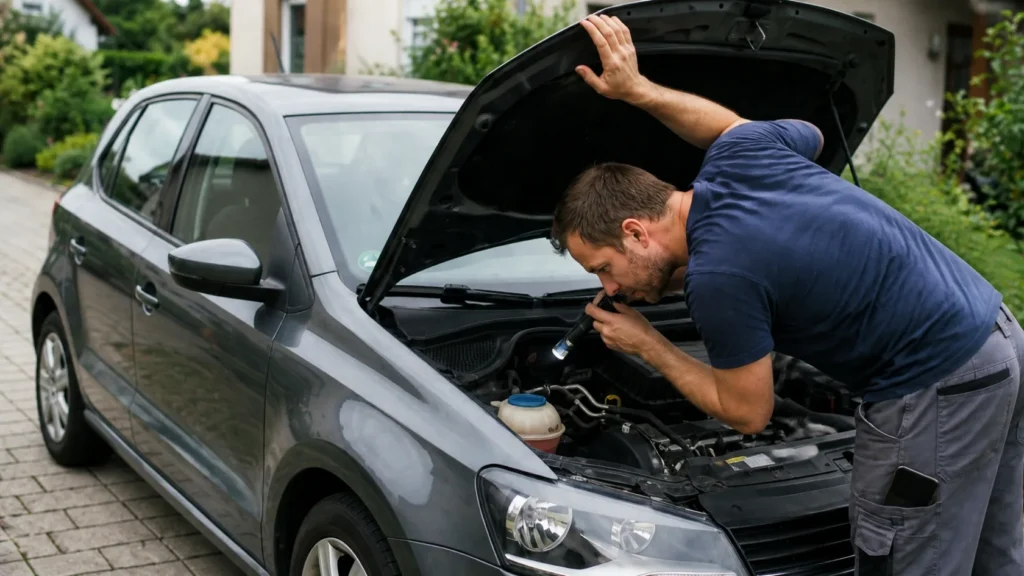
In a higher gear (e.g. fourth) at moderate acceleration from low RPM, watch the behavior: if the RPM jumps suddenly and the vehicle doesn't accelerate proportionally, the clutch is slipping. One clear test is enough. Don't repeat it aggressively and don't floor the throttle, since every instance of slipping burns the friction surface further and shortens its life. Note the gear and load at which the symptom appears.
3 Check pedal free play, hydraulics, and the smell of burning
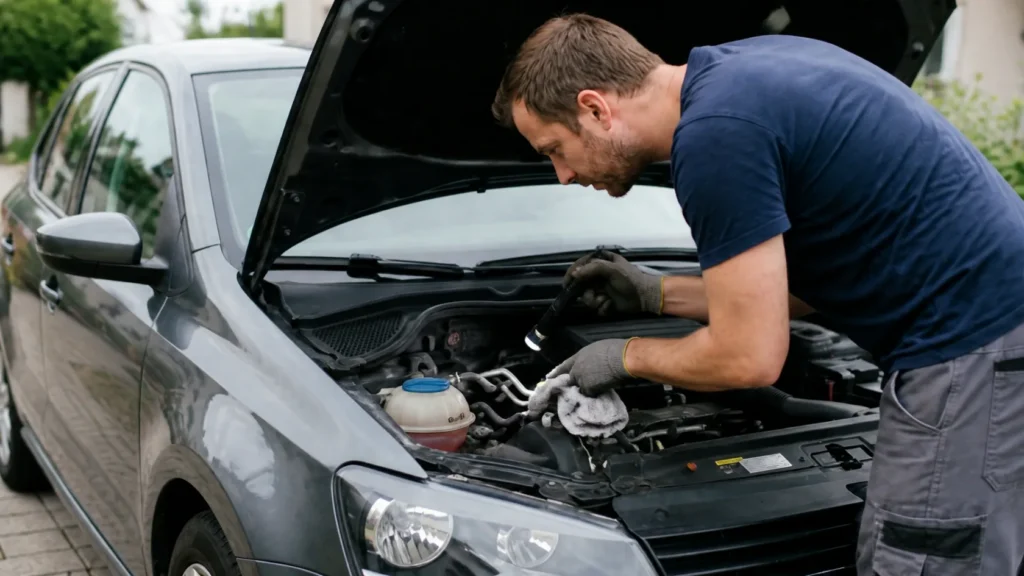
With the engine off, check the clutch pedal free play against your model's specification and whether there's leakage at the cylinder or hydraulic hose. Too little or no free play can keep the clutch slightly engaged all the time, which mimics wear. A smell of burnt friction material in the cabin or around the transmission confirms overheating of the friction surface. These clues separate an adjustable detail from real wear.
4 Determine whether the job requires removing the transmission and replacing the kit
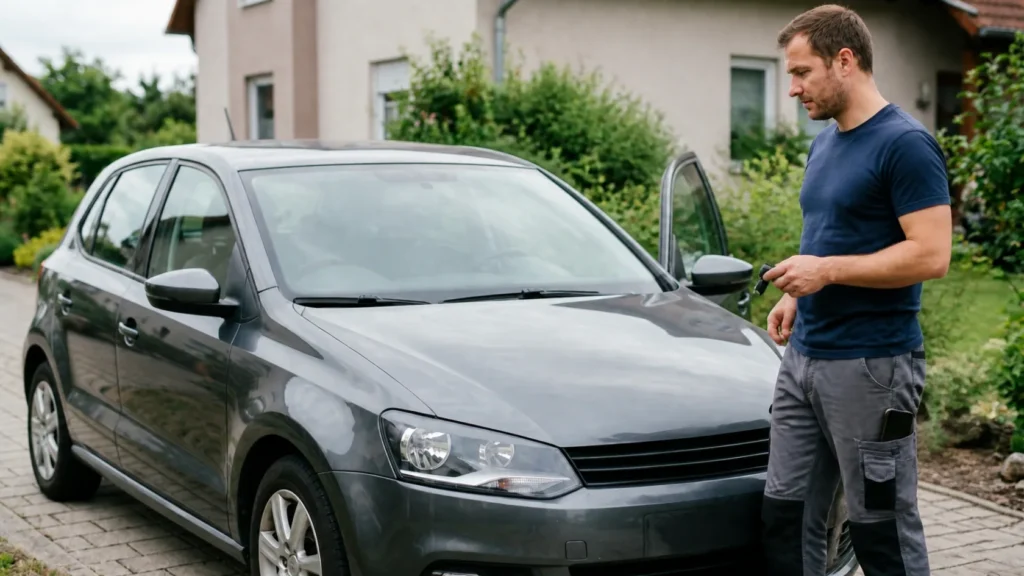
A worn disc, a damaged pressure plate, a scored flywheel, or engine oil (from a leaking seal) on the friction surface all mean removing the transmission and a professional clutch kit replacement. This isn't a home job without a lift and experience. If the only problem is poorly adjusted cable free play on older vehicles, that can be corrected, but no adjustment brings back an overheated, burnt friction surface. Recognize the limit and don't force an improvised fix.
5 Check that the vehicle pulls normally after clutch service
After replacement or adjustment, in a safe spot check that RPM and speed rise together during acceleration, without the engine suddenly 'revving.' Clutch engagement should be clear and at a reasonable pedal height, without slipping in higher gears. Until you're sure it pulls normally, don't load the vehicle with cargo, a trailer, or steep climbs. If slipping remains, the assembly hasn't been fixed and needs to go back to a mechanic.
Final check
- Slipping was confirmed with one meaningful test, without further stressing the assembly.
- The gear and load at which the symptom appears have been noted.
- Pedal free play, hydraulic leaks, and the smell of burning have been checked.
- After the repair, RPM and speed rise together, without slipping in a higher gear.
Common problems
- Several aggressive tests are done to 'be sure' the slipping is confirmed.
- Every instance of slipping under throttle burns and overheats the friction surface further. One clear test in a higher gear is enough; repeating it only speeds up wear and raises the repair cost.
- It's immediately assumed to be just the disc, without checking hydraulics or adjustment.
- Too little pedal free play or a hydraulic leak can feel similar. Check pedal travel, leaks, and the clutch control system first before blaming the disc.
- The vehicle keeps being used under heavier load because it 'still sort of works.'
- Once the clutch is already slipping, forcing it under load finishes it off quickly and can damage the flywheel. Unload the vehicle and fix the fault before a cheaper repair turns into an expensive one.