
1 Check the prescribed oil specification

In the vehicle manual, find the required viscosity and, more importantly, the manufacturer’s specification. Do not choose oil based only on a designation like 5W-30.
2 Park the vehicle level and wait
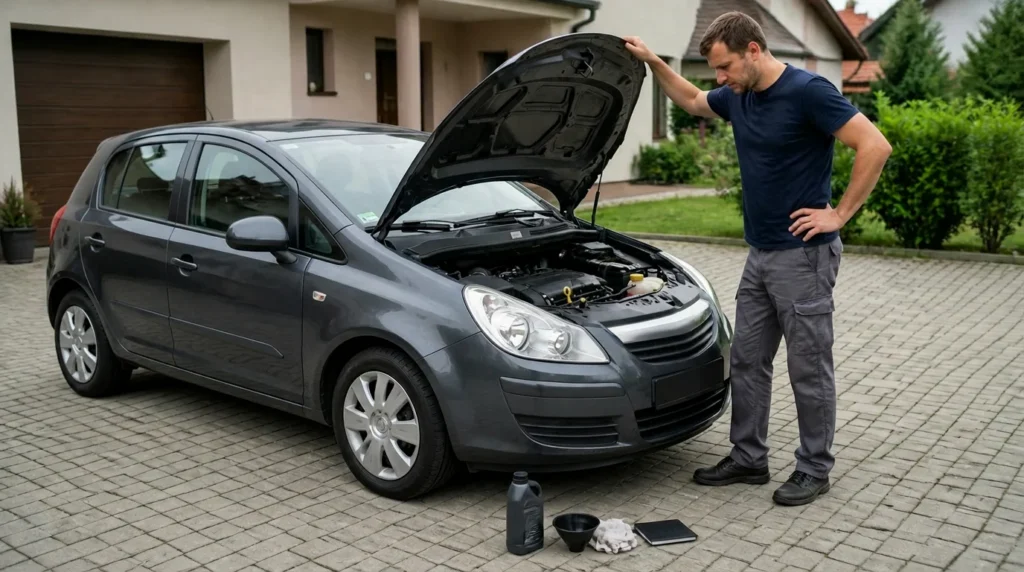
Park on flat ground, turn off the warm engine, and wait 5–10 minutes for the oil to drain into the oil pan. For some vehicles, follow the electronic measurement procedure from the menu.
3 Read the dipstick
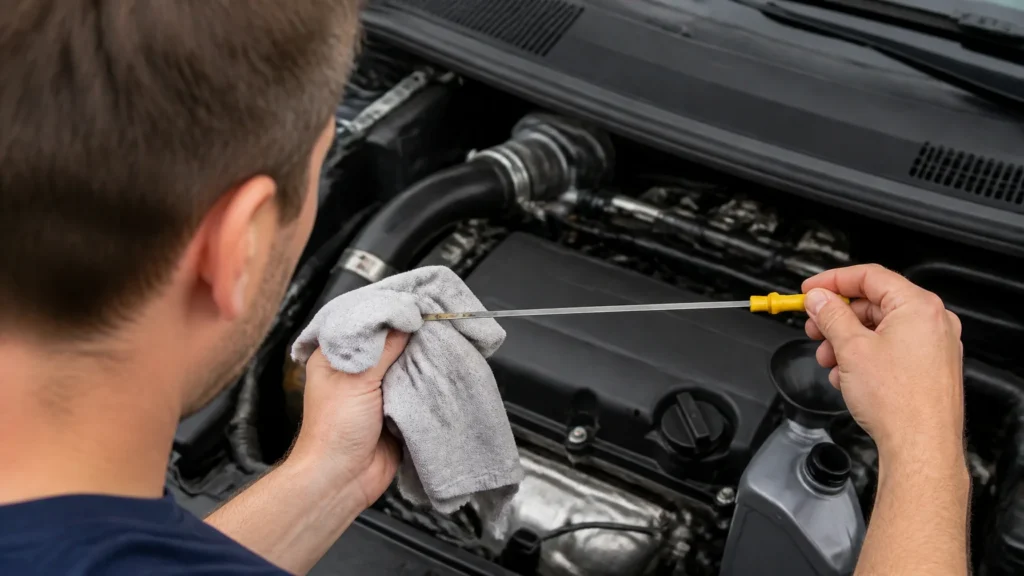
Pull out the dipstick, wipe it, put it back all the way, and pull it out again. The level should be between the MIN and MAX marks; the difference for many engines is approximately one liter, but check the manual.
? Tip: Check the oil every few weeks and before a long trip, even if the vehicle has an electronic warning.
4 Add in small quantities
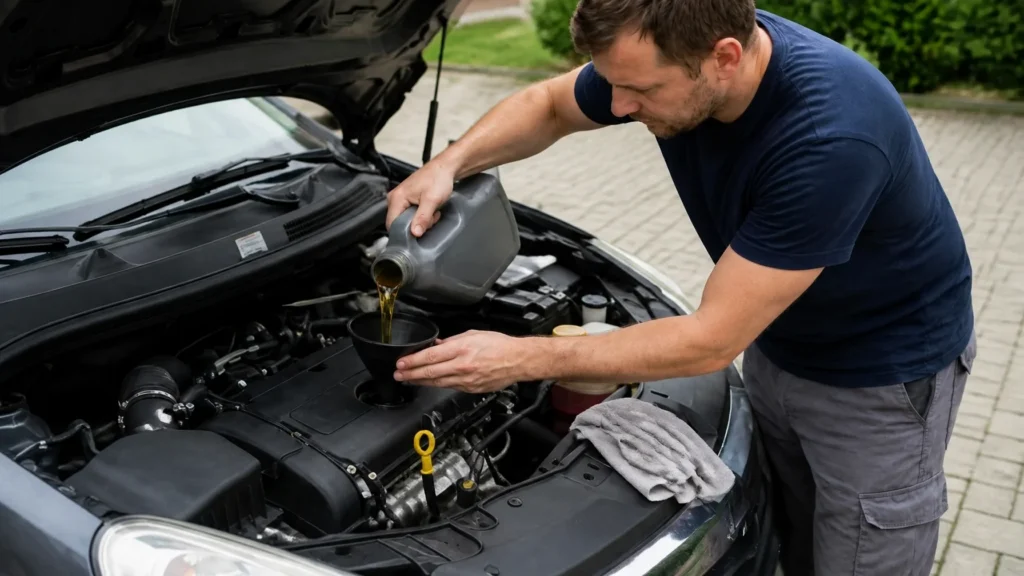
Unscrew the oil cap and add about 200 ml through a funnel. Wait a minute, repeat the measurement, and continue only if the level is still low.
⚠ Warning: Too much oil can foam, increase pressure, and damage the engine or emissions system. If you have exceeded MAX, the excess should be drained before driving.
5 Close the cap and monitor consumption

Stop topping up before the MAX mark, put back the dipstick and cap, wipe up any spilled oil, and note the mileage. Frequent lowering of the level requires checking for leaks or oil consumption.