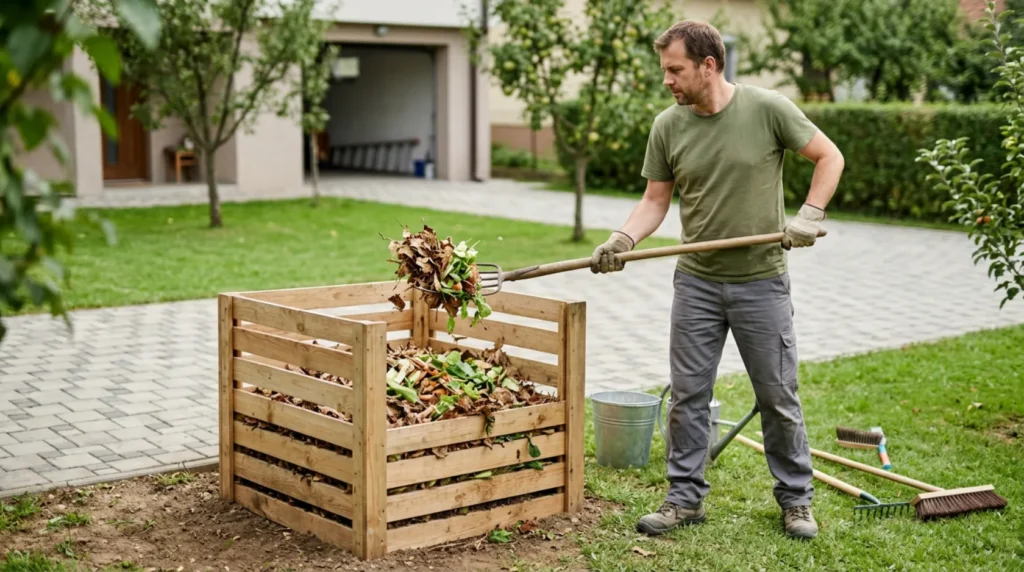
1 Prepare safe work
Check the weather, utilities and ground, put on gloves and eye protection, and keep children and pets away from tools and products.
⚠ Warning: Use the product only for its intended purpose and the dose on the label. Do not use electric tools in the rain, and identify sick plants and unknown pests correctly first.
2 Choose the location and conditions
Pick a partially shaded, well-drained spot accessible by wheelbarrow and water. The structure should allow air and contact with soil, while keeping the material contained.
3 Carry out the key check
Layer brown dry and green moist materials, shred bulky scraps, and keep moisture like a wrung-out sponge.
4 Make the adjustment or maintenance
Stir the pile from time to time. Do not add meat, fat, pet waste, sick plants, or weeds with ripe seeds.
? Tip: Photograph the starting condition and change only one thing at a time. That way you’ll more easily figure out what actually fixed the problem.
5 Test the result
When you’re done, water or test only as much as the process requires, clean the tools, and watch the plant or system over the next few days. Do not repeat the treatment before the recommended interval.