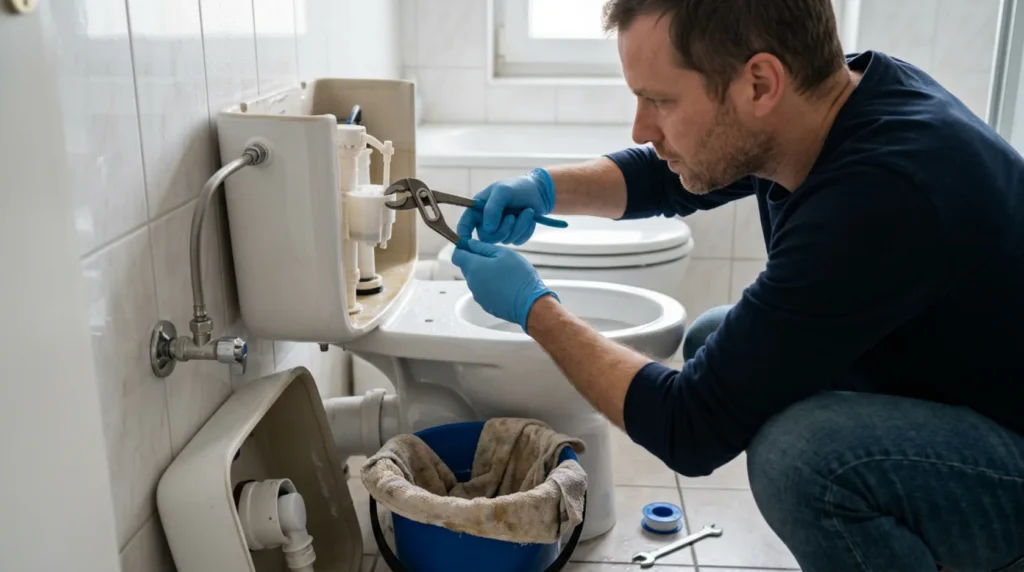
A kettle that fills very slowly usually has a problem with the inlet, the filter at the entrance, the float valve or scale deposits that choke the flow. This failure should not be immediately interpreted as a failure of the entire mechanism. First, it should be determined whether the water is slow to reach the cistern or slow to pass through the valve itself.
It is enough to know how to close the water supply and remove the accessible parts of the float valve or inlet connection without breaking the plastic. It is also useful to have a cloth and a small container for the rest of the water.
⚠ Safety note: This guide involves working with plumbing. If you're not completely sure about every step, stop and call a licensed professional. Before you start, always switch off the power at the breaker or close the main water/gas valve.
1 Close the supply and remove the lid of the cistern
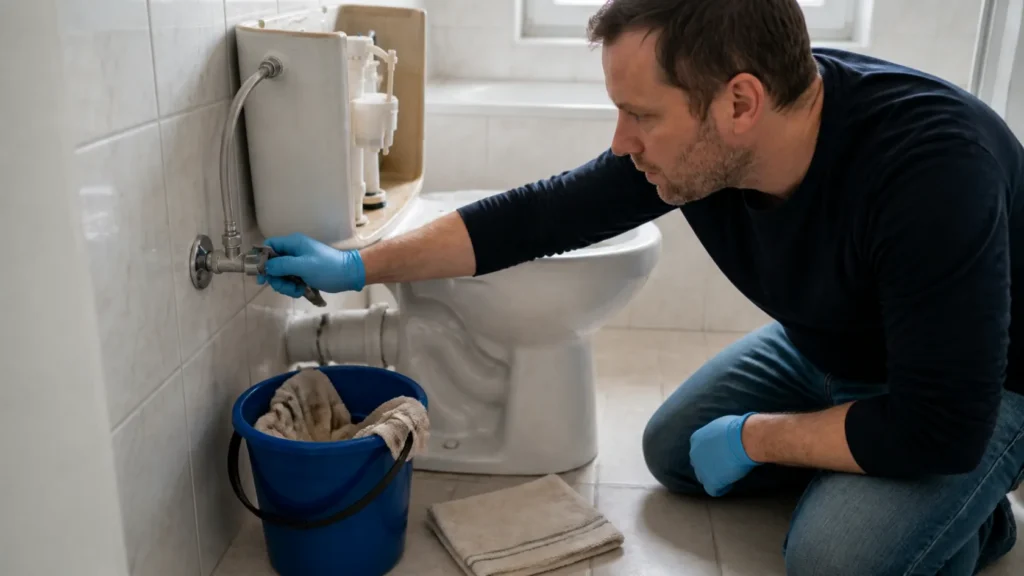
First, close the water and prepare a cloth, because a small amount of water will remain in the connection and the valve. Remove the cover so that you have a clear overview of the charging mechanism. Without a clear view, it is easy to miss the point where the flow is actually choked.
2 Disconnect the slow feed from the slow valve
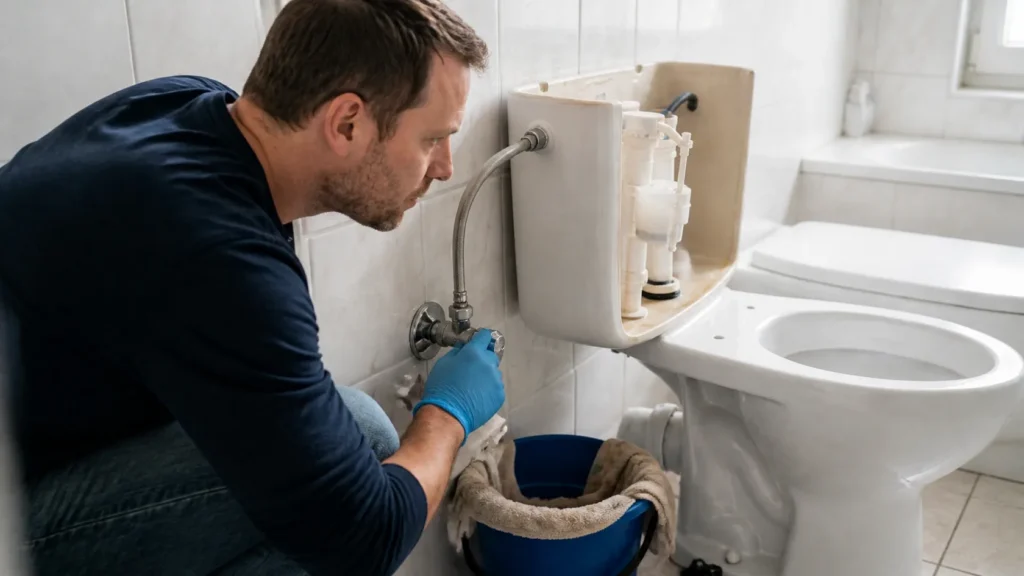
See if the water is coming slowly already at the entrance or if it normally reaches the valve and only then slows down. If the flow is weak even before the mechanism, the suspicion goes to the supply, the filter or the valve itself in front of the cistern. If the inlet seems lively, but the fill still takes a long time, the focus is more on the float valve.
3 Inspect the filter, valve and scale
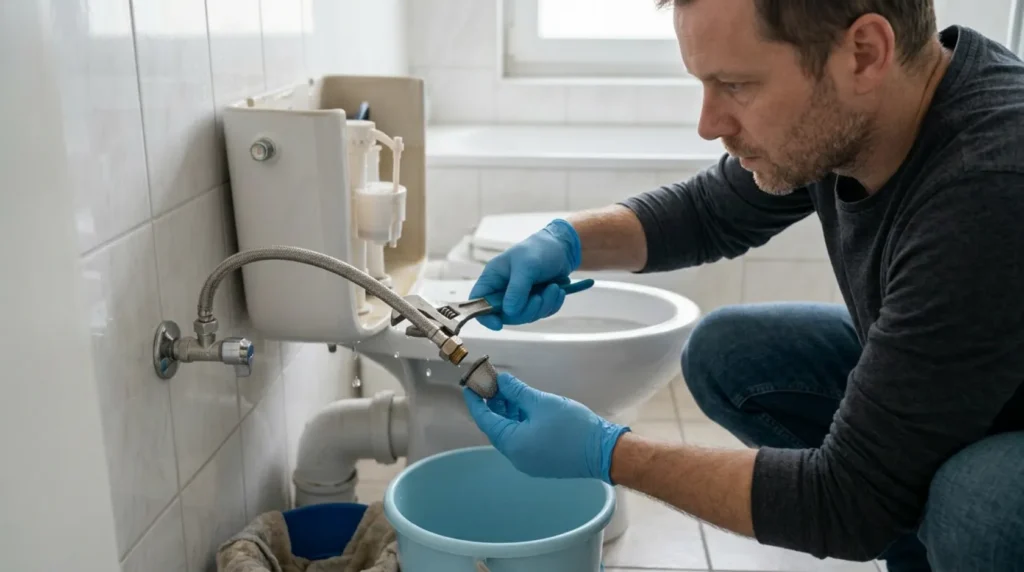
In accessible places, check for scale, small waste and deposits that narrow the passage of water. Even a small filter at the entrance can slow down the charging much more than it seems. Pay attention to cracks or worn parts that make it difficult for the float to work properly.
Tip: If the mechanism is old and the plastic parts seem brittle or cracked, cleaning may only solve part of the problem. Then it is worth planning to replace the floating valve with a suitable model.
4 Clean or replace only what is confirmed
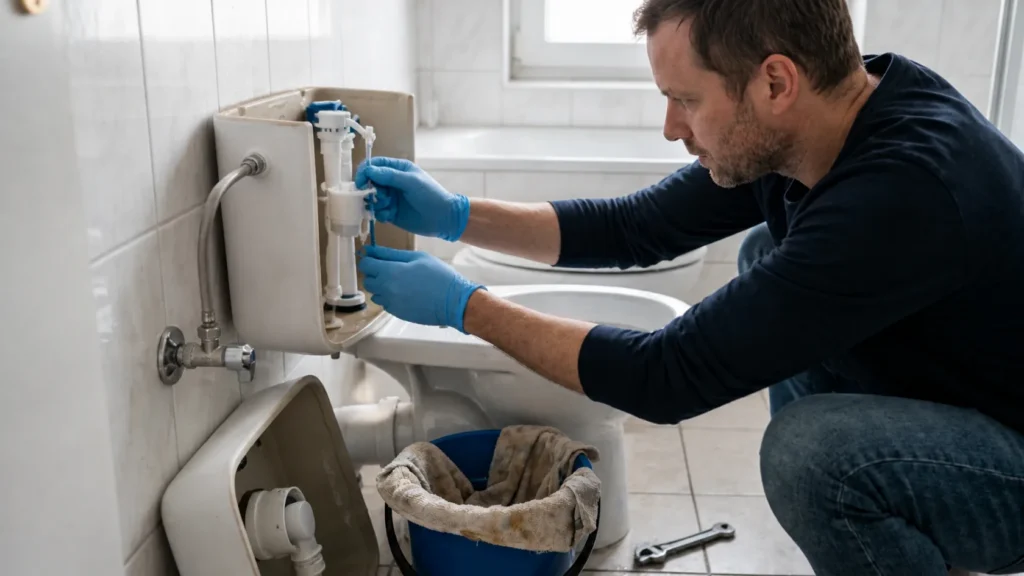
If you see a clogged filter or a valve that is stuck with limescale, fix that first. Don’t replace the whole assembly blindly if the problem is clearly in one accessible place. That way you keep track of what really accelerated charging.
5 Play several charges in a row
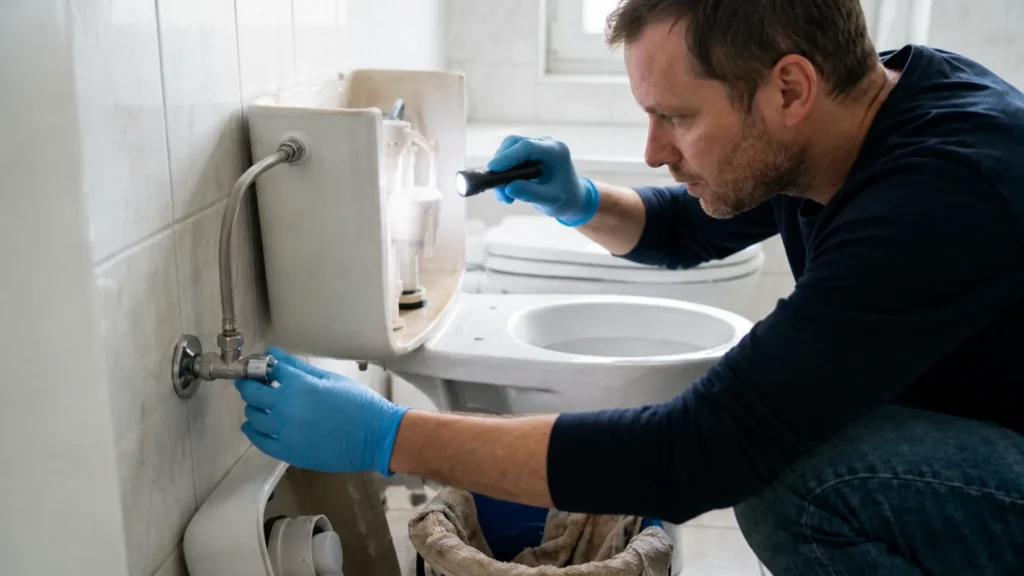
Turn on the water and let the cistern run several fills, not just one. Observe how quickly it reaches the operating level and if the noise, leakage or stalling repeats. Only when several cycles pass calmly and without slowing down, you can consider the problem closed.
Final check
- It was determined whether the deceleration occurs at the inlet or in the float valve itself.
- The filter, inlet valve and traces of scale or small debris were inspected.
- No changing random parts without confirming where the flow restriction is.
- The kettle returns to the normal filling time through several successive fillings.
Common problems
- Filling is still slow even though the cistern seemed clean inside.
- This often means that the problem was not in the bowl itself but in the filter, inlet or inlet valve before the mechanism. It is therefore important to isolate where the flow is first choked.
- The scale is cleaned, but the float still occasionally gets stuck.
- Then the problem is probably not only in the deposits but also in the wear or deformation of the part. Cleaning helps, but does not restore a mechanically worn piece to new condition.
- One charge is good, and the next is slow.
- This is a sign that the fault is not really closed and that there is a sticking or erratic flow. That is why the final check must include several charges in a row.