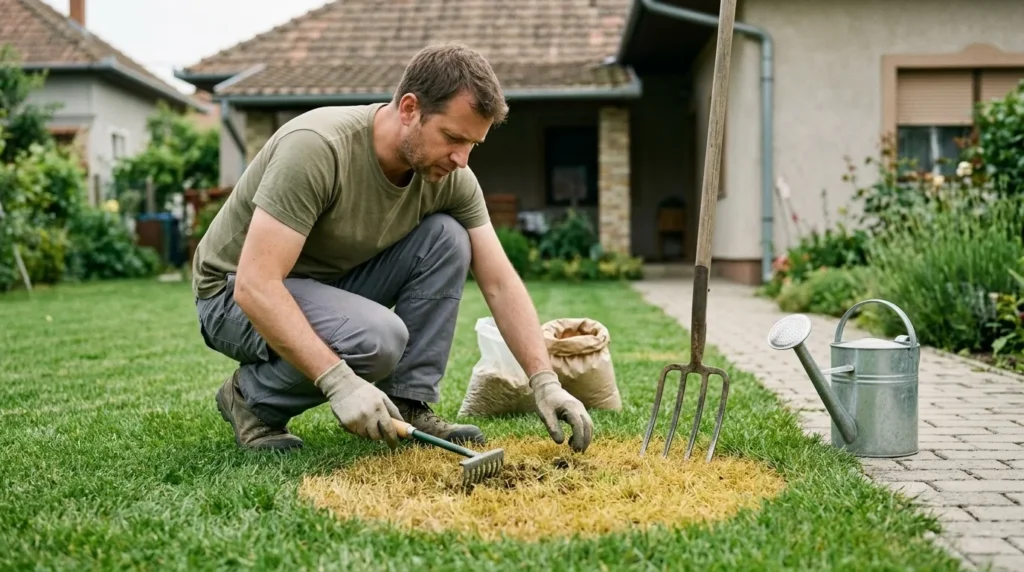
Yellow circular patches on grass don't always mean the same thing: sometimes the cause is pet urine, sometimes a fungal disease, and sometimes a local problem with moisture and compacted soil. That's why the first task is a good assessment of the edge, the center, and the state of the roots, not randomly adding fertilizer.
You need basic lawn observation skills, a check of soil moisture, and a willingness to overseed or aerate the surface locally. If the patches spread quickly over a large area, or you see signs of disease in several places, consider getting a more expert assessment of treatment.
1 Observe the shape and edge of the patch
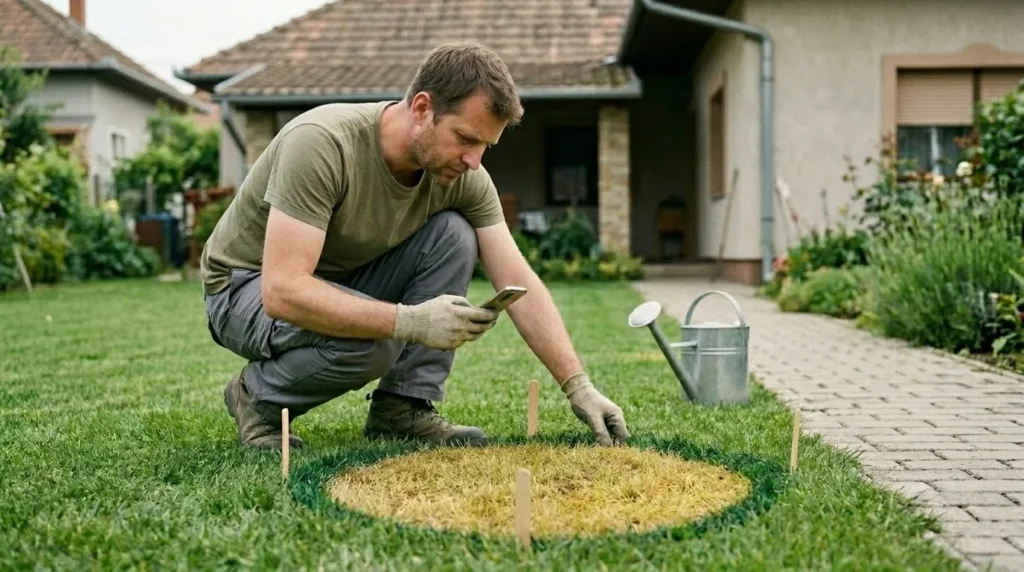
Check whether the edge is clearly defined, whether the center is greener than the rim, and whether the circles repeat in several spots. This pattern often helps distinguish local chemical damage from disease or a watering problem.
2 Check the moisture and roots
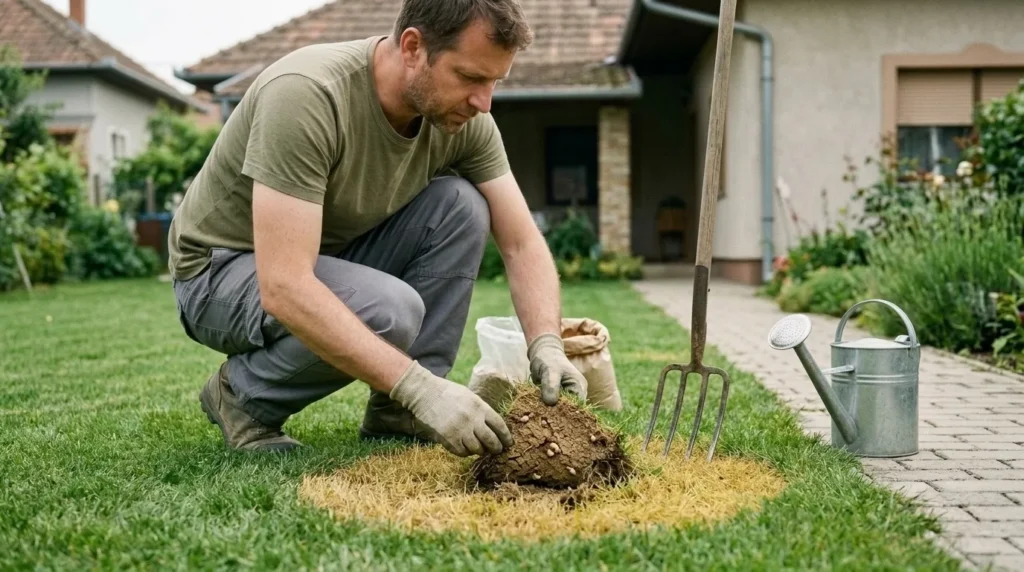
Lift a small piece of turf and check whether the roots are alive, moist, and firmly attached to the soil, or whether the grass comes away easily. Dry, hard soil calls for a different approach than a moist, soft, or slimy layer.
3 Flush out local excess salts
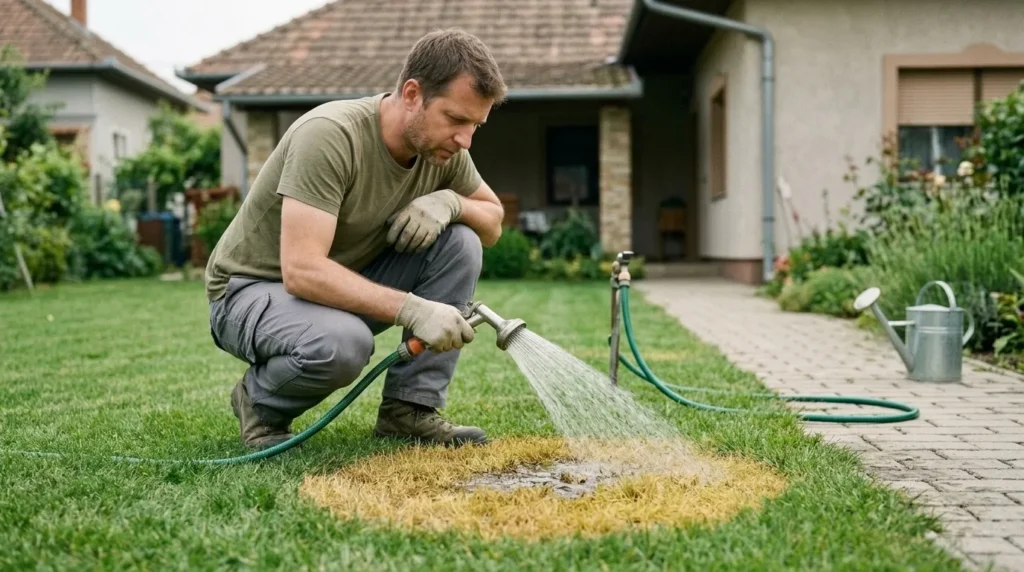
If you suspect urine or overly strong chemicals, flush the zone with deep watering several times, spaced apart. This dilutes the concentration in the top layer and gives the roots a chance to recover before overseeding.
4 Remove dead grass and aerate the soil
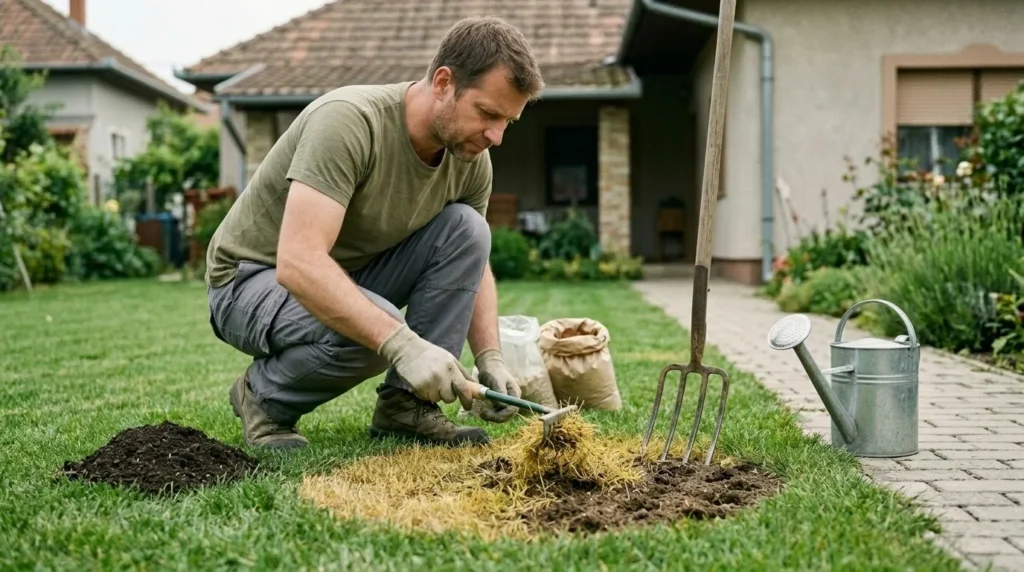
Lightly rake out the dried layer, and spike or aerate compacted soil so water and air can get in more easily. Without this step, seed or new growth often stays only on the surface and doesn't take hold well.
5 Overseed and monitor the change
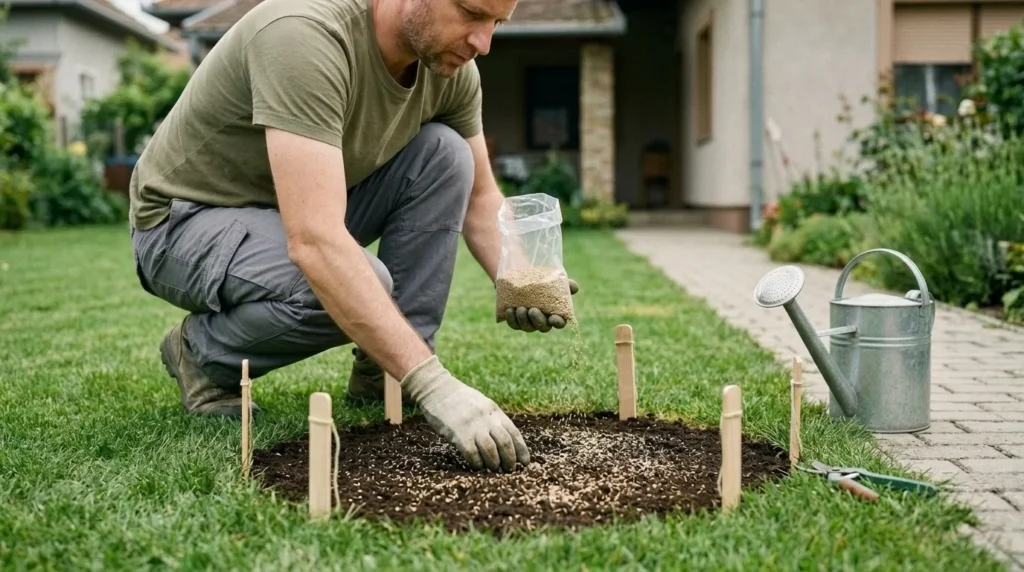
Once the soil settles and the cause has stopped, overseed locally with the same or a similar mix. It's important to monitor for a few weeks whether the circle keeps spreading, since that tells you whether you've fixed only the symptom or the actual cause.
Final check
- The edges of the yellow zone are not spreading further from week to week.
- The soil in the affected spot absorbs water and isn't hard like compacted crust.
- New green growth appears after overseeding or recovery.
Common problems
- The patch has a dark green ring and a dry center.
- This often points to a local chemical load, particularly urine. Flush the zone and overseed later once the soil stabilizes.
- The circles multiply after wet weather.
- A fungal cause is then also possible. Don't overwater, and watch whether the change appears in several separate spots at the same time.