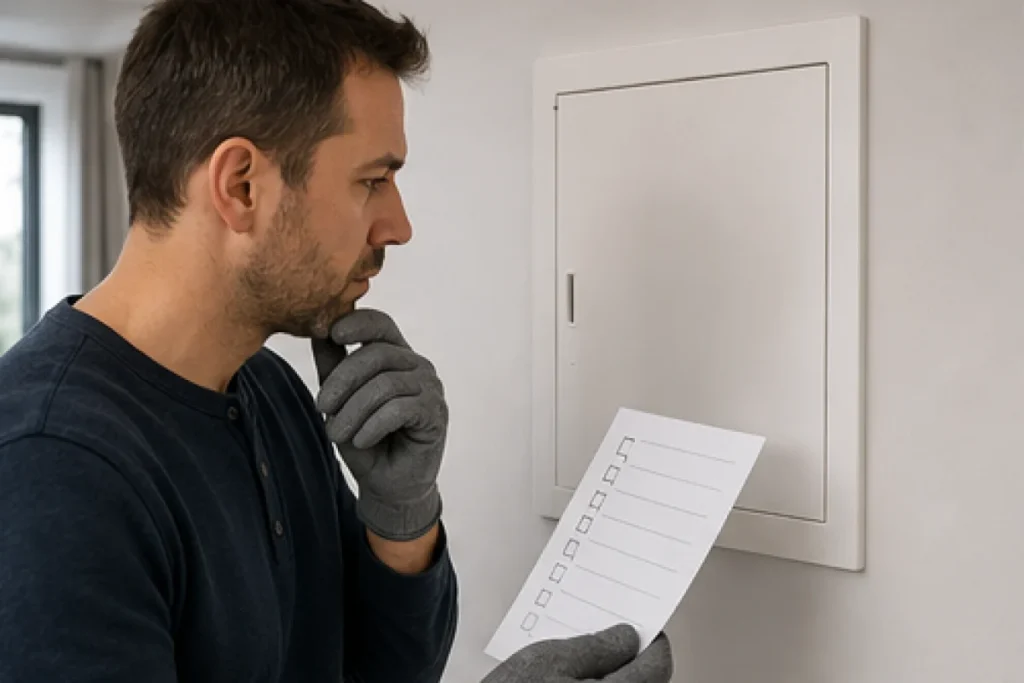
A circuit breaker that keeps tripping is doing exactly what it was designed for: signaling that the circuit is overloaded, that an appliance is drawing too much current, or that there's a fault you shouldn't ignore. At home, the goal isn't to 'force' the breaker to stay up, but to calmly determine whether the problem comes from an appliance, from load distribution, or from the fixed wiring. Good diagnostics here means order and patience, not fiddling with the panel.
No special technical knowledge is needed, but you should be able to tell an ordinary circuit breaker apart from an RCD, and keep track of what happens after each step. If the panel seems unclear or unlabeled to you, focus only on switching off safely and calling an electrician.
⚠ Safety note: This guide involves working with electricity. If you're not completely sure about every step, stop and call a licensed professional. Before you start, always switch off the power at the breaker or close the main water/gas valve.
1 Determine exactly what tripped and at what moment
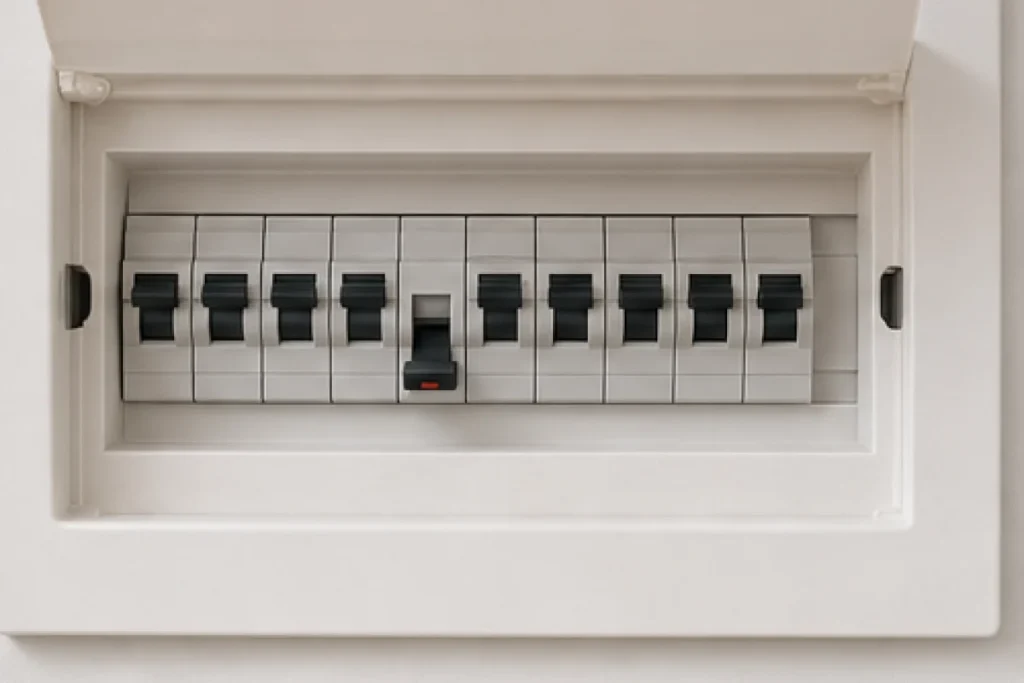
Check whether it was an ordinary breaker for a single circuit that tripped, or an RCD that protects several circuits and has a test button. Note whether it tripped when a specific appliance was switched on, after a few minutes of running, or randomly, since that detail says a lot about the type of fault.
2 Unplug every load on that circuit
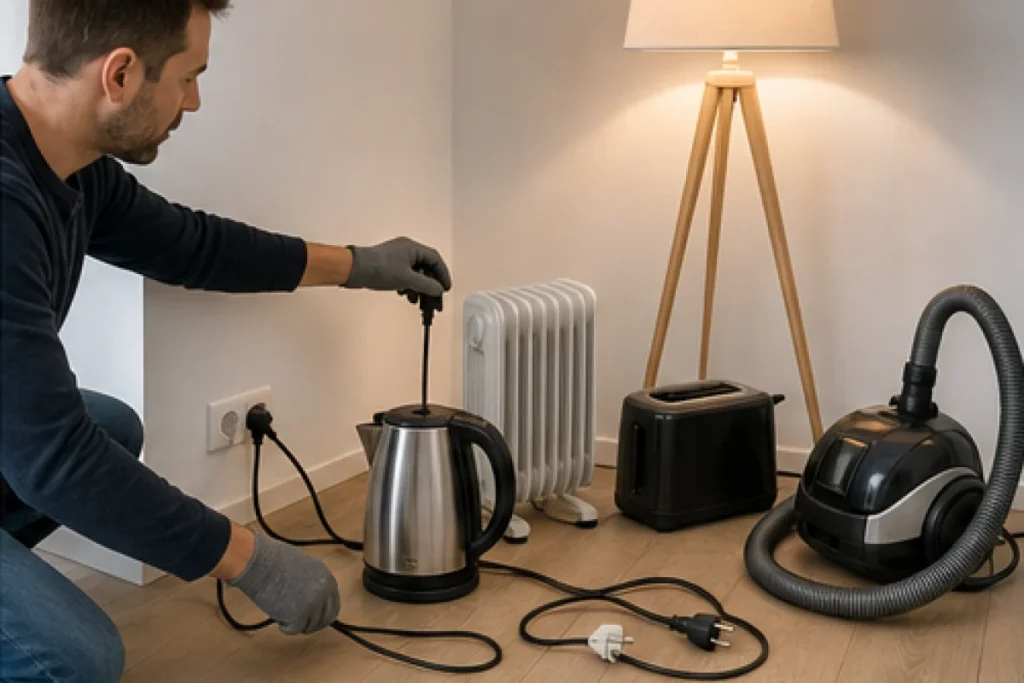
Pull all the plugs out of the outlets in that area and switch off any light switches belonging to the same circuit, including less obvious devices like chargers, a range hood, or LED strips. The goal is for the first reset to be with the circuit completely empty, so you can separate an appliance fault from a wiring fault.
3 Do a quick visual and smell check
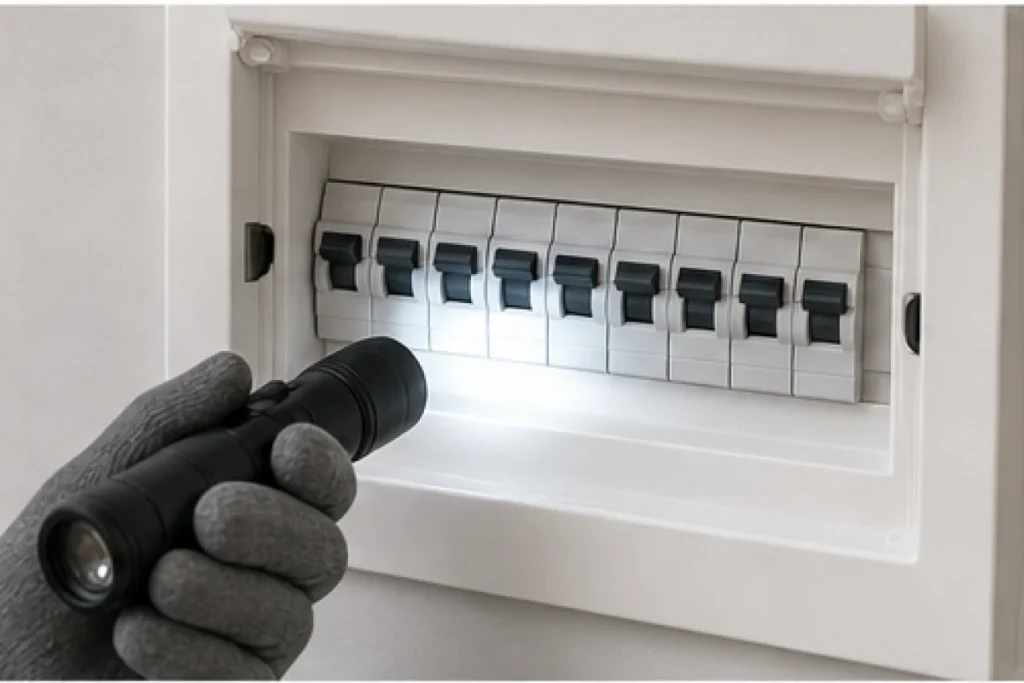
Before resetting, walk through the room and look for a melted outlet, a blackened extension cord, a wet outlet, or the smell of burnt plastic. If you notice any of that, don't reset the breaker just to 'try once more', because such signs point to a real risk of overheating or a short circuit.
4 Reset the breaker only once, on an empty circuit
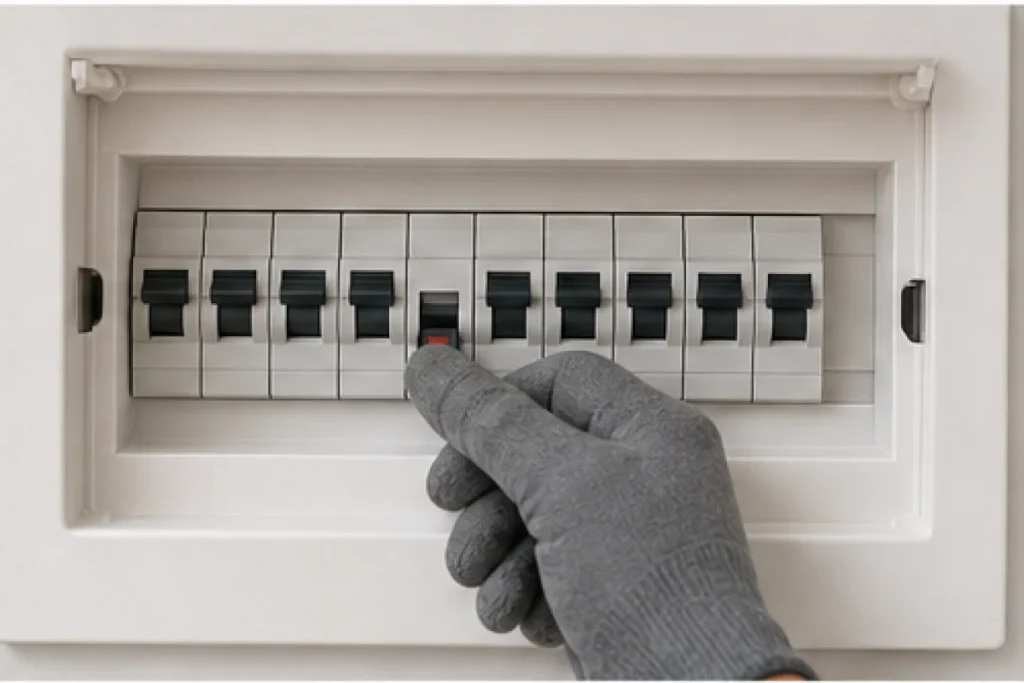
With the circuit unloaded, switch the breaker back on and watch whether it stays on. If it resets cleanly and holds, the problem is more likely in a device or in the combined load than in the cable in the wall itself.
5 If it trips instantly with nothing plugged in, stop
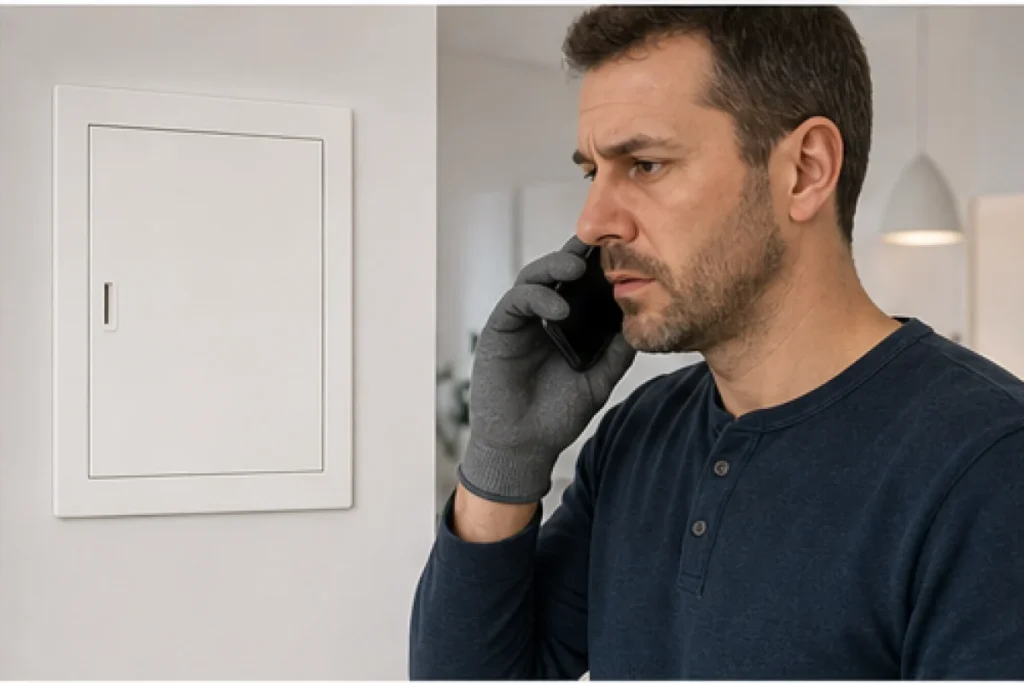
Instant re-tripping on an empty circuit most often points to a fault in the fixed wiring, a damaged outlet, a bad connection in a box, or a serious problem inside the panel itself. This is no longer diagnostics for home conditions, since finding the cause further requires measurement and opening up the wiring.
6 Reconnect loads one at a time and note the reaction
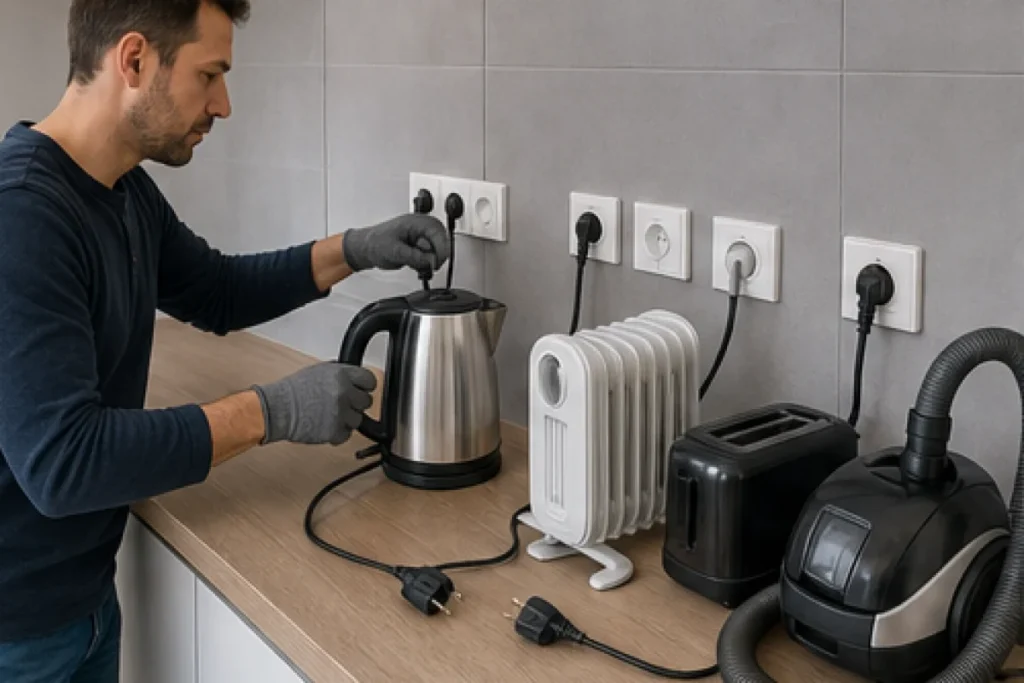
If the breaker holds on an empty circuit, start plugging appliances back in one by one with a short pause between each, instead of turning everything on at once and losing track. The device after which the breaker trips again is your prime suspect, especially if it's a heater, water heater, vacuum cleaner, oven, or a poor-quality extension cord.
7 Check whether it's simply overload
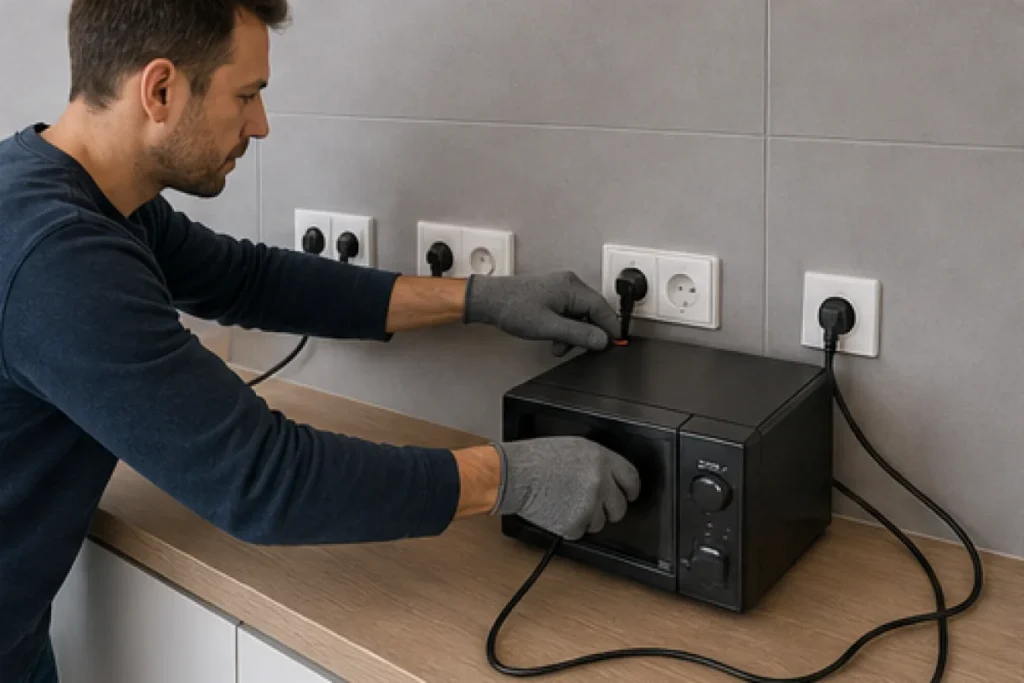
When each appliance works fine on its own, but the problem appears only when they run together, the cause is often not a fault but too many loads on one B16 or similar circuit. In that case, the fix isn't a stronger breaker, but redistributing the heavy loads or adding an extra circuit planned together with an electrician.
When to call a professional: If the job involves changes to the electrical panel, the main gas line, or load-bearing walls/beams — or if you're not sure how it will turn out — this is not a DIY task. Hire a licensed professional.
Final check
- The breaker stays on during normal operation and no longer trips randomly.
- A specific cause has been identified: a particular appliance, a damp outlet, or clear overload.
- Heavy loads are no longer crammed onto the same circuit at the same time.
- If suspicion falls on the wiring, the circuit is left switched off until an electrician comes.
Common problems
- The breaker trips only after an appliance has been running a few minutes, not immediately.
- This often points to thermal overload rather than a classic short circuit. The appliance draws too much current as it heats up, or several loads only add up past a certain running time.
- The RCD trips only when the water heater or washing machine is running.
- This is a very typical symptom of current leaking to the casing through a heating element or moisture. Take that appliance out of use until it's inspected, since the problem isn't just annoying but a genuine safety concern.
- Everything looks normal, but the breaker still trips occasionally with no clear pattern.
- Then look for less obvious causes: a damaged extension cord, an outlet that heats up only under load, outdoor moisture, or an appliance that briefly causes a problem only at motor start-up. If you can't pin down the pattern, an on-site measurement is needed.