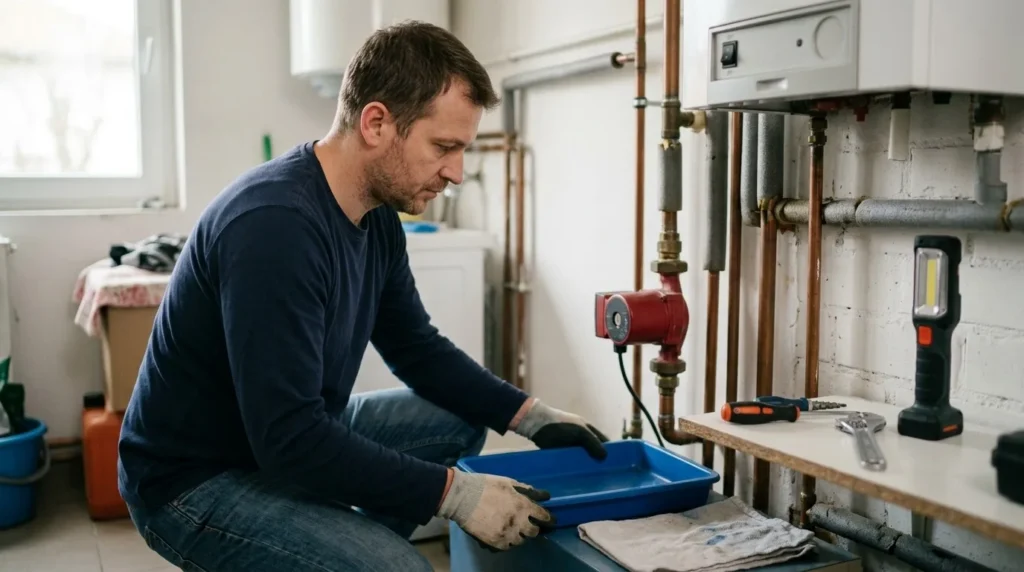
⚠ Safety note: This guide involves working with electricity, plumbing. If you're not completely sure about every step, stop and call a licensed professional. Before you start, always switch off the power at the breaker or close the main water/gas valve.
1 Prepare Safe Work
Turn off the system on the controller, wait for the water and metal parts to cool, and read the manual for your exact model. If you see gas, smoke, or electrical failure, stop immediately and call authorized service.
⚠ Warning: The service plug can release hot water, and the connection box contains mains voltage. Without complete shutdown and the manual, call service.
2 Confirm the System Is Calling for Heat
Check the thermostat, boiler temperature, pressure, and open valves. The pump might be working correctly and just waiting for the signal.
3 Listen and Check the Housing Temperature
Light vibration is normal, but a very hot pump that only buzzes may have a blocked rotor or trapped air.
4 Release the Rotor Only If the Model Allows
On a cold and shut-down system, you can access the service plug with rags according to the manual. If there’s no clear procedure, don’t open the pump.
? Tip: Take a photo of the starting state and change only one thing at a time. That way you’ll know which check actually affected the problem.
5 Reassemble, Test, and Set a Boundary
Restore settings one by one and watch the temperature, pressure, sound, and any leaks. If the values don’t stabilize or the alarm sounds again, leave the system off and request professional diagnostics.
When to call a professional: If the job involves changes to the electrical panel, the main gas line, or load-bearing walls/beams — or if you're not sure how it will turn out — this is not a DIY task. Hire a licensed professional.